Best Whole-Grain Wheat Flour for Healthier, Tastier Baking
Answering the search for the right whole-grain wheat flour, this guide highlights five options suited for different bakers. Whether you’re after sturdy sandwich loaves, rustic breads, or light pastries, these flours balance flavor, nutrition, and ease of use. The top picks cover sprouted varieties, traditional stone-ground textures, and organic options, so you can choose based on digestion, sourcing, and flavor preferences. Below, you’ll find quick buyer-focused sections and a practical Buying Guide to help compare at a glance.
Product snapshot table (selected flours)
| Product | Best For | Key Benefit |
|---|---|---|
| 365 by Whole Foods Market Organic 100% Whole Wheat Flour, 80 Ounce | Everyday baking, family kitchens | Large per-pack value, organic |
| King Arthur Whole Wheat Flour, 5 lb | Classic breads and muffins | Robust flavor, 14% protein |
| One Degree Sprouted Whole Wheat Flour, 32 oz | Digestive-friendly baking | Sprouted for higher nutrient bioavailability |
| Bob’s Red Mill Whole Wheat Flour, 5 lb | Versatile everyday use | Stone-ground, reliable texture |
| Bob’s Red Mill Organic Whole Wheat Flour, 5 lb | Organic baking focus | Organic, same great grain quality |
365 by Whole Foods Organic 100% Whole Wheat Flour, 80 Ounce

This flour is made from dark northern spring wheat and sold in a large 80-ounce bag. It provides the full fiber and nutrient profile associated with 100% whole-wheat flour. Best for cost-conscious bakers who bake in bulk or families that rely on steady weekly loaves. It’s especially suitable for traditional breads, tortillas, and hearty muffins. A potential limitation is the heavier texture often preferred for whole-wheat recipes, which may affect delicate pastries.
King Arthur Whole Wheat Flour, 5 lb

King Arthur Whole Wheat Flour is milled from 100% hard wheat, delivering a classic, robust whole-wheat flavor. It’s a dependable all-purpose whole-wheat option with 14% protein, making it ideal for sturdy breads, muffins, and scones. It’s non-GMO Project Verified and certified kosher, supporting buyers who want a trusted, well-rounded flour. Choose this if you want reliable performance in bread dough and strong flavor; avoid if you need a lighter pastry flour for delicate treats.
One Degree Sprouted Whole Wheat Flour, 32 ounce

One Degree Organic Foods offers a sprouted whole-wheat flour that claims easier digestion and higher nutrient bioavailability due to sprouting. It’s traceable back to farmers, which appeals to buyers who prioritize transparency and farm-to-table ethics. Best for bakers seeking digestion-friendly recipes or those who want to experiment with sprouting benefits. A potential limitation is that sprouted flour can behave differently in recipes compared with standard whole-wheat flour, requiring small recipe adjustments.
Bob’s Red Mill Whole Wheat Flour, 5 Pound

Bob’s Red Mill Whole Wheat Flour is stone-ground from hard red spring wheat using traditional millstones, preserving flavor and nutrition. It has a 13-15% protein range, making it versatile for sandwich bread, rustic rolls, buns, bagels, pretzels, and flatbreads. It’s well-suited for bakers who value a classic whole-wheat profile without sacrificing dough strength. The limitation is that stone-ground flours can yield denser loaves compared to refined flours, especially for lighter pastries.
Bob’s Red Mill Organic Whole Wheat Flour, 5 Pound

This organic version from Bob’s Red Mill uses the same stone-ground technique with hard red spring wheat and a similar protein range (13-15%). Organic certification appeals to buyers prioritizing organic farming practices. It’s a strong choice for all-purpose whole-wheat bread and baked goods. A potential limitation is price relative to non-organic options, which may matter for high-volume bakers.
Bob’s Red Mill Whole Wheat Flour, 3 Pound (Pack of 4)

This pack offers convenience for small-batch bakers who prefer a steady supply of whole-wheat flour without frequent reorder. It maintains the same stone-ground process and protein range, making it suitable for a range of bread types. Caution: smaller packs may require more frequent restocking for larger baking projects.
365 by Whole Foods Market Organic 100% Whole Wheat Flour, 80 Ounce (Pack of 2)
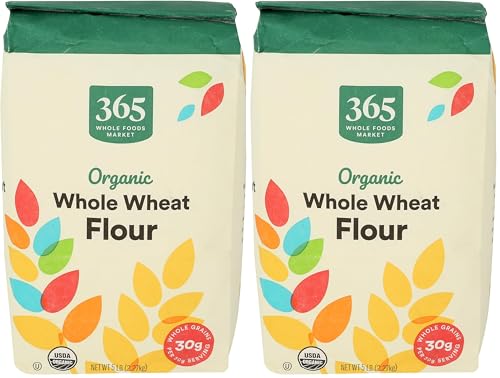
This option doubles the large-per-pack approach, useful for households with significant baking needs. It’s the same organic whole-wheat baseline as the single 80-ounce bag. Best for households that bake in bulk or run small bakeries in home kitchens. The per-bag weight means careful storage to maintain freshness between uses.
One Degree Organics Sprouted Whole Wheat Flour, 80 ounce

One Degree’s 80-ounce sprouted flour offers the same nutrient-availability advantages at a higher volume. It suits bakers who value traceability and sprouting benefits, and who regularly bake hearty breads or nutrient-dense recipes. Best for long-term households or small-scale producers seeking consistency across larger batches. Limitation: recipe adjustments may be needed compared to standard whole-wheat flour due to sprouted characteristics.
Buying Guide: Key Considerations For Whole-Grain Wheat Flour
- Flour type and texture: Choose stone-ground for traditional flavor and hearty texture, or sprouted for potentially better nutrient availability and digestibility.
- Protein content: A higher protein (around 13-15%) provides stronger gluten structure, suitable for bread. Lower protein can be better for muffins and pastries when aiming for tenderness.
- Origin and sourcing: Organic certifications and farm-traceability appeal to buyers who want transparent supply chains. Non-GMO verification is another indicator of sourcing standards.
- Pack size and storage: Large packs reduce cost per ounce but require airtight, cool storage to maintain freshness. Smaller packs are convenient for limited-batch baking.
- Digestibility considerations: Sprouted flours may be gentler on digestion for some bakers, though they can behave differently in recipes.
- Flavor profile: Whole wheat flour ranges from robust and nutty to somewhat milder depending on the wheat variety and milling method. Consider your desired bread or pastry flavor.
- Intended use: For bread dough, prioritize higher protein flours; for pastries or cookies, consider blends or lower-protein options to achieve tenderness.
Frequently Asked Questions
- What is the difference between sprouted and regular whole wheat flour? Sprouted flour is milled from sprouted wheat, which can improve nutrient availability and digestion, but it may require recipe adjustments due to different moisture absorption and density.
- Is organic whole-wheat flour better for health? Organic certification relates to farming practices; it does not guarantee a health outcome. It may appeal to buyers seeking organic farming practices and fewer synthetic inputs.
- Can I substitute whole-wheat flour for all-purpose flour? Whole-wheat flour is denser and can yield heavier baked goods. Start with a partial substitution or adjust hydration and handling to maintain texture.
- Which flour is best for bread vs. pastries? High-protein whole-wheat flours (around 13-15%) are better for bread dough. Lower-protein whole-wheat blends work well for pastries and cookies with a lighter crumb.
- Do different brands taste different? Yes. Flavor, density, and texture vary by wheat variety, milling method, and protein content. Testing a few brands can help identify preferred results.
- How should I store whole-wheat flour? Store in a cool, dry place and use an airtight container. For longer storage, refrigerate or freeze to preserve freshness and prevent rancidity.
Leave a Reply