Best Wheat Grass Juicer for Fresh, Nutrient-Packed Juices
Finding a reliable wheatgrass juicer helps you maximize nutrient intake from greens, wheatgrass, and produce. This guide highlights five well-regarded models, balancing slow, cold-press efficiency with hands-on, manual operation. Each option emphasizes nutrient preservation, ease of cleaning, and adaptability for leafy greens, roots, and fruits. The selection below offers options for quiet operation, durable construction, and user-friendly features, helping you choose the right fit for your kitchen routine and health goals.
| Product | Brand | Type | Key Benefit |
|---|---|---|---|
| Omega NC800HDS Cold Press Juicer | Omega | Cold Press Slow Juicer | Dual-stage masticating extraction for maximum nutrients |
| Fenjidrop Wheatgrass Juicer | Fenjidrop | Stainless Steel Manual Juicer | Fine-mesh filter for pulp-free juice |
| LUFVEBUT Vegetable Juicer | LUFVEBUT | Slow Masticating Juicer | 7-segment auger for high juice yield |
| NestGlynezz Manual Wheatgrass Juicer | NestGlynezz | Manual Hand Press | Premium stainless steel with stable clamp |
| Omega Cold Press Juicer Machine (Triple-Stage) | Omega | Slow Masticating Centrifugal Hybrid | Low-speed juice with nut milks and sorbets capability |
Considerations across these models include speed and heat management, material quality, ease of assembly and cleaning, and whether you want a manual or electric approach. For wheatgrass in particular, look for wide feeding chutes, sturdy clamps, durable stainless steel construction, and a design that minimizes oxidation. The following sections provide detailed insights into each product’s capabilities and how they align with different juicing needs.
Omega NC800HDS Cold Press Juicer Machine

The Omega NC800HDS operates at a slow 80 RPM, reducing heat buildup and oxidation to preserve enzymes and nutrients. Its dual-stage slow masticating design extracts a maximum amount of juice, making it suitable for greens like wheatgrass, as well as fruits and leafy vegetables. This model also functions as a versatile kitchen tool, capable of transforming nuts into butter, extruding pasta, grinding spices, and even producing soy milk. Its robust construction supports long-term daily use, and the 150 W motor delivers steady performance without excessive noise.
Key benefits include nutrient-rich juice with extended shelf life and a system that minimizes oxidation. The unit’s design supports a range of juicing tasks beyond fruits and vegetables, which appeals to households seeking a single appliance for multiple prep needs. For wheatgrass enthusiasts, the slow pace helps extract delicate vitamins and minerals while reducing heat-driven nutrient loss.
Fenjidrop Wheatgrass Juicer, Stainless Steel

This stainless steel manual juicer emphasizes rust resistance and durability with 304 stainless steel construction and a smooth wooden handle. It uses a fine mesh filter to produce pulp-free juice from ginger, pomegranates, celery, and leafy greens, supporting a clean, smooth texture ideal for wheatgrass lovers who prefer a low-effort setup. The wide 3.54″ feeding chute and C-clamp enable stable operation on a tabletop, reducing prep time and allowing single-person use. Manual juicing preserves nutrients and minimizes heat generation compared to many electric models.
The juicer’s mechanical design focuses on efficiency and ease of use, making it a practical choice for kitchens that want a dedicated, straightforward device for leafy greens and other produce. For wheatgrass, this model’s combination of a wide intake and a sturdy clamp means you can juice larger leaves with less prep, while still capturing nutrient-rich juice with minimal pulp.
LUFVEBUT Vegetable Juicer for Celery, Wheatgrass

LUFVEBUT’s juicer is designed as a slow, low-speed extractor to preserve enzymes and nutrients, with an 80 RPM operating speed. The one-speed control simplifies use, especially for leafy greens and soft to hard fruits. A seven-segment auger works to maximize juice extraction through a structured process—cut, break, squeeze, mill, separate, grind, and extract—aiming to deliver the purest juice possible. The 200 W motor supports robust juicing performance, enabling efficient handling of celery, spinach, kale, and even wheatgrass, while maintaining a relatively quiet operation compared to high-speed machines.
Materials and safety are emphasized: BPA-free parts, a smooth exterior, and a reverse function help prevent jams. Its design supports a balanced approach to home juicing, combining strong nutrient retention with practical maintenance. For users seeking a reliable, health-focused machine without complex setup, this model provides a straightforward path to everyday fresh juices and juice blends rich in chlorophyll and micronutrients.
Omega Cold Press Juicer Machine (Triple-Stage)

This Omega model emphasizes a triple-stage slow masticating approach at 80 RPM, designed to extract juice efficiently from a wide range of produce, including wheatgrass. It also notes the capability to make nut milks, baby food, and sorbets, highlighting its versatility beyond standard juice extraction. Users benefit from a low-speed operation that minimizes heat buildup, helping to preserve delicate enzymes and nutrients. The 200-watt motor provides ample power for tough greens and fibrous produce, while the Gray finish offers a sleek aesthetic for modern kitchen spaces.
In practice, the triple-stage design supports multi-purpose use—ideal for households seeking a single appliance to cover juice, nut milks, and soft frozen desserts. The juicer’s slow pace and sturdy construction align with long-term juicing routines, including regular wheatgrass servings, without compromising juice quality or flavor. Cleanability and assembly ease are important considerations, and Omega’s reputation for durable, nutrient-focused juicers is reinforced by this model.
Triquetra Health Organic Wheatgrass Juice Powder
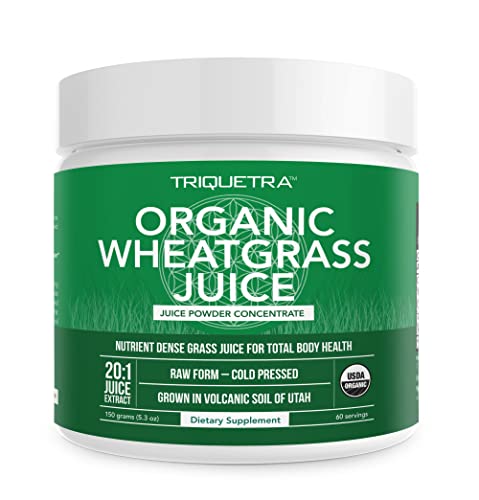
While not a juicer, this organic wheatgrass juice powder offers a concentrate for rapid nutrient intake when fresh juice is not available. The powder form is grown in volcanic soil in Utah and cold-pressed into a juice form before CO2 drying, preserving enzymes and nutrient density. It provides a 20:1 concentrate and is certified organic, with raw, bioactive properties intended to maintain chlorophyll and superoxide dismutase (SOD) activity. This option is complementary for those who want a wheatgrass supplement alongside juicing.
When considering wheatgrass supplementation versus juicing, powder offers convenience, shelf stability, and ease of integration into smoothies or water. However, it should not replace fresh juice entirely for individuals seeking the broad spectrum of fiber and juice yield that a dedicated juicer delivers. This product serves as a nutrient-dense addition to a wellness routine rather than a direct juicer substitute.
Buying Guide: Key Purchase Considerations
- Juicing method: Choose between slow, cold-press (masticating) vs. faster extraction. Slow juicers preserve nutrients and enzymes but may require more prep time, while manual juicers offer simplicity and energy savings but require physical effort.
- Material and build: Look for stainless steel components, especially for the auger, strainer, and body. Rust resistance and smooth surfaces enhance durability and ease of cleaning.
- Feeding chute size: A wider chute reduces prep work for leafy greens and wheatgrass; a narrower chute may require pre-cutting but can offer compact design.
- Output and pulp control: Some juicers separate pulp for a smoother juice, while others produce juice and pulp together. Decide based on texture preference and waste tolerance.
- Noise level: Electric slow juicers tend to be quieter than high-speed centrifugal models, which is beneficial for early-morning juicing.
- Maintenance: Check for dishwasher-safe parts and ease of disassembly. BPA-free materials and simple cleaning processes save time over the long term.
- Versatility: If you want more than juice (nut milks, sorbets, baby foods, herbs), consider models that support these functions or have accessory attachments.
- Price versus value: Manual juicers are typically more affordable and energy-efficient, while premium electric models offer longer warranties and broader functionality.
- Diet alignment: For wheatgrass, prioritize models with robust juice extraction and minimal oxidation to maximize chlorophyll and micronutrient preservation.
Overall, the best wheatgrass juicer for a given household balances nutrient preservation, ease of use, and maintenance with the volume of juice desired. For most users, a slow, dual-stage or triple-stage system provides reliable performance across greens, fruits, and vegetables. Manual options are excellent for those prioritizing simplicity and hands-on control, while electric machines suit daily, high-volume juicing routines.
Leave a Reply