Best Ultra-Filtered Organic Milk Options for Protein and Lactose-Free Living
Ultra-filtered organic milk delivers higher protein and lower sugar with lactose-free options. This guide highlights five strong choices for people seeking high-protein milk, lactose-free varieties, and organic, pasture-raised sourcing. The top picks are suited for active individuals, families managing lactose intolerance, and shoppers prioritizing organic, small-farm sourcing. Below is a quick summary table to compare the best options.
| Product | ||||
|---|---|---|---|---|
| Organic Valley Protein Plus Organic Whole Ultra-Filtered Milk | Whole Milk | 13 g | 50% less than regular milk | Lactose free |
| Organic Valley Protein Plus Organic Ultra Filtered Fat Free Milk | Fat Free | 13 g | 50% less sugar | Lactose free |
| Organic Valley Protein Plus Organic 2% Ultra-Filtered Milk | 2% Milk | 13 g | 50% less sugar | Lactose free |
| Fairlife Fat Free Ultra Filtered Milk, Lactose Free | Fat Free | 50% more protein | 50% less sugar | Lactose free |
| Fairlife 2% Reduced Fat Ultra-Filtered Milk, Lactose Free | 2% Reduced Fat | 50% more protein | 50% less sugar | Lactose free |
Organic Valley Protein Plus Organic Whole Ultra-Filtered Milk

Product notes: 13 grams of protein per serving, 50% more protein and 50% less sugar than regular milk. Organic, pasture-raised, lactose-free ultra-filtered milk. Best for: protein-focused consumers who want whole milk flavor with lactose-free convenience. Caution: higher fat content means more calories per serving than fat-free options.
Organic Valley Protein Plus Organic Ultra Filtered Fat Free Milk
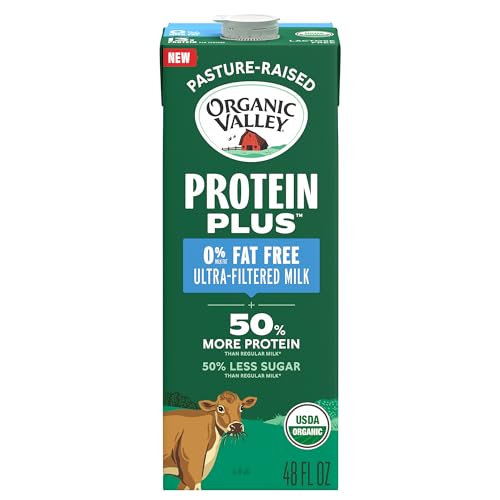
Product notes: 13 grams of protein per serving, 50% more protein and 50% less sugar than regular milk, lactose-free ultra-filtered milk. Best for: lactose-intolerant athletes who want high protein without fat. Caution: fat-free may be less satisfying for some who prefer creaminess.
Organic Valley Protein Plus Organic 2% Ultra-Filtered Milk

Product notes: 13 grams of protein per serving, 50% more protein and 50% less sugar than regular milk, organic, pasture-raised, lactose-free 2% ultra-filtered milk. Best for: those who want a balanced fat level with higher protein and lactose-free assurance. Caution: 2% fat may not be ideal for ultra-low-fat dietary plans.
Fairlife Fat Free Ultra Filtered Milk, Lactose Free

Product notes: Starts with high-quality dairy milk from family-owned farms, filtered to concentrate protein and calcium while reducing lactose and natural sugars. Best for: those seeking higher protein with lactose-free options and a working substitute for traditional milk. Caution: not organic; dairy sourcing notes vary by product line, which may matter to strict organic shoppers.
Fairlife 2% Reduced Fat Ultra-Filtered Milk, Lactose Free

Product notes: 13 grams of protein per serving, 50% more protein and 50% less sugar than regular milk, lactose-free ultra-filtered milk. Best for: shoppers who want a lower-fat option with strong protein and lactose-free assurance. Caution: some consumers prefer organic or non-GMO labels not offered in this variant.
Buying Guide
- Protein goals: If protein per serving is your priority, all shown products provide around 13 g, while Fairlife variants emphasize higher protein density due to filtration.
- Fat preferences: Choose whole or 2% options for creaminess, or select fat-free to minimize calories per serving. Organic Valley offers multiple fat levels in ultra-filtered formats.
- Lactose considerations: All listed options are lactose-free, making them suitable for lactose-intolerant consumers seeking flavor and nutrition without discomfort.
- Organic and sourcing: Organic Valley products emphasize organic farming and pasture-raised cows. Fairlife focuses on filtration technology; organic options may align more with organic-only buyers.
- Flavor and texture: Whole and 2% variants generally taste closer to traditional milk, while fat-free options have a lighter mouthfeel. Personal preference will guide selection.
FAQ
- What does ultra-filtered mean? Ultra-filtered milk uses a filtration process to concentrate protein and calcium while reducing lactose and sugars, resulting in higher protein and lower sugar per serving.
- Are these milks lactose-free? Yes. All five listed products are lactose-free variants designed for easier digestion.
- Is organic always better? Organic Valley products emphasize organic farming practices and pasture-raised cows. Fairlife products emphasize filtration-based protein content and lactose reduction, not necessarily organic certification.
- Which is best for kids? A fat-free or 2% option provides lower calories per serving while maintaining protein; however, taste preference matters for kids, so consider a mild flavor and texture preference.
- Can I substitute this milk in baking? Yes. Ultra-filtered milks can replace regular milk in most baking and cooking recipes, offering added protein and lower sugar in some variants.
- Do these milks taste different from regular milk? Some may notice a creamier mouthfeel or slightly different aftertaste depending on fat level and filtration; whole and 2% variants typically resemble traditional milk more closely.
Leave a Reply