Best Surfaces for Kneading Dough: Durable Silicone Mats for Home Bakers
Finding the right kneading surface can dramatically improve dough handling, cleanup, and consistency in your baking. The following surfaces are top-rated silicone pastry mats designed to support smooth rolling, non-stick work, and easy cleanup. Each option below highlights durability, size, and practical features to help you choose the best mat for your kitchen workflow.
Summary of selected products
- Folksy Super Kitchen Non-slip Silicone Pastry Mat Extra Large – 28″ x 20″
- QUELLANCE Silicone Baking Pastry Dough Mat – 28″ x 20″
- DANIA & DEAN 26″ x 16″ Extra Thick Silicone Mat
- EuChoiz Silicone Pastry Mat 24″ x 16″
- Folksy Super Kitchen Extra Thick Silicone Pastry Mat – 16″ x 24″
Folksy Super Kitchen Non-slip 28×20 Silicone Pastry Mat
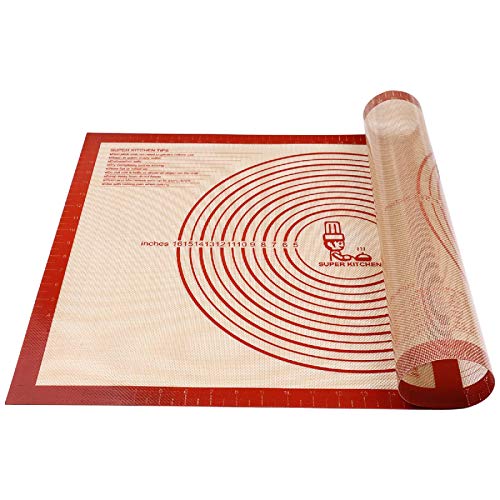
This extra-large silicone mat is designed for dough kneading, rolling, and fondant work. It emphasizes a premium food-grade silicone construction for safe kitchen use and easy cleanup. The mat’s surface is non-stick, reducing the need for flour while you work. A thickness of 0.7 mm aims to provide a stable work surface that resists wrinkling during kneading, helping to keep dough movements controlled on the counter.
Key features include a non-stick surface that cleans with a cloth and a durable build intended to endure frequent kneading sessions. The product positioning highlights safety and durability, making it suitable for home bakers who often roll out dough for pies, cookies, or fondant. Its size offers ample room for large batches, while the non-slip bottom helps keep the mat in place on your countertop.
QUELLANCE 28×20 Inch Silicone Dough Mat

The QUELLANCE mat emphasizes 100% food-grade silicone with a substantial 0.7 mm thickness, designed to withstand daily kneading and rolling without warping. Its large 20×28 inch surface provides substantial room for dough and pastry work, including fondant shaping. The mat’s non-stick surface minimizes the need for flour, enabling smoother dough movement and easier transfers. It also features a non-slip bottom to prevent shifting during kneading, which is particularly helpful when working with stiff or sticky doughs.
According to its listed features, the mat resists deformation and offers edge stability that prevents edges from curling as you work. The combination of thickness, non-stick properties, and a robust underside makes this mat suitable for serious home bakers and those who frequently roll out large dough portions or fondant sheets. It’s positioned as a reliable work surface for pizzas, cookies, and bread dough alike.
DANIA & DEAN 26×16 Extra Thick Silicone Mat
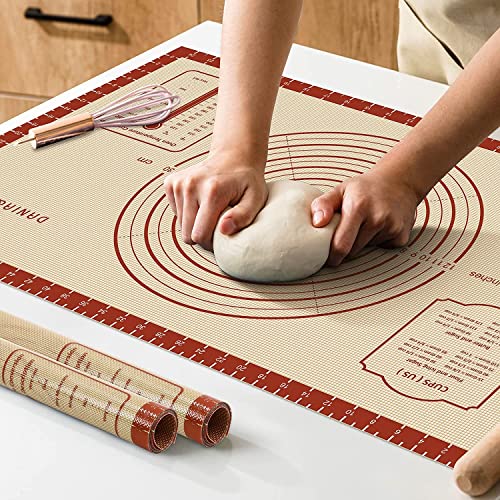
This mat emphasizes 0.7 mm thickness with reinforced fiberglass for added durability. The extra thickness aims to provide a stable kneading surface that resists wrinkling and deformation during extended dough sessions. The surface is described as non-stick, reducing the need for flour, which helps with cleaner dough handling and easier cleanup afterward. The anti-slip bottom is designed to hold the mat firmly in place on various countertop surfaces, supporting steady kneading and rolling movements.
From a practical standpoint, the mat’s compact 26 by 16 inch size is well-suited for standard kitchen counters, making it a versatile option for everyday bakers who don’t require the largest mat but still want durability and a non-stick surface. The materials chosen aim to balance safety, performance, and easy maintenance for frequent dough work.
EuChoiz 24×16 Inch Silicone Pastry Mat

The EuChoiz mat offers edge heightening to prevent dough from spilling over the sides during kneading. It uses a 1.3 mm thickness, aiming to deliver added durability and stability compared with thinner mats. The raised edge feature helps protect your workspace, particularly when kneading sticky doughs or handling liquids nearby. The mat is designed with storage in mind, including side holes for hanging and a strap for easy rolling and space-saving storage.
Designed for practicality, this mat’s size is suitable for many home kitchens, allowing comfortable handling of dough for bread, pastries, and cookies. The combination of edge heightening and a relatively thick silicone layer makes it a robust choice for those who value a sturdy surface and long-term usability in the baking process.
Folksy Super Kitchen Extra Thick 16×24 Silicone Mat

This mat focuses on extra thickness (0.7 mm) for added durability during heavy kneading and daily use. The non-stick surface reduces dough sticking and simplifies cleanup, aligning with a practical home baking workflow. It highlights a robust design intended to withstand repeated rolling, kneading, and shaping of fondant, cookies, and pie crusts. The mat’s size is well-suited for compact kitchens that still require ample space for dough work and sheet preparation.
FAVXD Dough Mat Pastry Silicone Baking Mat 32×24″
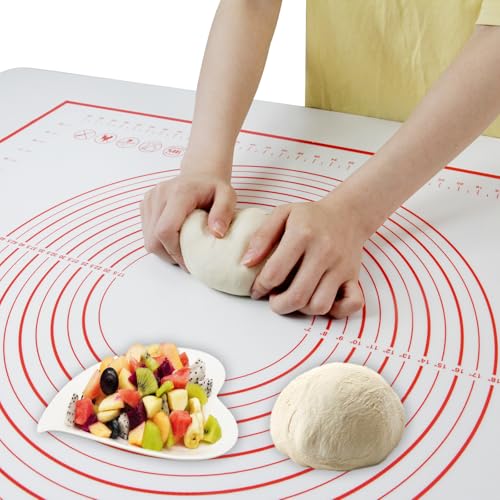
The FAVXD mat presents a sourdough-friendly surface with a large 32×24 inch footprint, making it suitable for substantial dough batches. It emphasizes a combination of food-grade silicone and fiberglass mesh for stability and durability. The mat is advertised as oven, microwave, and freezer safe from -45°F to 450°F, broadening its versatility beyond standard kneading tasks. The non-slip surface helps keep dough movements controlled, while the non-stick property minimizes flour usage and cleanup effort.
Buying Guide: Key Considerations For Choosing The Best Kneading Surface
- Size and workspace: Choose a mat size that matches your typical dough batch. Larger mats provide more working room for rolling and shaping, while smaller mats fit compact counters and may be easier to store.
- Thickness and durability: Mats around 0.7 mm thick tend to offer durability and a stable kneading surface. Thicker mats resist folding or curling, while thinner mats can wear out faster with heavy use.
- Non-stick performance: A true non-stick surface minimizes flour usage and dough sticking, speeding up work and cleanup. Look for silicone with a proven non-stick claim and easy-clean properties.
- Anti-slip bottom: A reliable anti-slip or non-slip underside helps keep the mat in place on various countertop surfaces, especially when applying pressure during kneading.
- Edge heightening and containment: Mats with raised edges help prevent dough and liquids from spilling over, keeping your workspace cleaner during kneading and rolling.
- Storage and maintenance: Side holes for hanging or straps for rolling can aid storage. Dishwasher-safe or easy wipe-clean surfaces save time after use.
- Safety and materials: Ensure the mat uses food-grade silicone, free from BPA and other unsafe additives. This is important for long-term kitchen use and contact with dough and pastries.
- Versatility: Consider mats that can be used beyond dough kneading, such as for fondant work, cookie sheet lining, pie crusts, and as general countertop protection.
- Price and value: Compare thickness, surface quality, and included features relative to price. A slightly higher investment in a thicker, more durable mat can pay off with longer life and better performance.
When evaluating options, consider how you typically bake: batch size, dough types, and how often you need to roll fondant or pizza dough. A larger mat with 0.7 mm thickness and a non-slip base generally delivers the best balance of stability, durability, and ease of use for frequent kneading and rolling tasks. For smaller kitchens, compact mats with strong edge containment and good storage options can still provide a reliable work surface without dominating your counter space.
Leave a Reply