Best Non-Alcoholic Sparkling Rosé for Guilt-Free Celebrations and Everyday Enjoyment
Find the best non-alcoholic sparkling rosé options for a festive, alcohol-free experience. This guide highlights five top choices, explaining who they’re best for, how they taste, and any important limitations. Ideal buyers include wine lovers seeking a true de-alcoholized experience, guests wanting a lighter calorie option, and those preferring gluten-free or vegan ingredients. Below is a concise summary to help you compare quickly.
| Product | Best For | Main Benefit | Calories per Serving |
|---|---|---|---|
| Surely Sparkling Rosé (California) | Wine lovers seeking authentic de-alcoholized Rosé | High-quality wine made the traditional way, alcohol removed | 20 |
| BO°LLE Sparkling Rosé | Elegant celebrations with fine bubbles | Award-winning, twice-fermented for true wine structure | Not specified |
| Wander + Found Sparkling Rosé (Variety Pack) | Gauged for variety-seeking drinkers | Real grapes, zero proof, rich red-berry profile | Low calorie |
| Oddbird Sparkling Non Alcoholic Rosé | French-style rosé fans who want a grape-forward experience | Made from real grapes with dealcoholization | Not specified |
| Thomson & Scott Noughty Sparkling Rosé | Organic, low-sugar, alcohol-free option | Vacuum distillation with aroma recovery; pale rose with apple notes | Not specified |
Surely Sparkling Rosé — De-alcoholized California Rosé

Best for wine lovers who want a real Rosé experience without alcohol. This de-alcoholized sparkling wine uses 100% Barbera grapes sourced in Sonoma, delivering a traditional winemaking approach with alcohol removed. Tasting notes include strawberry, pear, guava, lemon, vanilla, and a crisp, dry finish. It is gluten-free, vegan, non-GMO, and contains only 20 calories and 2 g of sugar per serving. Caution: As a de-alcoholized wine, the flavor profile will resemble wine more than juice, which may be stronger than some expect in a non-alcoholic option.
BO°LLE Sparkling Rosé — Non Alcoholic

Best for celebrations that call for elegance and fine bubbles without alcohol. BOLLE’s Sparkling Rosé is an award-winning, dual-stage fermented non-alcoholic wine crafted as a champagne-style alternative. It’s designed for mindful celebrations and carries the prestige of multiple awards. It’s best for those who want a sophisticated, dry rosé experience. Limitation: detailed sugar and calorie information isn’t provided here, so verify nutrition if that matters for your plan.
Wander + Found Sparkling Rosé & Cuvée Blanc — 6 Pack
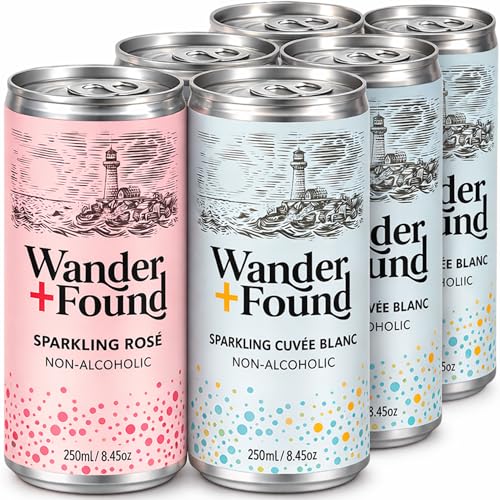
Best for guests who appreciate real grape-based flavors in a zero-proof format. The pack includes a Sparkling Rosé with red berries, rose hips, and citrus zest, plus a Sparkling Cuvée Blanc with lime and gooseberry notes. Vegan, gluten-free, and low-calorie, this option is ideal for pairing with casual meals or as a party favorite. Limitation: as a German-made product, availability and shipping may vary by region.
Oddbird Sparkling Rosé — Alcohol-Free

Best for drinkers who want a French-style rosé experience with a grape-forward profile. Oddbird uses dealcoholized Syrah grapes from the Languedoc-Roussillon region to deliver a dry, silky rosé. It’s vegan-friendly and gluten-free. Caution: flavor intensity may vary by batch due to dealcoholization and grape sourcing, so expect a consistent but potentially variable profile.
Thomson & Scott Noughty Sparkling Rosé
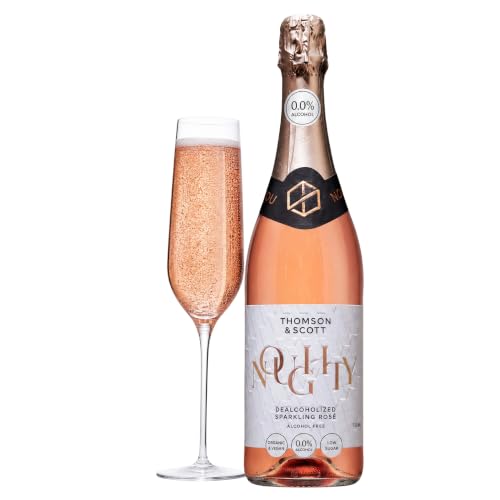
Best for consumers seeking an organic, low-sugar, alcohol-free Rosé with a lightly carbonated body. The wine undergoes vacuum distillation with aroma recovery, followed by maceration and light carbonation, resulting in a pale pink color and apple-like aroma. It pairs well with light desserts and seafood. Limitation: the flavor profile emphasizes a softer finish, which may not satisfy those wanting a stronger rosé bite.
Buying Guide
- Flavor profile: If you prefer a dry, crisp finish, look for terms like ‘dry’, ‘crisp’, ‘minerality’. If you want fruit-forward sweetness, choose options emphasizing berry or citrus notes.
- Alcohol removal method: Vacuum distillation or de-alcoholization can influence aroma retention and texture. Some brands claim dual fermentation or aroma recovery for richer mouthfeel.
- Calories and sugar: For low-calorie needs, check calories per serving and sugar grams per serving. Some options list explicit values; others emphasize being low sugar without exact numbers.
- Allergen and diet considerations: Gluten-free and vegan labeling can matter for dietary restrictions. If vegan status is critical, verify the ingredient list or brand certifications.
- Serving occasions: For casual evenings, a pack or variety can be ideal. For gifts, a premium, award-winning bottle may be preferred.
FAQ
- What is non-alcoholic sparkling rosé? It is rosé wine whose alcohol content has been removed, retaining wine-like flavor and bubbles.
- Are these products gluten-free? Most listed options advertise gluten-free ingredients; always check labels if sensitivity is a concern.
- Do these wines have calories and sugar? Yes, most provide calories and sugar per serving, with some highlighting low-sugar formulas.
- Can these replace regular wine in pairings? They can pair similarly with many foods, but the flavor intensity may differ from alcoholic rosé.
- Is there a difference between de-alcoholized wine and dealcoholized wine? They refer to the process of removing alcohol; taste and texture depend on grape variety and processing.
- Which option is best for a formal event? Look for award-winning labels and a refined label presentation, such as BO°LLE or Thomson & Scott.
Leave a Reply