Best Small Food Waste Bags for Any Kitchen or Office Space
Small food waste bags offer a convenient, sanitary way to dispose of scraps, compostable materials, and everyday litter without bulky trash liners. This guide highlights five compact options that balance strength, fit, and environmental considerations. Read on to find the best choice for your countertop bin, apartment kitchen, or small office break room. The selections below are organized to help you match bag size to bin capacity and waste type.
Summary of chosen products (quick reference):
- Teivio Mini Clear Trash Bags — 0.5 gallon, 11″ x 12″, ideal for tiny cans and quick visibility of contents.
- UNNI 2.6 Gallon Compostable Bags — 10 L, 100 count, sturdy and certified compostable for kitchen scraps.
- GreFusion 1.2 Gallon Compostable Bags — fits small countertop bins, certified compostable.
- Aoriyar Small Trash Bags — 1.2 gallon, 120 count, octagonal bottom, multi-purpose for all rooms.
- TERRACOR 3 Gallon Compostable Bags — 3 gal, 100 bags per roll, plant-based and ASTM/BPI certified.
Teivio Mini Clear Trash Bags 0.5 Gallon — Best For Tiny Cans

Best for: Tiny kitchen counters, office desks, and bathroom hampers. The 0.5-gallon bags measure 11.4″ W x 12.2″ L and feature star-seal bottoms for easy removal. Clear film helps identify contents quickly, reducing guesswork when sorting waste. The compact size minimizes slack in small receptacles and prevents bag collapse in light-use bins.
Why selected: Ideal for very small trash cans where standard kitchen bags are too large. Clear material helps with content visibility, which is useful for quick waste separation or when separating recyclables from organics in a compact space.
Cautions or limitations: Not designed for heavy loads; avoid overfilling to prevent tearing, especially in high-traffic spaces.
UNNI 2.6 Gallon Compostable Bags — For Everyday Kitchen Scraps
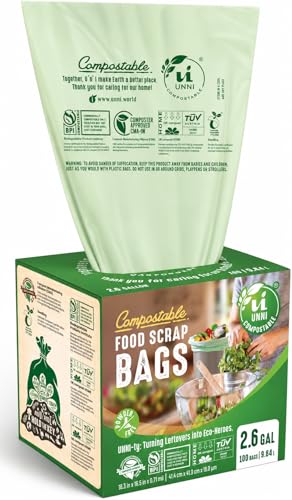
Best for: Small-to-mid kitchen compost bins that receive daily scraps. Size at 2.6 gallons (about 9.84 liters) fits compact kitchen bins; each bag is 0.71 mil thick for durability. The roll typically includes 100 bags, designed to keep bins clean and easy to manage.
Why selected: Certified compostable with multiple programs (including BPI) ensures industrial and home composting compatibility. Strong enough for daily waste while maintaining composting integrity.
Cautions or limitations: May be less leak-proof for heavy, wet loads compared to conventional plastics; store away from heat to maintain material integrity.
BOS Odor-Sealing Small Bags — Scent & Smell Free
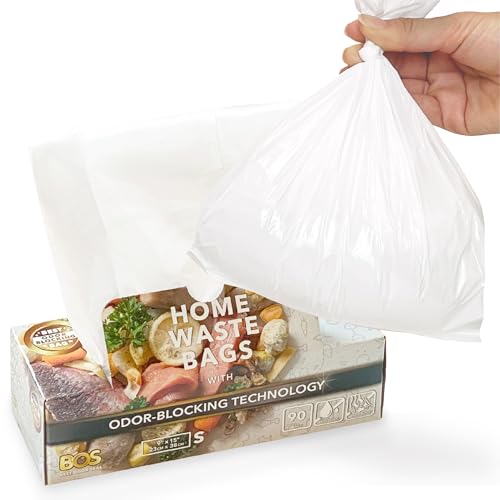
Best for: Food waste and kitchen scraps where odor control is important. These small bags are designed for durability with tear-resistant features and a boxed, easy-dispense format ideal for quick daily use in busy kitchens.
Why selected: The combination of a compact size and odor-sealing capability makes them a practical choice for everyday food leftovers and small-batch waste in households or break rooms.
Cautions or limitations: They come in a smaller count (90 bags) per package, which may require more frequent replacement in high-usage settings.
SUPERBIO 1.6 Gallon Compostable Bags

Best for: Countertop compost bins that handle regular kitchen scraps and coffee grounds. The 1.6 gallon size offers a balance between bag capacity and bin fit, with 0.63 mil thickness for sturdy containment.
Why selected: Certified compostable with recognized standards (BPI and OK Compost HOME). Suitable for consumers seeking an environmentally friendly option for composting at home or in mixed facility contexts.
Cautions or limitations: Do not store in extreme heat; shelf life is impacted by heat exposure, so cool, dry storage is advised.
TERRACOR 3 Gallon Compostable Bags

Best for: Small to medium countertop bins used for kitchen waste and garden scraps. The 3-gallon size is a common fit for compact office kitchens and apartment kitchens that generate a steady stream of scraps.
Why selected: Plant-based composition and certification (BPI, ASTM D6400) ensure compostability while offering stronger material for more robust daily use. A practical option for users transitioning to compostable liners.
Cautions or limitations: Larger bags may be less convenient for ultra-tiny cans; ensure bin dimensions align with bag size to prevent overflow or overflow risk.
Buying Guide
What size bag fits my bin?
Match bag capacity to your bin’s volume. Tiny cans use 0.5 gallon bags; small countertop bins fit 1.2–2.6 gallons; larger compact bins can use 3 gallon bags. Always measure width and height to avoid bag overflow or bag gaps.
Compostable vs. conventional plastic
Compostable bags are ideal for kitchen scraps and garden waste when you have access to composting facilities or home compost.” They typically meet standards like ASTM D6400 or EN 13432 and may carry certifications (BPI, OK compost HOME). Conventional bags offer stronger moisture resistance but are not compostable in most home settings.
Durability and odor control
Choose bags with adequate thickness for expected waste moisture. For odor control in kitchens, odor-sealing designs or packaging that minimizes odor exposure can be beneficial. If you frequently dispose of wet scraps, thicker bags reduce leaks.
Ease of use and dispensing
Interfolded or boxed packaging helps with easy one-at-a-time dispensing. Bags with easy-tear sides and bottom seals reduce tangling and tearing during removal from receptacles.
Environmental considerations
Consider the end-of-life plan for bags. Compostable liners reduce plastic waste when disposed of properly in industrial or home composting streams. For households without composting, a standard recyclable bag may be preferable if you separate waste streams.
Best practice checklist
- Measure bin dimensions before buying.
- Assess whether composting is available at home or nearby facilities.
- Check bag thickness and material for expected loads.
- Prefer sealed or odor-resistant options for kitchens.
Frequently Asked Questions
- What size bag should I use for a 2.6-gallon bin? A 2.6-gallon bag is typically a direct fit, providing enough room for scraps without excessive slack.
- Are compostable bags suitable for wet waste? Yes, but check thickness and certifications; they are designed to break down under composting conditions and may perform differently with very wet materials.
- Can I use these bags in a standard trash can for non-food waste? Yes, most bags are versatile for various light to moderate waste, but ensure the liner is strong enough for the specific contents to prevent tearing.
- Do compostable bags require special disposal? If labeled compostable, dispose of them in appropriate composting streams or facilities according to local guidelines.
- Which bag is best for odor control? Options marketed with odor sealing or stronger materials tend to perform better in kitchens with persistent smells.
- Are there any safety concerns with scented bags? Some people prefer unscented bags to avoid masking food odors or triggering sensitivities; choose unscented options if needed.
Leave a Reply