Best Renin for Cheese Making: Top Coagulants for Home and Craft Cheeses
Answering the question “rennet for cheese making” with clear options you can buy on Amazon. This guide highlights five dependable coagulants, suitable for home cheesemakers and hobbyists. Each product is evaluated for best use cases, including which cheese styles they suit, measurement ease, and any notable limitations. Whether you’re new to cheesemaking or expanding your toolkit, the selections below covervegetarian, animal-based, and microbial options to fit different recipes and milk types.
Buyer summary table (at-a-glance):
- North Mountain Supply Professional Quality Liquid Calf Rennet — Best for traditional, denomination-focused cheeses; liquid, easy to dose.
- Liquid Animal Rennet – Single Strength Calf Rennet — Beginner-friendly; easy measurement; suitable for small batches.
- Natural Probio Liquid Animal Rennet — High concentration; precise dosage with dropper; versatile for many cheeses.
- Bixa Liquid Microbial Rennet — Vegetarian option; vegan-friendly; stable in various temperatures.
- Microbial Rennet Powder (QG Group) — Powder form; long shelf life; good for multiple batch sizes.
North Mountain Supply Liquid Calf Rennet — Best For Traditional Cheeses

Brand: North Mountain Supply. Features include: Professional quality liquid calf rennet with a 1:10,000 strength, ideal for cheeses with denomination of origin and both short and long aging. Typical guidance suggests about 1/4 tsp per gallon of whole milk, following your recipe for best coagulation. Best for traditional, farmstead cheeses where precise texture and aging profile matter.
Who it’s best for: Experienced cheesemakers and dedicated home dairies focusing on classic cheeses like aged cheddars, tommes, and regional specialties. Why selected: the liquid format allows even distribution and straightforward scaling for larger batches.
Caution: The strength is designed for specific coagulation goals; mismatched milk or recipe timing can affect curd formation. Start with recommended dosages and adjust slowly.
Liquid Animal Rennet — Single Strength Calf Rennet (Home Use)
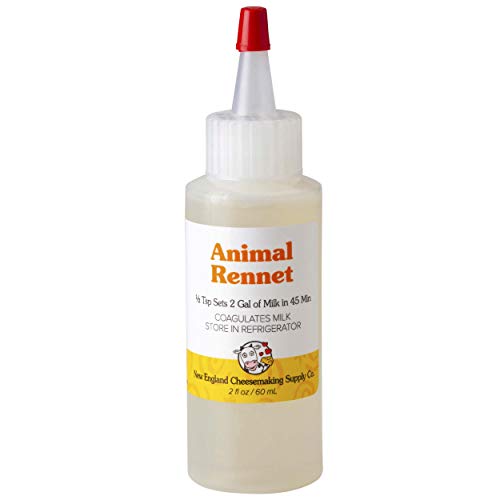
Brand: New England Cheesemaking Supply Company. Features: Single strength animal-derived rennet designed for home cheesemaking; half a teaspoon sets about 2 gallons of milk in ~45 minutes. Non-GMO and gluten-free ingredients with a liquid format for easy measurement and distribution.
Who it’s best for: Beginners or cooks making small to medium batches who want a reliable, easy-to-measure option. Why selected: simple dosing and quick coagulation help new cheesemakers achieve consistent results.
Limitation: As a liquid, it can be sensitive to storage conditions; ensure the bottle is sealed and stored per instructions to maintain potency.
Natural Probio Liquid Animal Rennet — Precise Dosage

Brand: Natural Probio. Features include: Veal rennet with 1:10,000 coagulation strength; easy dosage with a dropper, allowing up to 132 gallons of milk from 1.7 fl oz. Quick results in 1 to 2 hours when using whole farm milk; dosage guidance is provided (e.g., 0.07 fl oz per 2.6 gallons).
Who it’s best for: Advanced hobbyists and small producers seeking precise, scalable dosing and high yield. Why selected: dropper design simplifies consistent distribution and reduces measurement errors.
Limitation: Performance depends on milk quality and temperature; adjust timing and dosage as needed for different batches.
Bixa Liquid Microbial Rennet — Vegetarian Coagulant

Brand: Bixa. Features: Vegetarian, non-GMO, gluten-free, cruelty-free, vegan-friendly microbial rennet from Rhizomucor miehei. Does not contain common allergens; suitable for plant-based or non-animal cheese styles. Packaged as a liquid microbial coagulant, offering a reliable alternative to animal rennets.
Who it’s best for: Vegetarians and dairy hobbyists seeking non-animal coagulants. Why selected: broad compatibility with soft and semi-soft cheeses, plus vegan-friendly labeling.
Limitation: Texture and flavor profiles can differ from animal rennet in some cheese varieties; test with small batches to dial in your preferred coagulation time.
Rennet Microbial — 10ml Beginner Friendly

Brand: Generic. Features: 10ml bottle; natural, GMO-free microbial coagulant suitable for both occasional and regular use. Positive points include high yield, with an indication it can coagulate up to 8 gallons of milk per bottle.
Who it’s best for: New cheesemakers seeking a compact, easy-to-store option; and those who want a straightforward microbial alternative to animal rennet. Why selected: compact size helps manage starter kits and recipe experiments.
Limitation: Microbial coagulants may behave differently from traditional rennet in certain aged cheese recipes; plan to test with your chosen milk and aging plan.
Microbial Rennet Powder — 4 x 1 g Sachets

Brand: QG group. Features: Microbial rennet powder for cheese making; each 1 g sachet is sufficient for up to 100 liters of milk. Comes with a micro measuring scoop for convenient dosing of a 1-gallon batch. Suitable for both soft and hard cheeses; supports varieties like mozzarella, feta, and farmer’s cheese.
Who it’s best for: Producers who prefer a dry, shelf-stable option with precise dosing. Why selected: powder form with included scoop simplifies batch planning and storage.
Limitation: Powder dosing can be less forgiving than liquid forms; accurate rehydration and mixing are essential for reliable coagulation.
Buying Guide: Key Considerations For Choosing Rennet
- Cheese style and milk type: Animal rennet is traditional for hard-aged cheeses; microbial rennet is a versatile vegetarian option good for many soft and semi-soft cheeses. Consider milk source (cow, goat) and aging goals when choosing a coagulent.
- Coagulation strength and dosage: Liquid rennet often requires fewer drops; powder forms need careful rehydration and scoops. A higher concentration (1:10,000 or stronger) can coagulate more milk per drop or teaspoon, affecting texture and aging.
- Measurement ease: Droppers and micro-scoops help ensure consistent dosing. Beginners may prefer ready-to-use liquids; experienced makers may prefer powders for long shelf life and batch planning.
- Dietary and ethical considerations: Vegetarian and vegan coagulants are suitable for non-animal cheesemaking. Check allergen statements if dairy sensitivity or dietary restrictions apply.
- Storage and shelf life: Liquid rennet typically requires refrigeration and has a finite shelf life. Dry powder rennet often stores longer and travels well for kits and classes.
Frequently Asked Questions
- What is the best rennet for beginners? A beginner-friendly option like a single-strength liquid calf rennet or a microbial/vegetarian alternative can be easier to measure and less prone to dosing errors.
- Can I substitute rennet types in a cheese recipe? Yes, but texture and aging times may vary. Start with small tests when substituting animal with microbial or vegetarian coagulants.
- How much rennet do I use per gallon of milk? Dosage varies by product; always follow the manufacturer’s guidelines for your specific product and batch size.
- Is microbial rennet suitable for hard cheeses? Microbial coagulants work for many soft and semi-hard cheeses; some aged cheeses may require animal rennet for the preferred texture. Test in small batches.
- Do I need to refrigerate rennet after opening? Most liquid rennets require refrigeration; dry powders should be stored in a cool, dry place and resealed well.
- How long does coagulation take with these products? Coagulation times vary by product and milk quality; typical ranges are 20–60 minutes for many home recipes. Follow recipe timing and observe curd formation.
Leave a Reply