Best Raw Wheatgrass Juice Powder Options for Easy Green Boost
If you’re seeking a concentrated, nutrient-dense way to add green vitamins to smoothies, juices, or wellness routines, raw wheatgrass juice powders are a strong option. They’re designed for higher nutrient density than whole-grass powders, often using cold-pressed juice and CO2 drying to preserve enzymes and chlorophyll. This guide highlights five top options well-suited to different needs, from purity-focused organic powders to high-concentration blends. The buyer takeaway: choose based on concentration, soil origin, and processing method to fit your goals.
Summary table of chosen products
- Organic Wheatgrass Juice Powder – Organic, Utah volcanic soil – Raw BioActive, 20:1 concentrate – Triquetra Health
- Dr. Berg USDA Organic Green Powder – Raw wheatgrass blend, lemon flavor – Dr. Berg Nutritionals
- Terrasoul Superfoods Organic Wheat Grass Juice Powder – 5 oz, Utah grown – Concentrated juice
- Organic Wheatgrass Juice Powder (Lemon) – Volcanic Utah soil, 20:1 concentrate – Triquetra Health
- Garden of Life Raw Organic Perfect Food Wheat Grass Juice – USA grown, Stevia-free – Garden of Life
Organic Wheatgrass Juice Powder — Triquetra Health (Utah volcanic soil)
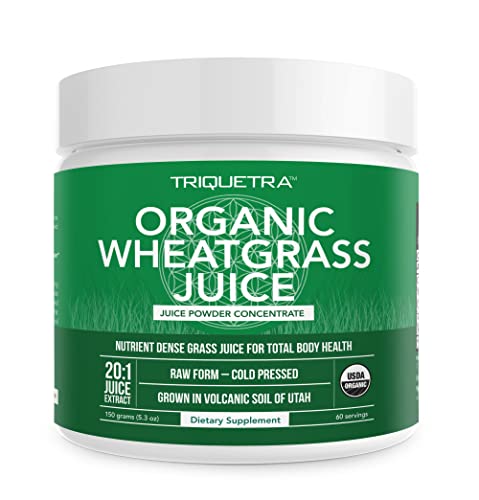
Best for purists who want a raw, bioactive juice powder with a 20:1 concentration. This product emphasizes organic farming in mineral-rich volcanic soil in Utah and maintains enzyme activity through a cold-pressed juice extraction followed by CO2 drying at ambient temperature. It’s suited for people who value nutrient density and plant enzymes in a single-ingredient format.
Best for: buyers seeking a pure, high-density wheatgrass juice powder with emphasis on soil quality and raw form. Limitation: the product is unflavored, so blending with other ingredients may require additional flavor management.
Dr. Berg USDA Organic Green Powder Superfood

Better for those who want an organic, non-GMO blend of raw wheatgrass plus chlorophyll and trace minerals, with a U.S.-based GMP-certified manufacturing environment. The product aims to provide a nutrient-dense greens powder profile and emphasizes high-quality ingredients. It is well-suited for daily greens supplementation and for users who value domestic production standards.
Best for: consumers who want a trace-mineral-rich greens powder with formal quality controls. Limitation: not purely single-ingredient wheatgrass juice; it’s a blended greens formula, which may dilute the wheatgrass-specific density for some users.
Terrasoul Superfoods Organic Wheat Grass Juice Powder — 5 Oz

Best for buyers who want a compact 5-ounce option sourced from Utah and made from concentrated juice. Terrasoul emphasizes raw, organic, non-GMO, and USA-grown packaging. This powder is well-suited for smoothies and wellness drinks, particularly for people seeking a straightforward, plant-based supplement without additives beyond the wheatgrass juice concentrate.
Best for: people wanting a smaller, ready-to-use organic option with clear sourcing. Limitation: 5 ounces may require more frequent purchases for heavy daily use.
Organic Wheatgrass Juice Powder — Lemon Flavor (Triquetra Health)

This lemon-flavored variant caters to taste-integrated use, offering the same 20:1 concentration in a raw, bioactive form with salts of the Utah volcanic soil origin emphasized by Triquetra Health. It’s a practical pick for individuals who want a flavorful way to include wheatgrass juice powder in beverages and recipes.
Best for: flavor-friendly daily use without sacrificing concentration. Limitation: flavor may not appeal to those who prefer unsweetened options, and flavoring can add optional ingredients not present in the original raw powder.
Garden of Life Raw Organic Perfect Food Wheat Grass Juice

Best for users who want a trusted, widely available greens powder with a focus on raw organic wheat grass juice and stevia-free formulation. Garden of Life emphasizes a high chlorophyll content and convenience in a 60-serving profile, suitable for long-term daily use without added sweeteners. It is a strong choice for those who prioritize clean ingredients and a recognized brand.
Best for: fans of stevia-free, organic greens with a straightforward daily regimen. Limitation: composed as a blend of greens; individuals seeking only pure juice concentrate may prefer single-ingredient options.
Buying Guide
What should you consider when buying raw wheatgrass juice powder?
- Concentration and form: A 20:1 concentrate offers more nutrients per serving than standard powders. Decide if you want juice concentrate or a blended greens formula.
- Organic and soil origin: Powder sourced from volcanic soil in Utah is marketed for mineral-rich content. Organic certification is important for those avoiding synthetic pesticides.
- Raw and bioactive claims: Raw processing aims to preserve enzymes and chlorophyll. If enzyme activity is important to you, prioritize raw formats.
- Flavor and additives: Flavored options (like lemon) aid taste but may introduce extra ingredients. Plain versions suit purists who mix into recipes.
- Packaging and serving size: Smaller formats require more frequent purchases; larger bottles may offer better long-term value for daily use.
- Manufacturing standards: GMP-compliant facilities and US-based production can influence consistency and quality control.
How to use raw wheatgrass juice powder
Start with small servings to gauge tolerance. Mix into water, smoothies, or juice. Because of its concentrated nature, you may use less powder than you would with non-concentrated greens.
FAQ
- What is the primary benefit of wheatgrass juice powder?
Answer: It provides a concentrated source of nutrients, chlorophyll, and enzymes from pressed wheatgrass juice, often at a higher density than whole-leaf powders. - Is organic certification important for these products?
Answer: Yes, organic certification supports avoidance of synthetic pesticides and often aligns with higher farming standards and soil practices. - Can these powders replace vegetables in a diet?
Answer: They can supplement a diet but should not replace a varied vegetable intake. Use as a greens boost rather than a sole source of nutrients. - What should I look for in a flavor option?
Answer: Flavor options (like lemon) can improve palatability but may introduce additional ingredients. Check the ingredient list if you have sensitivities. - Are there any common cautions?
Answer: Start with small amounts to assess tolerance; some powders may cause digestive adjustments as your body adapts to concentrated greens. - Which product is best for long-term daily use?
Answer: A larger-serving option from a trusted brand with organic farming practices tends to be more economical for ongoing use.
Leave a Reply