Best Protein Powder for Wound Healing and Recovery
Answering the question “which protein powder best supports wound healing?” this guide highlights five options that emphasize collagen, amino acids, and wound repair support. Ideal for adults recovering from surgery, injuries, or chronic wounds, these products target collagen production, tissue repair, and inflammation management. Each entry explains who it’s best for, plus practical considerations to help you choose.
Selected products at a glance
| Product | Best For | Key Benefit | Notes |
|---|---|---|---|
| Juven Therapeutic Nutrition Drink Powder (Fruit Punch) | Post-surgery and wound care users seeking collagen support | Collagen peptides, amino acids, and HMB for tissue repair and muscle preservation | Packet form for easy dosing |
| Wound Collagen Powder for Wound Healing Support & Post-Surgery Recovery (Chocolate) | People focusing on collagen-based healing | Collagen peptides with hyaluronic acid for scarring and moisture management | Better for daily use in soft foods and drinks |
| ABINTRA Specialized Nutrition for Wound Healing | Dietary support for complex wounds | Ariginine and glutamine to support blood flow and cell replication | Clinical ingredient framing |
| Unjury Unflavored Protein Powder | Knock-on protein support with low carbs | Whey isolate protein with clean formula | Kosher, lactose-free, and gluten-free |
| MEND Repair & Recover Citrus Protein Powder | General wound and tissue healing | Protein blend aimed at accelerated healing and bone support | Specialty focus on bone healing |
Juven Therapeutic Nutrition Drink Powder With Collagen Peptides

Juven’s fruit punch formula provides collagen peptides and essential amino acids, including arginine and glutamine, plus HMB to slow muscle breakdown. Best for adults needing supported wound healing with an appetite-friendly beverage. It’s suited for post-surgery recovery or chronic wound care where collagen production and muscle preservation are priorities. A limitation is the reliance on a powder package; individuals who prefer solid foods may need to adjust portioning or timing to meet daily goals.
Juven Therapeutic Nutrition Drink Powder (Unflavored)
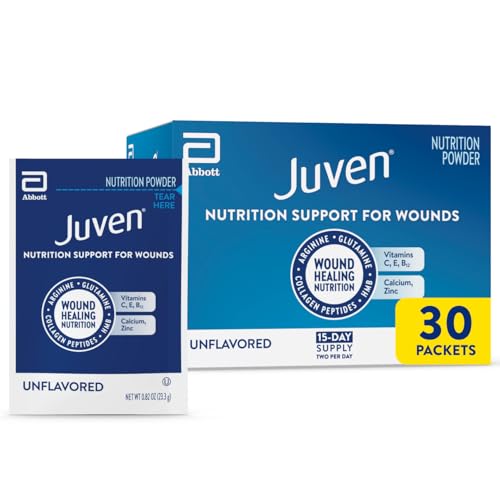
This unflavored Juven option shares the same nutrient profile—collagen peptides, arginine, glutamine, and HMB—without flavor masking. It’s a flexible choice for mixed beverages or foods, allowing precise blending with soups or yogurt. Choose this if you want a neutral taste while targeting wound healing and muscle preservation; the caveat is flavor preference for some users who may favor a fruit-flavored option.
ABINTRA Specialized Nutrition For Wound Healing

ABINTRA emphasizes arginine and glutamine as cornerstones for tissue synthesis and repair, plus antioxidants. It’s positioned for wounds that require enhanced blood flow and rapid cell turnover. Best for patients who need a targeted amino acid approach. A potential limitation is that emphasis is on specific nutrients rather than a broad protein source; consider pairing with a complete protein if daily protein goals aren’t met.
Unjury Unflavored Protein Powder

Unjury uses 100% whey protein isolate to deliver 21 grams per serving with low carbs and sugar-free composition. It’s ideal for individuals who require a clean protein source with minimal additives during wound healing or dietary restrictions. Best for those who want a versatile, neutral-tasting protein that blends into beverages and meals; limitation is that it lacks explicit collagen or wound-healing claims beyond high-quality protein.
MEND Repair & Recover Citrus Protein Powder

MEND focuses on accelerated healing and bone support with a citrus-flavored protein blend. It’s positioned for recovery from wounds and fractures, offering a systemic protein source to support tissue repair. Choose this if bone healing is a priority; if you primarily want collagen support, you might prefer products centered on collagen peptides or amino acids. A potential limitation is its broader wound healing emphasis rather than a strict amino-acid profile.
Buying Guide
What should you look for when choosing a wound-healing protein powder?
- Target ingredients: Look for collagen peptides, arginine, glutamine, and HMB if collagen formation and tissue repair are priorities. Some blends emphasize wound healing through amino acids; others center on collagen support.
- Form and flavor: Consider powders you can mix into drinks, soups, or soft foods. Unflavored options offer versatility, while flavored versions may improve adherence for daily use.
- Dietary needs: Check for lactose-free, gluten-free, kosher, or other dietary considerations. This matters if you have dietary restrictions that could impact wound healing through nutrition.
- Medical supervision: Some products recommend use under medical supervision, especially when recovering from surgery or chronic wounds. Align usage with healthcare guidance.
- Overall protein goals: Balance wound-healing ingredients with total daily protein intake. A standalone amino-acid-focused product may need a complementary protein source to hit daily targets.
Practical recommendations
- Best overall for collagen-driven healing: Juven (Fruit Punch) or Wound Collagen Powder with hyaluronic acid.
- Better for neutral mixing and daily use: Unjury Unflavored Protein Powder.
- Choose ABINTRA for targeted wound healing ingredients like arginine and glutamine.
- Choose MEND if bone healing and tissue recovery are primary goals.
Frequently asked questions
- What is the role of collagen peptides in wound healing?
They support collagen production, which helps form new skin and tissue during recovery. - Are amino acids necessary for wound healing?
Arginine and glutamine support blood flow and rapid cell replication essential for tissue repair. - Can I use protein powder during post-surgery recovery?
Yes, but follow medical guidance and ensure the product fits your dietary needs and daily protein goals. - Is flavored powder better than unflavored for wound healing?
Flavor preference affects adherence; unflavored powders are versatile but may require blending with foods to improve taste. - Should I combine multiple products?
Combining products can help cover different nutrient targets, but ensure total daily protein and amino-acid intake remain balanced. - Do these products replace medical nutrition therapy?
No. They are dietary supplements that can support healing when used under medical supervision.
Leave a Reply