Best Play Foods for Toddlers: Top Pretend Play Sets for Little Chefs
Answering the search for engaging, safe, and durable play foods for toddlers, these picks cater to budding chefs and curious minds. Each option supports creative play, fine motor skills, and early learning—great for home classrooms or daycare. Best for kids who love sensory exploration, pretend meals, and role-play kitchen setups. The top five choices introduce diverse foods, textures, and cutting actions to suit different developmental stages and play styles. Below, you’ll find a quick product snapshot, then deeper guidance to help you choose the right set for your child.
| Product | Best For | Why It Stands Out |
|---|---|---|
| LAUGIGLE Pretend Play Food | Creative little chefs | Varied foods, cutting-ready pieces, storage bag |
| JOYIN Learning Toys Play Food Set | Color sorting + collaborative play | Five color baskets, multiple food types |
| Melissa & Doug Food Groups | Nutrition basics & organization | Wooden, grouped in crates, educational ideas |
| Shimfun 143 Piece Set | Extreme variety & durability | Large color box, storage bag, BPA-free |
| Shemira 100 Pcs Play Food Set | Value-packed starter set | 82 small pieces, two baskets, knives and boards |
LAUGIGLE Pretend Play Food For Kids Kitchen
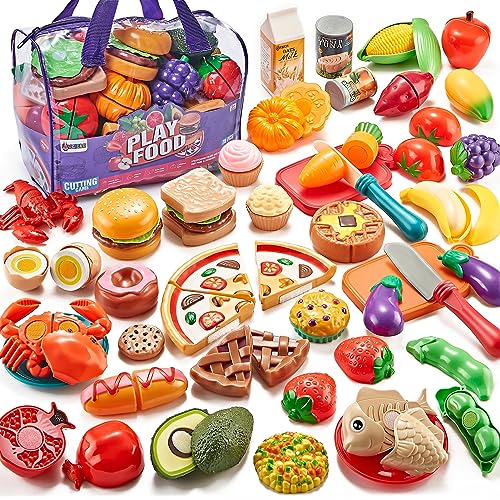
This set is best for imaginative play and early sensory exploration. It includes a large array of foods—pizza, fast food, burgers, desserts, fruits, vegetables, and more—plus sturdy utensils and a storage bag. The hook-and-loop food pieces support safe cutting and peeling actions, helping refine fine motor skills. Choose this for kids who enjoy a varied pantry to create pretend meals and role-play grocery shopping. A caution: some pieces are small and should be used under supervision for toddlers prone to mouthing.
JOYIN Learning Toys Play Food Set For Toddlers

Best for color sorting and group play, this set emphasizes educational value with five color-coded baskets and named food items. It supports color recognition, sorting, and categorization of meats, fruits, and vegetables. It’s well-suited for toddlers who learn best through structured play and cooperative activities. Limitation: some children may outgrow the color-sorting phase quickly; this set scales with more advanced pretend play as kids grow.
Melissa & Doug Food Groups Wooden Set
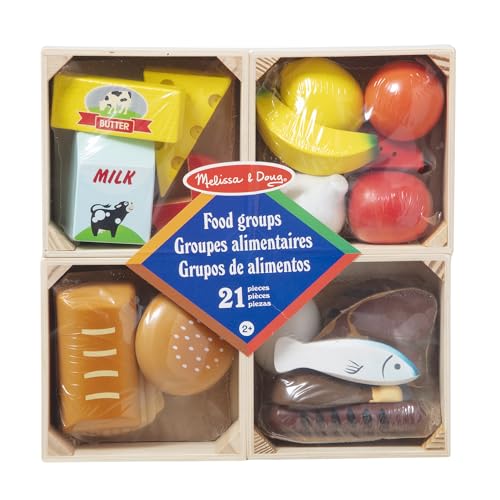
Best for nutrition education and organization, this wooden set represents the five food groups and comes with four crates to sort items by group or color. It blends classic durability with learning opportunities about balanced meals, early numeracy, and categorization. Choose this if you value a tactile, durable build and clear sorting mechanics. Caution: wooden pieces require careful handling to maintain finish over time.
Shimfun 143 Piece Play Food Set
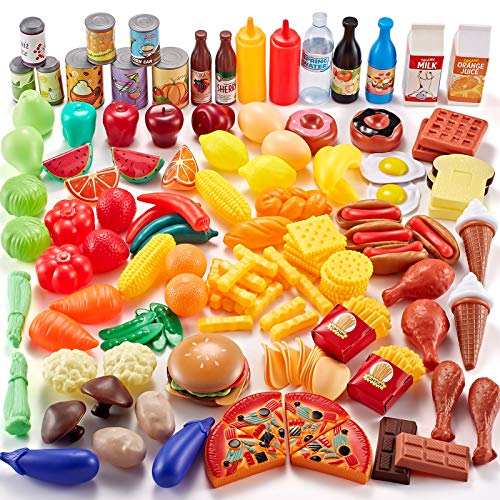
Best for volume and variety, this deluxe set includes 143 pieces with a bonus water bottle and color box packaging, plus a storage bag. It’s ideal for families or classrooms that want multiple play scenarios—from cooking to grocery shopping. It’s noteworthy that the set emphasizes safety and durability with BPA-free materials and rounded edges. Use this when you need a comprehensive play food collection in one purchase, but expect larger storage needs.
Shemira 100 Pcs Play Food Set
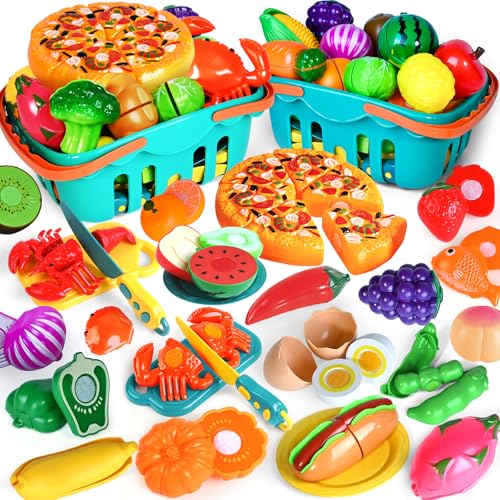
Best value starter kit, this set packs 100 pieces across fruits, vegetables, meat, and more, plus two baskets and essential utensils. It’s well-suited for younger toddlers who are building basic pretend cooking skills and exploring different foods. A helpful note: while versatile, the smaller parts mean close supervision during playtime to prevent choking hazards.
Buying Guide
What to consider when choosing play foods for toddlers:
- Safety and materials: Look for BPA-free plastics or wooden pieces with smooth edges. Avoid sets with sharp or detachable small parts for younger toddlers.
- Durability: For busy playtimes, choose sturdy construction and pieces that hold up to cutting, peeling, and stacking.
- Educational value: Some sets emphasize color sorting, nutrition basics, and early math skills. Pick based on your child’s learning goals.
- Storage and organization: Baskets, crates, and storage bags help keep play spaces tidy and teach cleanup habits.
- Age appropriateness: Match piece size and complexity to your child’s age. Larger, fewer pieces suit younger toddlers; more pieces suit older preschoolers.
- Play versatility: Sets with diverse foods encourage imaginative scenarios beyond cooking, like grocery shopping or restaurant play.
Practical tips for use
- Pair with a pretend kitchen or play-restaurant setup to maximize role-play opportunities.
- Use color sorting or nutrition-themed prompts to extend learning into daily routines and mealtime planning.
- Rotate subsets of the collection to maintain interest and reduce clutter.
FAQ
- Q: Are these sets safe for toddlers who like to put items in their mouth? A: Look for BPA-free plastics and wooden sets with smooth edges; supervise younger children during play.
- Q: How many pieces should I expect in a typical set? A: It varies; starter sets may have 40–100 pieces, while deluxe sets can exceed 140 pieces.
- Q: Can these sets support early learning goals? A: Yes, many sets promote cooking routines, color recognition, sorting, and basic nutrition concepts.
- Q: Are there storage solutions included? A: Many sets include baskets, boxes, or bags to help keep pieces organized.
- Q: Which set is best for group play? A: Larger, more varied sets with multiple baskets or storage options facilitate collaborative play.
- Q: Do these sets include utensils? A: Most include basic kitchen utensils and cutting tools designed for safe pretend play.
Leave a Reply