Best Peanuts for Bird Food: Top Wild Bird Staples for Backyard Feeding
Looking for dependable peanuts to attract backyard birds all year long? This guide highlights five top peanut-based products ideal for cardinals, jays, woodpeckers, and more. These selections are best for backyard bird lovers who want high-energy, protein-rich snacks that are easy to scatter or mix with seed blends. Each entry notes who it’s best for, plus practical cautions to help you choose confidently.
Summary table of selected products:
| Product | Best For | Notes |
|---|---|---|
| Kaytee Shelled Peanuts (11 lb) | Outdoor birds with year-round feeding | High-energy, nutritious peanut pieces |
| Trailmark Naturals Shelled Peanuts (11 lb) | Birds and squirrels in mixed feeding | Unsalted, USA-grown |
| Happy Wings Shelled Peanuts (5 lb) | Backyard bird variety without waste | No grow seed, no shells |
| Trailmark Naturals Shelled Peanuts (3 lb) | Compact outdoor setups | Unsalted, USA-grown |
| Wagner’s Shelled Peanut Pieces (10 lb) | All-season feather care and energy | No-mess, shell-free |
Kaytee Shelled Peanuts for Cardinals and More — 11 Pounds

What it is: A large bag of shelled peanuts designed to attract a range of outdoor wild birds. Best for feeders that host cardinals, jays, woodpeckers, nuthatches, and other backyard visitors. The mix emphasizes high fat and protein to sustain energy.
Who it’s best for: Yard owners who want a year-round attractant and enjoy frequent visits from diverse species. This is especially suitable for families with multiple bird species visiting feeders.
Why chosen: The product emphasizes a bird-enthusiast design approach and provides nutritious, high-energy pieces that birds actively seek for fat and protein. It’s a straightforward option for simple feeder setups.
Caution: Shelled peanuts can be a choking risk for very small birds or wildlife if offered in large, chunky chunks. Use in a feeder or mix that breaks the pieces down or feed in small amounts at a time.
Trailmark Naturals Raw Shelled Peanuts — 11 lb

What it is: Raw, unsalted shelled peanuts grown in the USA, intended for outdoor animal feeding. The product targets both wild birds and squirrels with natural, protein-rich nutrition.
Who it’s best for: Backyard feeders that host blue jays, woodpeckers, and other wildlife while also supporting occasional squirrel visits. Suitable for mixed-wildlife feeding stations.
Why chosen: The USA-grown, unsalted formulation prioritizes clean nutrition while remaining versatile for various species. This is a practical option for homeowners who want to offer a raw peanut option without added flavors.
Caution: Unshelled or uncracked peanuts may require some extra effort to access, and squirrels may be particularly drawn to this type of feed, potentially outcompeting birds at feeders.
Happy Wings Shelled Peanuts Seeds Wild Bird Food — 5 Pounds
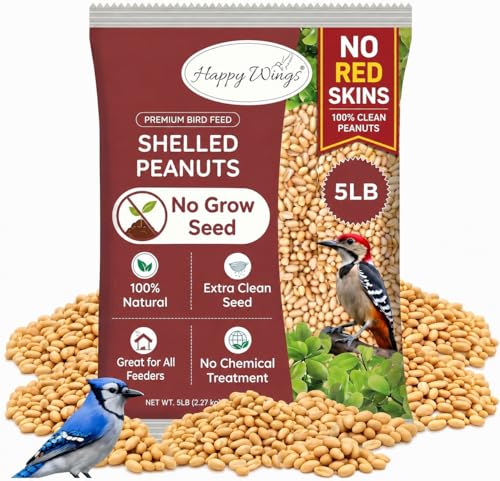
What it is: Shelled peanuts marketed as a no-grow-seed solution, providing fat and protein without shell debris. It targets wild birds with a simple, clean feed presentation.
Who it’s best for: Homeowners seeking a tidy feeding area with minimal waste and a reliable protein source for a diverse bird mix. This option is also suitable for those avoiding shell litter in the yard.
Why chosen: The no-grow-seed guarantee helps keep yards cleaner, reducing maintenance. The product highlights 100% edible peanuts, minimizing waste and mess.
Caution: Some birds may prefer mixed seeds or suet over plain peanuts depending on the season and local species diversity.
Kaytee Whole Peanuts in Shell — Cardinals and Friends, 10 Pounds (Two 5 lb Bags)

What it is: Whole-shell peanuts meant to attract a variety of birds and small mammals, supplied in two 5-pound bags for convenience.
Who it’s best for: Bird lovers who enjoy drawing in cardinals, woodpeckers, jays, chipmunks, and squirrels, with a simple, repeatable feeder setup across seasons.
Why chosen: Whole peanuts in shell offer a natural feeding experience that encourages foraging behavior and energy-rich nutrition for a range of visitors.
Caution: Peanuts in shell can leave more scraps and shells around feeders, so consider a tray feeder or ground cleanup plan to minimize waste.
Trailmark Naturals 2 Pack — 5 lb Each (Total 10 lb)

What it is: A two-pack of raw, unshelled peanuts in shell, designed for outdoor wildlife feeding. The set emphasizes fresh, USA-grown kernels for daily use.
Who it’s best for: Bird and wildlife enthusiasts who want a cost-effective, long-lasting supply that can support ongoing backyard visits from both birds and mammals.
Why chosen: The multi-pack format suits steady feeding routines and larger yards, providing consistent nutrition across seasons.
Caution: Shells can accumulate; pairing with a dedicated feeder tray helps manage waste and keep bird feeding areas tidy.
Kaytee Seed & Suet No Mess Peanut Mix — 10 Pounds

What it is: A combination of seeds, suet nuggets, and peanut components designed to be no-mess and highly attractive to wild birds.
Who it’s best for: Feeders seeking a balanced option that combines fats, proteins, and seeds, while minimizing waste and debris on lawns and patios.
Why chosen: This no-mess formula targets higher visitation by multiple species and reduces ground cleanup after feeding sessions.
Caution: The mix may be heavier and denser than plain peanuts, so adjust feeder capacity and seed-to-suet ratios to your setup.
Buying Guide: How To Choose The Right Peanut-Based Bird Food
- Bird species in your yard: If you see cardinals, blue jays, or woodpeckers often, shelled or whole peanuts are a strong draw. For mixed visitors, unsalted raw peanuts can be a versatile option.
- Feeder type and cleanup: No-mess or shell-free options reduce yard waste. Consider tray feeders for shell management or use no-grow-seed formulas to limit ground debris.
- Raw vs. roasted/salted: Unsalted, raw peanuts are common for wildlife and are generally preferred for backyard feeding. Avoid flavored or salted varieties unless explicitly marketed for wildlife.
- Size and storage: Larger bags are cost-effective for busy feeders but require steady use. Two-pack or smaller bags suit smaller yards or seasonal feeding.
- Wildlife balance: If you want to attract squirrels alongside birds, consider products that are unshelled or whole for foraging behavior, while using feeder placement to manage visits.
Frequently Asked Questions
- Are peanuts good for wild birds? Yes. Peanuts provide high fat and protein, supporting energy, feather health, and overall vitality for many wild birds when offered in appropriate, shell-managed forms.
- Should I feed squirrels with peanuts? Peanuts can attract squirrels; separate feeding areas or timed feedings can help balance bird and mammal visits.
- Which form is best for cleanliness? No-mess or shell-free peanut products reduce yard debris and simplify cleanup after feeding.
- Can peanuts spoil? Store peanuts in a cool, dry place to prevent mold. Use within recommended storage windows and avoid moisture exposure.
- How much should I feed? Start with moderate amounts to observe which species visit, then adjust to avoid seed waste and overfeeding.
- Are there safety concerns? Peanuts can slightly elevate fat intake; ensure feeders are cleaned regularly to prevent mold or contamination. If birds show signs of distress, reduce or pause peanut offerings.
Leave a Reply