Best Organic Decaf Low Acid Coffee for Sensitive Stomachs and Flavorful Mornings
For coffee lovers seeking smooth, low-acid options without caffeine jitters, organic decaf low-acid coffees offer a practical solution. This guide highlights five top choices, each best for different needs—diet-friendly brews, flavor-focused drinkers, and those who want easy, everyday use. Each product section explains who it’s best for, why it was chosen, and a practical limitation to consider. A quick buyer’s table follows the introduction to help you compare at a glance.
Product Snapshot: Quick Comparison
- Lucy Jo’s Coffee Organic Decaf Mellow Belly Low Acid Ground – Best for smooth, creamy texture.
- Alex’s Low Acid Organic Coffee (12 oz) – Best for mild, balanced Chiapas flavor.
- Lifeboost Medium Roast Swiss Water Decaf Ground – Best for purity and high-altitude origin.
- Mommee Coffee Decaf Ground Low Acid – Best for sensitive stomachs and caramel notes.
- Java Planet Low Acid Organic Coffee – Whole Bean Peru Decaf – Best for small-batch, organic Peru origin.
Lucy Jo’s Organic Decaf Mellow Belly Ground Coffee
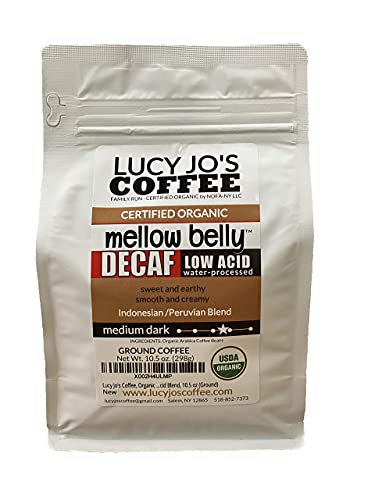
Best for: drinkers who want a smooth, creamy cup with earthy sweetness. This certified organic decaffeinated ground coffee uses a water-process method, avoiding chemical aftertastes. The flavor is described as sweet, earthy, and well-balanced, with a mellow belly profile that’s easy on the stomach. The product is ideal for daily drip or pour-over routines where a gentle cup is preferred.
Why it’s selected: The combination of organic certification, water-process decaf, and a smooth medium-dark profile makes it a practical all-purpose option for both morning and afternoon coffee rituals.
Caution: Like all decaf products, aroma and brightness may be slightly reduced compared with fully caffeinated varieties, so expect a milder cup.
Alex’s Low Acid Organic Coffee 12oz Ground Decaf

Best for: fans of mild, delicate beans with notes of brown sugar and pear, grown in Chiapas. This Swiss water-decaffeinated recipe focuses on low chlorogenic acid while maintaining full flavor. The beans are sourced from southern Mexico and processed to minimize mold and mycotoxins, delivering a smooth cup suitable for hot mornings or iced coffee alike.
Why it’s selected: Chiapas beans bring a nuanced, slightly sweet profile that pairs well with decaf, making it a strong pick for those who want flavor clarity without acidity spikes.
Caution: Some readers may notice subtle earthy sweetness; if you prefer brighter cups, this may feel mellower than other options.
Lifeboost Medium Roast Swiss Water Decaf Ground

Best for: eco-conscious drinkers who want a single-origin experience with strict purity controls. Lifeboost’s decaf is Swiss Water Processed and labeled as low acid, with an emphasis on shade-grown, high-elevation farms. The flavor is full-bodied for a decaf and backed by third-party testing for mycotoxins and pesticides.
Why it’s selected: The brand emphasizes organic, non-GMO, and bird-friendly farming practices, along with a high-altitude profile that often yields more complex flavors in decaf form.
Caution: Availability can be variable due to limited-supply sourcing; check stock if you need a steady monthly supply.
Java Planet Organic Decaf Coffee – Whole Bean Peru

Best for: buyers who prefer whole-bean flexibility and are focused on Peruvian origin with smooth, full flavor. This medium-dark roast uses water process decaffeination, avoiding pesticides and heavy metals through independent testing. The product is roasted in small batches to preserve flavor, making it suitable for grinders and various brew methods.
Why it’s selected: A Peruvian single-origin decaf can deliver clean acidity and a chocolaty finish, appealing to those who want a reliable, weeknight-friendly cup without harshness.
Caution: Whole-bean fresh grinding is required for best flavor; otherwise, pre-ground options may be less fresh.
Buying Guide: Key Considerations For Organic Decaf Low Acid Coffee
What does “low acid” mean for coffee?
Low-acid coffees are often produced to minimize stomach discomfort and bitterness. They typically feature smoother tasting notes and are processed in ways that reduce acidic compounds. When shopping, look for products that emphasize Swiss Water Process or other chemical-free decaffeination methods.
Why choose organic decaf?
Organic certification ensures the beans are grown without synthetic pesticides, offering a cleaner cup and environmental benefits. Certification can also indicate stricter farming standards and higher traceability from farm to cup.
Ground vs. whole bean: which is better?
Ground coffee is convenient for automatic brewers and drip methods, while whole-bean offers longer freshness for grinders. If you drink coffee daily and want peak aroma, consider whole-bean and grind just before brewing.
Origin matters: what to expect
Origin informs flavor expectations. Peruvian coffees often deliver smooth chocolate and nutty notes; Chiapas and Guatemalan coffees can offer bright, earthy, or fruity hints. For decaf, a high-altitude origin typically yields more structure and balance.
Flavor profiles to expect in decaf
Common decaf flavor ranges include smooth caramel, nutty overtone, and subtle brown-sugar sweetness. Avoiding overly burnt or bitter notes is a goal in many low-acid rations.
How to choose the best option for your needs
- If you want a creamy, mellow cup for daily drips, consider Lucy Jo’s Organic Decaf Mellow Belly.
- For a mild Chiapas-flavored decaf, pick Alex’s Low Acid Organic Coffee 12oz.
- For purity and a robust yet low-acid profile, Lifeboost Medium Roast is a strong pick.
- For stomach-friendly coffee with sweet caramel notes, Mommee Coffee Decaf is well-suited.
- If you prefer whole-bean flexibility with Peru origin, Java Planet’s decaf is a good match.
Frequently Asked Questions
- What makes decaf coffee low acid?
- Is organic decaf coffee safe for sensitive stomachs?
- Do these decaf coffees maintain strong flavor?
- Should I grind beans myself?
- Which decaf method is best?
- Are these products tested for contaminants?
Low-acid decaf coffees are processed to reduce acidic compounds and often use methods like Swiss Water Processing to preserve flavor while removing caffeine.
Organic decaf coffee can be gentler on the stomach due to cleaner farming practices and decaffeination methods that minimize irritants.
Flavor strength varies by origin and roast. Many decafs retain rich profiles such as caramel, chocolate, and earthy notes, especially when sourced from high-altitude farms and roasted in small batches.
Grinding fresh just before brewing tends to maximize flavor, particularly for whole-bean options like Java Planet.
Swiss Water Process is widely regarded as a clean, chemical-free decaffeination method that helps preserve flavor with lower acidity.
Some brands report third-party testing for mycotoxins and pesticides. Check product descriptions for any testing claims.
Leave a Reply