Best Loose Leaf Decaffeinated Tea for Relaxed Evenings
Find the best loose leaf decaffeinated tea for a calm, flavorful cup without the late-night jitters. This guide highlights top options for different buyers: classic black tea lovers, organic advocates, and herbal tea fans seeking caffeine-free blends. Each product below is chosen for quality, aroma, and ease of brewing, with notes on who benefits most and any limitations to consider. A quick comparison table helps you decide at a glance.
| Product | Type | Best For | Notes |
|---|---|---|---|
| Harney & Sons Decaffeinated Earl Grey Tea, Loose Leaf | Loose Leaf Black Tea | Earl Grey fans who want a caffeine-free option | Includes bergamot aroma; best with filtered water |
| Davidson’s Organics Decaffeinated English Breakfast | Loose Leaf Black Tea | Traditional English breakfast lovers seeking organic | Full-bodied, malty finish; USDA Organic |
| Tiesta Tea Blueberry Wild Child | Herbal (Caffeine-free) | Fruit-forward, non-caffeinated blends | Blueberry hibiscus flavor; great hot or iced |
| TeeLux Decaf Green Tea | Loose Leaf Green Tea | Green tea lovers seeking caffeine-free option | CO2 decaffeination preserves flavor |
| Harney & Sons Decaffeinated Earl Grey (16 oz) | Loose Leaf Black Tea | Value-seekers wanting a larger tin | Classic Earl Grey with bergamot, decaf |
Harney & Sons Decaffeinated Earl Grey Tea, Loose Leaf 3 Ounce Tin

Type: Loose leaf black tea. Flavor focus: Bergamot notes from Earl Grey with caffeine removed. Brewing guidance: Use one teaspoon per cup, water around 212°F, steep 4–5 minutes, then strain. Water quality matters; filtered water enhances clarity of flavors. Best for traditional tea drinkers who want a smooth, citrusy black tea without caffeine. Caution: Decaf flavor can be more delicate than caffeinated varieties, so avoid over-steeping.
Davidson’s Organics Decaffeinated English Breakfast, Loose Leaf Tea

Type: Loose leaf black tea. Flavor focus: Full-bodied, malty English Breakfast profile without caffeine. Best for: Everyday morning tea lovers who prioritize organic, ethically sourced tea. Selection note: Davidson’s emphasizes a vertically integrated process from leaf to cup and USDA Organic certification. Caution: Decaf may be less robust than caffeinated blends if oversteeped.
Tiesta Tea Blueberry Wild Child, Loose Leaf

Type: Herbal, caffeine-free blend. Flavor focus: Blueberry with hibiscus and elderberries for a fruity, refreshing cup. Best for: Herbal tea enthusiasts who want a flavorful, naturally caffeine-free option suitable for hot or iced tea. Advantage: Reusable tin stores up to 50 servings. Caution: Contains hibiscus; may alter flavor if brewed too long.
TeeLux Decaf Green Tea, CO2 Decaffeinated Loose Leaf

Type: Green tea, decaffeinated using CO2 process. Flavor focus: Delicate, smooth green tea with a slightly vegetal—yet refreshing—finish. Best for: Green tea lovers who want caffeine-free options with preserved flavor and antioxidants. Caution: Some users may notice a milder cup than caffeinated greens; adjust leaf amount to taste. Packaging note: Resealable kraft pouch helps maintain freshness.
Harney & Sons Fine Teas Decaf Ceylon Black Tea Tin
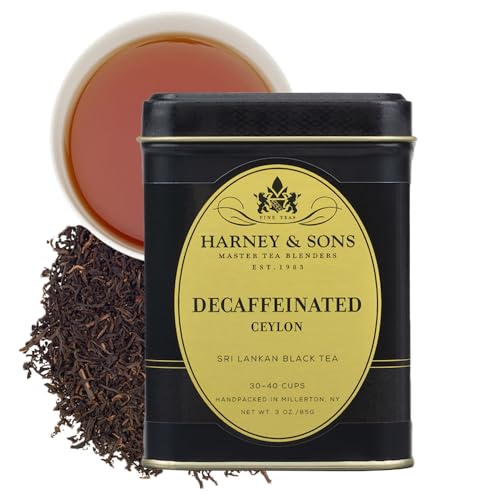
Type: Loose leaf black tea. Flavor focus: Decaf Ceylon maintains depth of flavor similar to caffeinated counterparts. Best for: Those who want a classic black tea profile in a decaf form. Caution: Some delicate flavors may require precise steeping to avoid bitterness; water temperature and steep time matter.
Harney & Sons Decaffeinated Ceylon, 16 oz Loose Leaf

Type: Loose leaf black tea. Flavor focus: Deep Ceylon profile with caffeine removed. Best for: Bulk buyers who want a consistent decaf black tea for daily use. Caution: Larger bulk size requires proper storage to maintain freshness; keep away from light and moisture.
Harney & Sons Decaffeinated Earl Grey, Loose Leaf Tea (16 oz)

Type: Loose leaf black tea with bergamot. Flavor focus: Classic Earl Grey aroma and taste without caffeine. Best for: Traditional tea drinkers who enjoy a bergamot-forward cup while avoiding caffeine. Caution: Decaf Earl Grey can be lighter; brewing adjustments may be needed to achieve a stronger cup.
Buying Guide
What should you consider when shopping for loose leaf decaffeinated tea?
- Decaffeination method: CO2 methods tend to preserve flavor better than some chemical processes. If flavor retention matters, look for CO2-decaffeinated options.
- Tea type: Black teas like Earl Grey and Ceylon offer traditional profiles with bergamot or rich malty notes. Green tea decaf provides lighter, grassy flavors. Herbal blends are naturally caffeine-free and can be fruit-forward.
- Organic and sustainability: Organic certifications and ethically sourced teas appeal to many buyers. Consider suppliers with clear farming practices.
- Freshness and packaging: Look for airtight tins or resealable pouches. Larger bulk bags require proper storage away from light and moisture.
- Brewing guidelines: Temperature and steep time influence flavor for decaf teas. Start with the recommended 4–5 minutes for black decafs and shorter times for green or delicate blends.
Frequently Asked Questions
- Is decaffeinated tea completely caffeine-free? Most decaf teas have trace caffeine, but levels are significantly lower than their caffeinated counterparts.
- Which decaf tea is best for beginners? A balanced decaf Earl Grey or English Breakfast provides a familiar flavor to start with.
- Can I reuse loose leaf decaf tea leaves? Yes, many loose leaf teas can be steeped a second time, though flavor may be milder.
- Does the decaffeination process affect flavor? It can, depending on method; CO2 decaffeination tends to preserve more flavor than some chemical methods.
- What water temperature is ideal? Most black decafs brew best near 212°F, greens around 175–185°F, and herbals can go hotter.
- Are organic decaf teas worth it? Organic certifications indicate farming without synthetic pesticides, which many buyers prefer for sustainability and purity.
Leave a Reply