Best Light Liquid Malt Extract for Homebrewers and Craft Crafters
Light liquid malt extract (LME) is a popular base for lighter beer styles and versatile brewing experiments. This guide highlights five accessible options that cater to different brewing goals, from clean, crisp ales to session-friendly brews. The top picks are best for new brewers wanting consistent gravity and for seasoned brewers seeking reliable base malts. Below, you’ll find quick comparisons, a buying guide, and a concise FAQ to help you decide which product fits your batch size, recipe goals, and budget.
| Product | Brand | Best For | Notes |
|---|---|---|---|
| CBW Golden Light LME | Briess | Light-bodied pale ales | Condensed wort with Carapils, gravity around 1.035 |
| Light LME | Brewer’s Best | Simple, clean base for beginners | Quality 2-row barley extract |
| Pilsen Light LME | Briess CBW | Light color, good fermentability | Meets general pale ale needs |
| Extra Light LME | Brewer’s Best | Very light color for pale lagers | Carefully crafted from high-quality barley |
| Light DME | Home Brew Ohio | Alternative for drier, lower fermentables | Derives from organically grown barley |
Note: The fifth option is a dried malt extract (DME) as a practical alternative for brewers seeking different extract characteristics. All products listed are suitable for creating lighter color beers or as a neutral base for custom recipes. This guide provides factors to consider, including base malt content, gravity contributions, and potential limitations.]
Briess CBW Golden Light Single Canister LME

The Briess CBW Golden Light is a concentrated brewers wort that serves as a base malt with Carapils and a typical gravity around 1.035. This product is best for brewers who want a clean, pale profile with subtle body and easier fermentation. It’s well-suited for pale ales and light-colored lagers where a steady fermentable base is desired. A potential limitation is its slightly higher extract density, which may require careful recipe adjustments for very light beers.
Brewer’s Best Liquid Malt Extract – Light
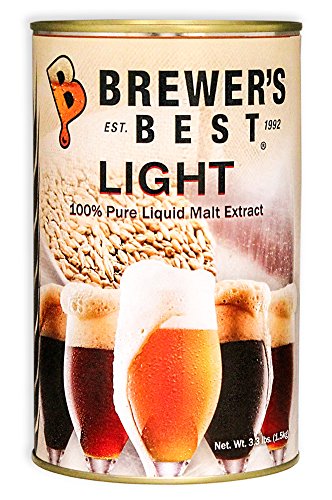
Brewer’s Best Light LME is crafted from high-quality 2-row barley and offers a straightforward, approachable base for a wide range of light beers. It’s an excellent choice for beginners or brewers aiming for a crisp, clean finish with reliable attenuation. Better for simple recipes where the brewer wants to minimize steeping complexity. A caution: this product’s lighter color may require additional malt additions if a deeper malt character is desired.
Briess G2-297W-9HJ2 Pilsen Light LME

This Pilsen Light LME by Briess CBW is designed to deliver a light color and robust fermentability, making it suitable for pale ales and lager-style experiments. Best for brewers seeking a dependable, neutral base malt that remains versatile across recipe styles. Limitations to note include package weight and mechanical component descriptors that occasionally appear in product listings but do not affect usage directly.
Briess Golden Light Dry Malt Extract

Although this entry is a dry malt extract (DME) rather than a liquid malt extract, it’s included as a practical alternative for brewers who want a lighter base with a different handling profile. It’s well suited for pale beers and for brewers who prefer quicker rehydration and longer shelf life. A caution is that DME can lead to a slightly drier finish and may behave differently in fermentation than LME.
Brewer’s Best Liquid Malt Extract – Extra Light

Brewer’s Best Extra Light LME is designed for very pale beers with minimal color contribution. It’s best for bright, clean ales or lagers where malt character should remain subtle. Choose this if you’re aiming for a near-clear beer and want to maximize hop aroma and taste without adding color. A potential limitation is the lighter malt flavor, which may require careful recipe balancing if stronger malt notes are desired.
Buying Guide: Key Considerations For Light LME
- Color and flavor profile: Light LME adds fermentable sugars with minimal caramel or roasted flavors. For very pale beers, choose Extra Light or Pilsen variants.
- Fermentability and gravity: Check the expected original gravity (OG) contribution. Most light LMEs target around 1.035–1.040, enabling steady fermentation for pale ales and lagers.
- Base malt composition: Many LMEs contain Base Malt and Carapils. This affects mouthfeel and head retention; Carapils adds body without heavy malt sweetness.
- Packaging and storage: LME is sensitive to heat and light; store in a cool, dark place and seal tightly after opening to avoid oxidation.
- Brewing goals: If you want a clean canvas for dry hopping, a lighter LME helps preserve hop aromas. For more malt-forward styles, consider a slightly darker option or mix with a touch of specialty malt.
- Alternative extracts: DME offers different handling and finish properties. It can be a good substitute if you need quicker rehydration and longer shelf life, but expect differences in body and sweetness.
FAQ
- What is light liquid malt extract best used for? – It’s ideal as a base for pale ales, session beers, and light lagers where a clean malt base is desired.
- How does LME affect fermentation? – LME contributes fermentable sugars that yeast convert to alcohol and CO2; a higher gravity base may require adjusted hop schedules to balance sweetness.
- Can I substitute DME for LME? – Yes, but expect differences in body and dryness. Adjust water and fermentation parameters accordingly.
- Which color variant should I choose for a pale beer? – Light, Extra Light, or Pilsen Light variants are typically best for pale beers with minimal color.
- Is storage important for LME? – Yes. Store in a cool, dark place and seal tightly to prevent oxidation and flavor degradation.
- Are these LME products suitable for beginners? – Yes. They provide a straightforward base to start experimentation and recipe development.
Leave a Reply