Best Home Brewing Set Up for Budding Brewers and Enthusiasts
If you’re building a home brewing setup, start with reliable, complete kits and essential accessories that fit your space and experience level. This guide highlights five practical options—from beginner-friendly kits to core fermentation gear—tailored for different buyer types: beginners seeking all-in-one solutions, hobbyists expanding their process, and savvier brewers needing durable gear. A concise comparison table below helps you weigh what matters most: kit scope, fermentation capacity, and transferable components.
| Product | Best For | Key Benefit | Note |
|---|---|---|---|
| Mr. Beer Craft Beer Making Kit | Beginners | All-in-one, quick start | Includes bottles and ingredients |
| Northern Brewer Brew. Share. Enjoy Starter Set | New brewers to intermediate | Comprehensive kit with recipe | 5 gallon potential with complete package |
| Home Brew Ohio 5 Gallon Fermentation Set-Up | Serious hobbyists | Separate primary & secondary gear | Versatile for beer and wine |
| Brewer’s Best American Amber Kit | Flavor-focused brewers | Quality malt blend for amber ale | Includes ingredients and procedures |
| SUNPRO Brew Bags (2 Pack) | All-grain or BIAB approach | Reusable, versatile filtration | Fits large kettles; space saver |
Mr. Beer Craft Beer Making Kit

Best for beginners seeking an all-in-one home brew experience. This kit includes fermentation equipment, supplies, ingredients, and bottles, so no extra gear is needed. It promises a fast brew cycle, with a batch ready for drinking in 3–4 weeks. The main advantage is simplicity and minimal setup, which helps new brewers avoid equipment shopping overwhelm. A limitation is that capacity is typically smaller than 5-gallon systems, making it ideal for experimenting with one batch at a time.
Northern Brewer Brew. Share. Enjoy. Starter Set
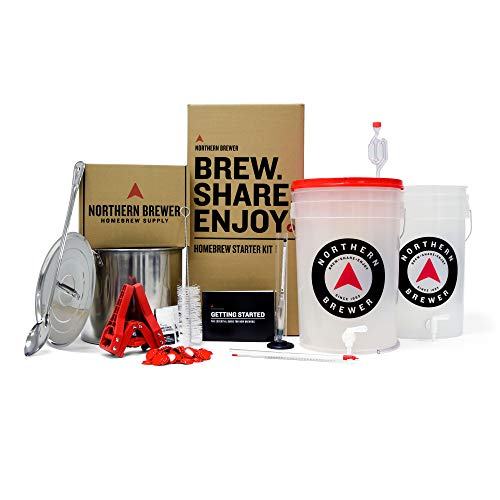
Best for beginners and gift-ready setups. This all-in-one starter kit includes a Brew Kettle and Hank’s Hefeweizen recipe kit, with foolproof instructions. It’s well-suited for those who want a guided, complete start to homebrewing and a clear recipe path. This option may be better for starting with standard 5-gallon batches, though the included equipment may be optimized for beginners rather than advanced all-grain systems.
Home Brew Ohio 5 Gallon Primary and Secondary Fermentation Set-Up

Best for serious hobbyists who want dedicated fermentation stages. This kit provides a full 5-gallon carboy, a 6.5-gallon bucket, and lids with bung and airlock—covering primary and secondary fermentation workflows. It’s ideal for longer, more controlled fermentation processes and larger batch experiments. A consideration is the transport and storage footprint required for larger containers.
American Amber Homebrew Ingredient Kit (Brewer’s Best)

Best for flavor-focused brewers who want a complete ingredient set. This kit combines pale ale malt with caramel malt to deliver a copper-toned amber beer. It includes brewing procedures and essential components. Choose this if you prioritize a balanced malt profile and a straightforward brew day. A potential limitation is that it centers on a specific style, which may be less flexible for those who prefer experimentation with multiple recipes.
SUNPRO 2 Pack Brew Bags (Reusable Mesh Strainer)
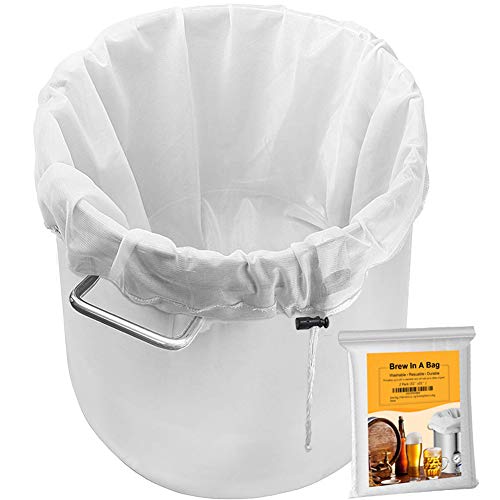
Best for BIAB and all-grain setups where filtration and space efficiency matter. These 26″ x 22″ bags fit large kettles and can hold up to 20 pounds of grain. They are reusable and designed to minimize grain slip into the wort. The bags are a practical upgrade for batch efficiency, though care is needed to maintain bag integrity after multiple uses.
Buying Guide: Key Considerations For A Solid Home Brewing Setup
- Batch size compatibility: Decide between 1–to 5-gallon systems based on space and consumption goals. Smaller kits are great for experiments; larger kits support more ambitious batches.
- All-in-one vs. modular: All-in-one kits simplify setup for beginners, while modular gear offers flexibility to upgrade components as you gain experience.
- Fermentation workflow: Primary and secondary fermentation options influence equipment choices. Separate vessels reduce risk of dingers between stages and improve clarity.
- Ingredient and recipe support: Look for kits that include easy-to-follow recipes and high-quality malt or adjuncts, especially if flavor profiles matter to you.
- Durability and maintenance: Seek durable materials (glasses, food-grade plastics, stainless components) and reusable brewing accessories to reduce long-term costs.
- Storage and space: Consider shelves, bins, or dedicated corners to keep a clean, organized brewing area without clutter.
Frequently Asked Questions
- What is the best starter kit for a first-time brewer?
– A kit with all essential pieces and clear instructions, like a complete beginner-friendly setup, is ideal to learn the basics quickly. - How much space is needed for a home brewing setup?
– A compact space can work with 1–2 gallon or 5 gallon kits; larger fermentation gear requires more dedicated space. - Are all-in-one kits better than modular ones?
– All-in-one kits simplify initial setup; modular kits suit long-term growth and customization.
Ready to assemble your home brewing setup? Use these five options to align with your experience, space, and target batch sizes, then build up your gear over time with purpose-driven upgrades.
Leave a Reply