Best Decaf Green Coffee Beans for Home Roasting
Direct answer: if you want green, decaf beans you can roast at home, these five options offer decaffeination with a focus on flavor, roast range, and origin. They’re best for home roasters who want reliable decaf beans without sacrificing taste. Each product fits different roaster styles—whether you prefer single-origin clarity, starter kits, or CO2 decaf profiles. The table below highlights quick picks to compare at a glance.
| Product | Best For | Decaf Method | Roast Recommendation |
|---|---|---|---|
| Fresh Roasted Coffee, 100% Colombian EA Natural Decaf Unroasted Green Coffee Beans | Traditional flavor seekers | EA (chemical-free) decaf | Medium to dark |
| Fresh Roasted Coffee, 100% Colombian Water-Processed Decaf Unroasted Green Beans | Flavor-forward, low-buzz decaf | Water-processed | Medium to dark |
| Fresh Roasted Coffee, Water-Processed Decaf Unroasted Green Beans Starter Kit | New roasters and blends | Water-processed | Various roast levels |
| Roastika – Decaf Colombia – 2lb Unroasted | Single-origin Colombian profile | Unspecified (green bean) | Light to medium |
| Coffee Bean Direct Unroasted CO2 Decaf Colombian/Espresso | Arabica espresso and light roasts | CO2 decaf | Light to medium |
Fresh Roasted Coffee EA Natural Decaf Unroasted Green Beans
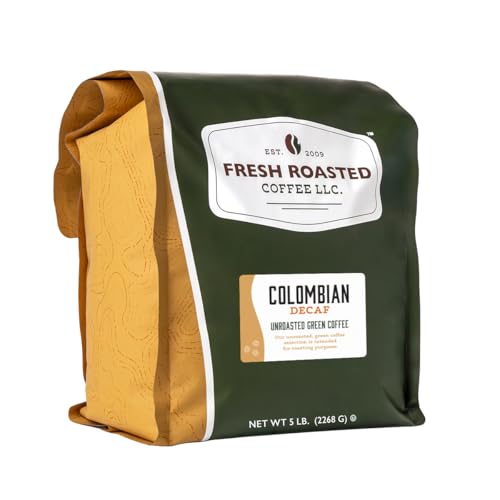
Best for traditional decaf flavor fans who want a natural decaf profile. These unroasted beans come from 100% Colombian origins with a suggestion to roast from medium to dark for best flavor. The decaf process aims to minimize caffeine while preserving character, making it suitable for home roasters seeking a straightforward, classic cup. Best for casual morning routines or those avoiding jitters without sacrificing body.
Who this is best for: home roasters who prefer a natural decaf with familiar Colombian notes and a clear roasting direction. Limitation: some users may notice a lighter body if not roasted toward the darker end.
Fresh Roasted Coffee Water-Processed Decaf Green Beans
Best for flavor-conscious decaf with a focus on the water-process method. This option highlights decaf with a balanced body and sweetness that shines as you roast from medium to dark. Water processing helps retain flavor while removing caffeine, making it suitable for drinkers who want less caffeine yet more flavor. Best for those who want a smooth, low-buzz cup.
Who this is best for: roasters who value flavor fidelity in decaf and want a steady roast window. Caution: the water-process flavor profile may mellow if over-roasted beyond dark levels.
Fresh Roasted Coffee Water-Processed Decaf Starter Kit

Best for beginners or those testing a decaf lineup. This four-pack provides four one-pound bags, making it convenient to roast and blend across small batches. The kit is ideal for exploring different flavor outcomes and roast profiles without committing to a single origin. Best for new roasters or households wanting variety with decaf options.
Who this is best for: novice roasters or households exploring decaf blends. Limitation: limited to starter pack contents; substitutions aren’t indicated.
Roastika Decaf Colombia – Unroasted 2lb

Best for a single-origin Colombian profile with mild acidity and a medium body. These unroasted beans are suitable for home roasting and offer notes of fig, pineapple, hazelnut, and semi-sweet chocolate as part of their flavor palette. Best for roasters who want a distinct Colombian decaf identity and a relatively forgiving roast window. Caution: flavor notes may vary with roast level and batch differences.
Coffee Bean Direct Unroasted CO2 Decaf Colombian

Best for espresso-focused decaf with a well-rounded profile. The CO2 decaf method aims to preserve flavor while removing caffeine, making it suitable for light to medium roasts. Best for roasters seeking a robust, aromatic cup in decaf form. Limitation: unroasted beans require roasting before use and should not be ground or brewed in their green state.
Buying Guide
What decaf method matters?
- Water-processed: preserves flavor; mild caffeine reduction with clean finish.
- CO2 decaf: strong aroma retention; good for lighter and mid roasts.
- Natural EA decaf: chemical-free option using direct decaffeination; flavor depends on origin.
Which origin best fits your palate?
- Colombia: balanced sweetness and body; reliable for everyday coffee.
- Sumatra and other single origins: distinctive, earthy notes; may require careful roast control.
Roast level guidance
- Light to medium roasts: preserve origin character and brightness.
- Medium to dark roasts: enhance sweetness and body, reduce perceived acidity.
Roaster type considerations
- Home roasters with drum or hot air: compatible with most green decaf beans listed.
- Starter kits: ideal to explore multiple decaf profiles and determine preferred roast paths.
FAQ
- What is green coffee meaning here? Green coffee beans are unroasted beans prepared for roasting at home.
- Is decaf coffee completely caffeine-free? No, decaf typically contains trace caffeine; amounts vary by method and bean origin.
- Can I brew decaf green beans directly? No, green beans must be roasted before brewing.
- Which method preserves most flavor? Water-processed and CO2 methods both aim to preserve flavor; results depend on roast level and origin.
- Are these beans Kosher? Some listings indicate Kosher certification; verify on each product page.
- How should I store green beans? Store in a cool, dry place in an airtight container to maintain quality.
Leave a Reply