Best Long Term Food Storage for Survival and Prepper Readiness
When planning for long term food storage, prioritize shelf life, calories, and ease of use. This guide highlights five reliable options for different needs—from compact disaster kits to full pantry staples. Best for families building a resilient supply, campers seeking ready-to-eat meals, and preppers focusing on storing nutritious staples for years. The table below summarizes each top pick to help you compare quickly.
| Product | Type | Shelf Life | Best For |
|---|---|---|---|
| Ready Hour 120 Serving Entree Bucket | Freeze-dried meals | Up to 25 years | Full emergency supply, flood-safe container, easy transport |
| Augason Farms Lunch & Dinner Variety Kit | Dehydrated meals | Up to 25 years | Variety meals for long-term storage and quick meals |
| ReadyWise 132 Servings Emergency Food | Freeze-dried meals | Up to 25 years | Comprehensive bucket kit for home or travel |
| Emergency Essentials All-Purpose White Flour | Flour #10 can, long-term storage | Up to 25 years | Everyday baking and emergency cooking staple |
| ReadyWise 60 Servings Grab Bag | Freeze-dried meals | Up to 25 years | Compact grab-and-go option for quick access |
The following sections dive into each pick, explaining who benefits most and why each was selected. Consider your space, dietary needs, and how you plan to access food during an emergency to guide your final choice.
Ready Hour 120 Serving Entree Bucket

Best for: households needing a large, self-contained emergency supply with long shelf life. TheReady Hour bucket contains freeze-dried entrees designed for extended storage, making it a solid core option for a family’s long-term plan. It’s also marketed for outdoor use, suggesting portability for camping or bug-out scenarios. Strength lies in high total servings and a durable, flood-safe container with an easy transport handle. A potential limitation is the need to rehydrate meals, which may require a consistent water source and time to prepare.
Augason Farms Lunch & Dinner Variety Kit 4 Gallon Bucket
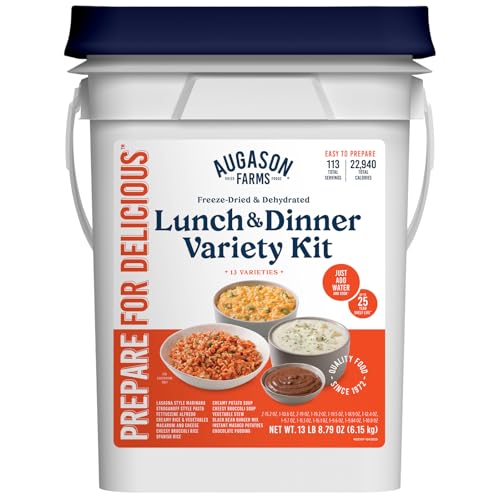
Best for: households seeking a broad meal variety with straightforward preparation. This kit offers 13 meal options and a large calorie total within a single bucket, making it convenient for rotating meals over years. It is designed for long-term storage and simple cooking—add water and heat. The bucket format supports organized stacking in pantries or shelters. A caveat: meal flavors can vary, and some users may prefer even more dietary diversity beyond the included varieties.
5-Gallon Stackable Water Storage Containers (6-Pack)

Best for: ensuring a clean, long-term water supply to supplement food storage. These BPA-free containers come with water treatment drops to help maintain water quality for up to five years. They are designed to stack securely to maximize space in garages, pantries, or shelters. The 30-gallon total capacity supports multi-month storage plans. A limitation is the weight when full (about 40 lbs per container), which can be challenging to move without assistance.
ReadyWise Emergency Food Survival Supply 7 Day Grab Bag

Best for: quick deployment for a week-long scenario or as a portable storage option for vehicles. The backpack-style kit is designed for easy transport and organization. It includes 60 servings of breakfast and entrées with a shelf life of up to 25 years, offering a reliable short-term solution for emergency kits or travel. A limitation is that smaller households may exhaust a week’s supply faster than projected, so growth planning is recommended if you rely on it as your sole source.
Buying Guide
What matters most when choosing long-term storage foods:
- Shelf life: Look for items advertised at 20–25 years when stored correctly in cool, dry spaces.
- Calorie density: Prioritize products with a mix of calories per serving to keep energy up during emergencies.
- Storage format: Buckets and #10 cans offer durable, stackable options; consider your available space and ease of access.
- Preparation requirements: Freeze-dried and dehydrated meals require water and heating; ready-to-eat options save time but may cost more per serving.
- Dietary needs: Check for allergen information and dietary compatibility (vegetarian, vegan, gluten-free, etc.).
- Portability: If you need bug-out or on-the-go readiness, compact grab-and-go options are valuable.
- Maintenance: Rotate stock before it expires to prevent waste and ensure freshness.
Common Scenarios And Recommendations
For a family with limited kitchen time, a large-bucket system like Ready Hour or ReadyWise 132 servings provides long-term reliability and simple “add water” preparation. For a fixed pantry, the Emergency Essentials flour adds daily practicality and supports baking versatility during long outages. If space is tight, the 4-gallon bucket approach from Augason Farms offers variety in a smaller footprint, while the water storage set ensures clean water alongside your food plan.
FAQ
- How long can long-term emergency foods safely last? Up to 20–25 years when stored in a cool, dry place.
- Do these products require refrigeration? Most freeze-dried and dehydrated meals do not; they are designed for non-refrigerated storage.
- Are these suitable for daily use? Some items are designed for everyday snacks or baking in addition to emergencies; check ingredient lists for dietary needs.
- What is the best way to store water? Use BPA-free containers with a tight seal; include water treatment drops for long-term stability.
- How should I rotate stock? Practice a first-in, first-out system and replace older stock before it nears its shelf life.
- Is a mix of products better than a single option? Yes, combining long-term staples with ready-to-eat items provides flexibility for different scenarios.
Leave a Reply