Best Food Grade White Oil for Wood, Kitchen and Food Equipment
If you’re searching for a safe, food-grade white oil or mineral oil for wood boards, utensils, or food-contact equipment, you’ll want options that are specifically labeled safe for culinary use. This guide highlights five top picks that emphasize cleanliness, non-toxicity, and easy application. Each product is explained with who it’s best for, why it’s chosen, and a practical limit to consider. Use this overview to compare application needs—from cutting boards to meat grinders—to help make an informed choice.
| Product | Best For | Size | Key Benefit |
|---|---|---|---|
| UltraPro Food Grade White Mineral Oil | Industrial slicers, cutting boards, and wooden blocks | 1 Gallon | Made in the USA, versatile food-grade mineral oil |
| Kate Naturals Mineral Oil (8 oz) | Home kitchens, wooden boards, utensils | 8 oz | Odorless, tasteless, easy rub-in |
| Sanco Industries NSF Certified Mineral Oil (Gallon) | Wood cutting boards, utensils, stainless steel | 128 oz | Colorless, odorless, prevents odors |
| Thirteen Chefs Mineral Oil (12 oz) | Cutting boards, butcher blocks, restoration | 12 oz | NSF certified, deep wood conditioning |
| US+ 32 oz Mineral Oil | General wood and kitchen surfaces | 32 oz | Light, pure, versatile for many surfaces |
UltraPro Food Grade White Mineral Oil (1 Gallon)
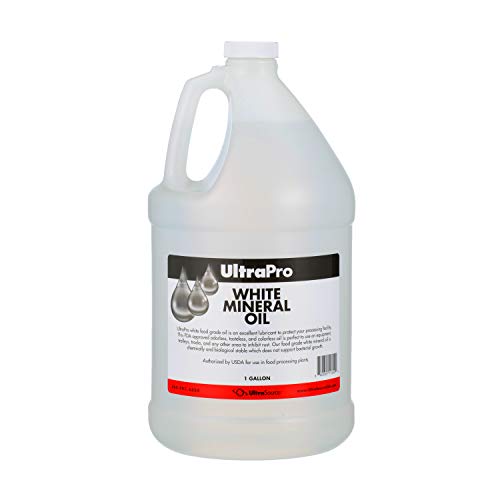
Best for: industrial slicers, knives, and cutting tools used in food preparation. This mineral oil is expressly marketed as food grade and made in the USA, offering a reliable option for protecting wooden boards and blades without leaving a greasy residue. Choose this if you need a large supply for frequent maintenance or commercial settings. A caution: large containers can be challenging to store in small kitchens. The product supports restoration of wooden boards and cutting blocks by guarding against cracking and drying.
Kate Naturals Mineral Oil for Wood Cutting Board (8 oz)

Best for: home cooks who want a pleasant, non-greasy finish on wooden boards and utensils. The oil is described as colorless, odorless, and tasteless, making it suitable for frequent board maintenance without affecting food flavor. It’s a good choice for preventive care and routine upkeep. Limitation: smaller bottle size means more frequent applications for busy kitchens.
NSF Certified Food Grade Mineral Oil – 1 Gallon

Best for: households and small-scale food service operations that require NSF certification and odorless performance. This gallon-sized option emphasizes odor control and protection for wood, utensils, and stainless surfaces. A potential limitation: some users may prefer a lighter scent profile or a smaller bottle for convenience.
Thirteen Chefs Mineral Oil (12 oz)

Best for: deep conditioning and restoration of cutting boards, butcher blocks, and wooden utensils. This bottle is NSF certified and marketed for a long-lasting finish, helping to prevent cracking and warping. Choose this if you need a product with strong restoration claims and USA-made quality. Limitation: the smaller bottle size requires more frequent applications on larger boards.
US+ 32 oz Mineral Oil

Best for: general-purpose wood care and kitchen surfaces needing a light, pure mineral oil. It’s colorless and odorless, designed for even coverage and smooth application. Choose this if you want a versatile option that covers cutting boards, countertops, and utensil handles. Limitation: lacks explicit certification details beyond USP status in the listing, so verify suitability for highly regulated environments if required.
Buying Guide
Key considerations when choosing food-grade white oil or mineral oil:
- Certification and safety: Look for USP, NSF, or FDA-compliant labeling to ensure food-contact safety and compliance with food processing standards.
- Intended use: Choose based on whether you primarily restore and protect wooden boards, guard metal surfaces, or lubricate kitchen equipment with food contact surfaces.
- Container size: Larger sizes reduce reordering frequency in commercial settings; smaller sizes suit home kitchens with limited storage.
- Oil appearance and feel: Colorless, odorless, and tasteless formulas prevent flavor contamination and keep utensils and boards neutral.
- Application ease: Some oils rub in easily with no film; others may require longer absorption for thorough penetration of dense woods.
- Residue and cleanliness: A non-greasy finish helps prevent dust or residue buildup on boards and utensils used for food preparation.
- Compatibility: Check whether the oil works on a range of surfaces—wood, stainless steel, and stone—to minimize the number of products needed.
Frequently Asked Questions
- What is food-grade mineral oil used for on wooden boards?
It conditions and seals wood to prevent cracking and warping while remaining safe for incidental food contact.
- Is all mineral oil edible?
No. Only products labeled as food-grade or USP/NSF-certified are appropriate for contact with food surfaces.
- How often should cutting boards be oiled?
Depends on use and wood type, but routine oiling every few weeks or when the wood looks dry helps maintain integrity.
- Can mineral oil be used on stainless steel appliances?
Yes, some products are described as safe for stainless steel and can help prevent rust on metal surfaces.
- What’s the difference between a gallon and a spray bottle mineral oil?
Spray bottles offer convenient, targeted application, while larger jugs are cost-effective for ongoing maintenance in busy settings.
- Are there petroleum-free options for kitchen lubrication?
Yes, some brands promote organic or coconut-derived bases as alternatives to petroleum-based oils.
Leave a Reply