Best Food Grade Spray Sealants for Safe Kitchen Maintenance
When choosing a spray sealant for food-related environments, look for products labeled as food-grade or NSF/H1-registered for incidental contact. These sealants protect moving parts, seals, and surfaces while minimizing contamination risk. This guide highlights five top options, each suited to different kitchen and processing scenarios—from high-temperature sealing to dry-film lubrication on plastic components. The selections aim to help buyers optimize safety, durability, and ease of use in food-prep areas, warehouses, and production lines.
Summary of Selected Products
- Silco Silicone RTV 4500: High-strength, food contact safe, bonds to most surfaces.
- Krowne Food Grade Silicone Spray: Thick lubricant, safe on plastic, great for doors and slides.
- CRC Food Zone Silicone Sealant: NSF-certified sealant for bonding and waterproofing.
- Quest Specialty Food Grade Dry Silicone Spray: Dry film, NSF H1, minimal oily feel.
- CRC General Purpose Food Grade Machine Oil Spray: Thin film, colorless, no silicone.
Silco Silicone RTV 4500 Food Contact Safe Sealant
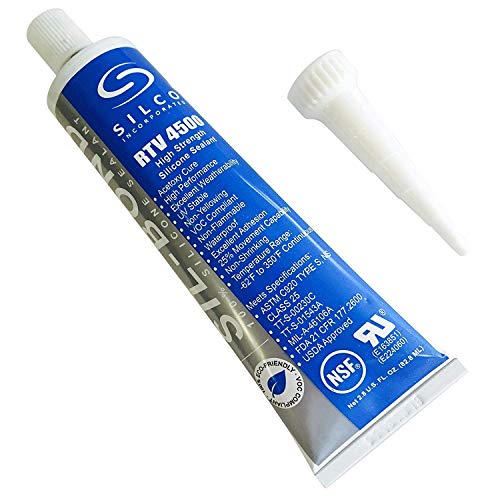
Best for applications requiring a robust, cure-stable seal on metal, glass, and many plastics in food zones. This clear silicone offers food contact safety and high-temperature tolerance up to 350F, making it suitable for gaskets, enclosures, and sealing joints exposed to heat. It bonds well to most common surfaces, supporting long-term durability in industrial kitchens and processing facilities. Choose this if you need a strong, high-temp seal in environments where incidental food contact may occur.
Limitation to consider: cures fully and forms a flexible bond, but it may be overkill for very low-load seals where a lighter sealant would suffice.
Krowne Food Grade Silicone Spray

Best for moving parts in refrigerated and food-service equipment. This high-viscosity spray provides effective lubrication, reduces wear, and protects against corrosion on doors, slides, and racks. It’s safe for plastic components and free from chlorine, offering a clean, non-staining film. Choose this if you need long-lasting lubrication that resists humidity and temperature fluctuations in cold or dry storage areas.
Limitation to consider: higher viscosity may require application in controlled amounts to avoid buildup on surfaces where a lighter film is preferred.
CRC Food Zone Silicone Sealant 14083

Best for sealing and waterproofing in moisture-heavy indoor and outdoor settings. The product is NSF-certified and designed for food processing and handling environments, offering a durable seal against moisture while remaining flexible. This sealant is well-suited for bakery walls, splash zones, and conveyor interfaces where a clear, long-lasting bond matters. Choose this if you need a reliable, certified sealant that resists humidity and heat cycling.
Limitation to consider: as a sealant, it may require surface prep and curing time; ensure compatible substrates before application.
Quest Specialty Food Grade Dry Silicone Spray

Best for moving parts in packaging, processing, and facility equipment where a dry film is preferred. The 11.5 oz spray is NSF H1 classified, suitable for incidental food contact. It leaves a dry silicone film rather than a heavy oily feel, which minimizes dust attraction and staining on surfaces. Choose this when you need lubrication without a wet residue, especially on metal rails and guides.
Limitation to consider: dry films can be less forgiving on very high-load seals where a wetter film might offer more initial lubrication.
CRC General Purpose Food Grade Machine Oil Spray
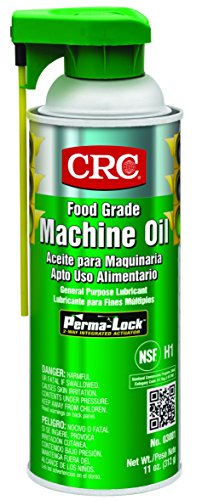
Best for thin-film lubrication on metal components where silicone is not required. This NSF H1-registered spray is virtually colorless and odorless and does not contain silicone, making it suitable for applications where silicone may interfere with texturing or coatings. It won’t stain most surfaces and is compatible with metal, wood, and painted substrates. Choose this if you need a non-silicone machine oil for incidental food contact in high-speed machinery.
Limitation to consider: it leaves less protective film on plastics compared to silicone-based products, and it may require more frequent reapplication in harsh environments.
Buying Guide: How to Choose the Right Food Grade Sealant or Lubricant
- Intended environment: If heat exposure is common, prioritize high-temperature silicone sealants with food contact safety.
- Surface compatibility: Check substrate compatibility (metal, glass, plastic) and whether a bonding or lubricating film is needed.
- Film type: Dry silicone sprays reduce dust and residues, while wetter films provide initial lubrication with longer-lasting protection in moist environments.
- Incidental food contact: Look for NSF or H1 certifications to ensure compliance with food processing standards.
- Viscosity and coverage: Higher viscosity sprays stay in place longer but may require careful application to avoid overspray on unwanted areas.
- Removal and cleanup: Some products leave residues that can attract dust or require solvents for removal; consider maintenance needs.
- Non-silicone options: If silicone is undesirable due to coatings or measurements, choose non-silicone machine oils that meet food-grade standards.
Practical Application Scenarios
- Food processing lines: Use NSF-certified silicone sealants for gaskets and joints in wet zones; pair with dry silicone sprays for moving parts to minimize friction.
- Refrigeration equipment: Choose high-viscosity silicone sprays that resist cold temperatures and prevent sticking on doors and slides.
- Cleaning and sanitation cycles: Favor clear, non-staining formulas that won’t discolor or leave residues on stainless surfaces.
- Electrical enclosures and controls: Ensure products have safe bonding properties and do not interfere with coatings or labeling.
Frequently Asked Questions
- What does “food-grade” mean in spray products? It indicates the product is formulated to minimize risk if incidental food contact occurs and often includes certifications like NSF or H1.
- When should I use a dry silicone spray vs. a wet film sealant? Dry sprays reduce dust and residue, ideal for moving parts; wet films provide stronger initial lubrication and sealing in moisture-prone areas.
- Can these products be used on plastic surfaces? Some are explicitly safe for plastic; always check the label for substrate compatibility.
- Are silicone sealants safe for food processing equipment? Yes, when labeled for food contact and NSF/H1 certified, they are designed for such environments.
- Do these products require curing time? Many sealants do; curing time depends on temperature, humidity, and the product, so follow the manufacturer guidelines.
- Is one product universally best? No. The best choice depends on temperature exposure, substrate material, moisture levels, and whether lubrication or sealing is the primary goal.
Leave a Reply