Best Food Flavorings and Extracts for Home Cooking and DIY Creations
Finding the right flavoring can elevate homemade desserts, beverages, and even lip balms. This guide highlights five versatile options from well-known brands and dedicated flavoring lines. It helps cooks, bakers, and DIY enthusiasts choose which product fits their needs—from pure citrus extracts to candy-flavor oils and butter notes. The top picks are best for creating authentic tastes without altering base ingredients excessively, and each entry notes who it’s best for and any limitations to consider.
| Product | Best For | Why It Stands Out |
|---|---|---|
| McCormick Cake Batter Flavor, 2 fl oz | Bakers seeking cake-forward flavor | Intense vanilla cake flavor; good for frosting or batter. |
| McCormick Strawberry Extract With Other Natural Flavors, 1 fl oz | Fruit-forward desserts and beverages | Real strawberry notes; no artificial flavors or colors. |
| McCormick Butter Extract With Other Natural Flavors, 1 fl oz | Butter-rich finishes and baked goods | Smooth, buttery taste from real butter; versatile in sweet recipes. |
| McCormick Pure Orange Extract, 2 fl oz | Citrus desserts and glazes | Double strength orange extract; pairs with honey and butter. |
| Food Flavoring Oil – Candy Flavoring (Assorted 20 Flavors), Herbeklab | DIY lip gloss, slime, candles, and flavored foods | High concentration, water- and oil-soluble; many flavors; versatile for creative projects. |
McCormick Cake Batter Flavor, 2 fl oz

Features: Vanilla Butter & Nut is now Cake Batter. Whip into vanilla frosting for intensified cake flavor. Tip: Stir 1 tbsp. with cup sprinkles into 2 cups batter for birthday cake pancakes.
Best for: Home bakers who want a distinct cake flavor without mixing multiple ingredients. It’s especially suitable for frosting, cupcakes, and pancake batter to achieve a strong cake-note quickly.
Caution: The flavor is concentrated; start with small amounts to control intensity in delicate recipes. Overuse can overwhelm other flavors.
McCormick Strawberry Extract With Other Natural Flavors, 1 fl oz

Features: Crafted with real strawberry for a ripe flavor; No corn syrup, non-GMO & gluten-free; No artificial flavors or colors.
Best for: Desserts, drinks, and frostings that require a true strawberry aroma without artificial color or sweetness. It’s a solid choice for natural flavoring in cakes and yogurt-tops.
Limitation: Being a natural-flavor extract, the intensity may vary slightly batch-to-batch. Use in proportion to maintain a balanced flavor profile.
McCormick Butter Extract With Other Natural Flavors, 1 fl oz

Features: Crafted with real butter for a smooth, buttery taste; No corn syrup, non-GMO & gluten-free; No artificial flavors or colors.
Best for: Enhancing baked goods and pastries with a rich butter aroma and mouthfeel. Ideal in frosting, cookie dough, and pastry fillings where a butter-forward note is desired.
Caution: Butter extracts can be strong; small adjustments are advised to avoid overpowering other flavors in delicate recipes.
McCormick Pure Orange Extract, 2 fl oz

Features: 2X more Pure Orange Extract than 1 fl. oz. bottle; Tip: Whip with butter and honey for a citrus-infused honey butter spread; No corn syrup, non-GMO & gluten-free.
Best for: Citrus-forward recipes, glazes, and breakfast spreads where a bright orange note is desired without adding extra liquid. Works well in cakes, muffins, and vinaigrettes.
Limitation: Pure citrus flavor can intensify with heat; add gradually when cooking to prevent bitterness or overwhelming brightness.
Food Flavoring Oil – Candy Flavoring For Candy Making (Herbeklab), 20 Flavors

Features: 20 different flavors including cotton candy, cake batter, lemon, strawberry, vanilla, and more. Water & oil soluble; non-GMO, gluten-free, sugar-free; designed to add aroma and flavor without altering the base.
Best for: Creative DIY projects such as lip gloss, slime, candles, and flavored foods. The wide flavor range helps tailor scents for crafts and desserts alike.
Caution: These flavor oils are highly concentrated. A few drops suffice; direct ingestion should be avoided and keep away from children in use cases beyond food.
Food Flavoring Oil – 24 Pack For Baking And Cosmetics (DecorRom)

Features: 24 concentrated aromas, suitable for baking, beverages, and cosmetics; water & oil soluble; concentrated, with a squeeze bottle for control.
Best for: People who want a broad set of aromas for experimenting with flavors in foods and non-food projects. Good for gifting and creative kitchen experiments.
Limitation: The sheer number of flavors can be overwhelming; start with a few drops and document amounts to repeat successful results.
Food Flavoring Oil – Candy Flavors (ERCorArt)
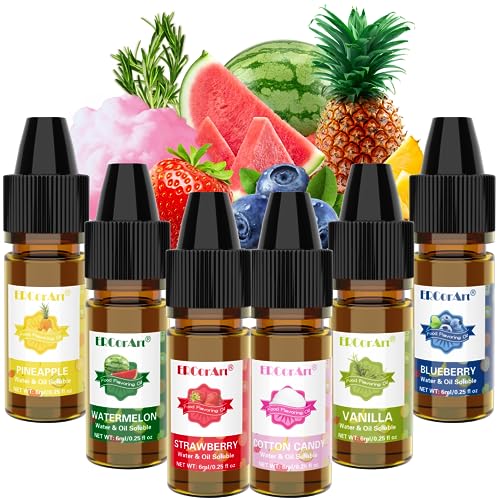
Features: 6 flavors including pineapple, strawberry, vanilla, blueberry, cotton candy, and more; water & oil soluble; highly concentrated for a strong aroma.
Best for: Quick flavor boosts in desserts, beverages, or lip products. Choose this if you need a compact set of candy-like flavors with strong aroma.
Caution: Concentration means precise dosing is essential to avoid overpowering the base dish or formulation.
Buying Guide: Key Considerations For Flavorings And Extracts
What type should you pick? Choose extracts for baking and cooking when you want authentic, true-to-fruit or dairy notes. Choose flavoring oils for intense aromas and small-dosed flavoring in treats, lip products, or crafts. Consider oil-soluble vs water-soluble compatibility with your recipe or project.
How strong should the flavor be? Start with small amounts—usually a drop or two—then adjust. Concentrated flavors can quickly dominate if added too soon or in large quantities.
Are natural ingredients important to you? If you prefer no artificial colors or synthetic ingredients, prioritize products labeled real fruit flavors, non-GMO, gluten-free, and free of artificial colors.
What is the best use case for each format? Extracts are great for breads, cakes, and frostings. Flavoring oils excel in candies, slurries, lip glosses, slime, candles, and non-dairy beverages where aroma is key.
How does solubility affect use? Water- and oil-soluble formulas expand usage across beverages, baked goods, and cosmetic projects. Ensure compatibility with your base (water-based vs oil-based) when mixing.
Frequently Asked Questions
- What’s the difference between extract and flavoring oil? Extracts are typically water-based and designed to mimic natural flavors in foods, while flavoring oils are highly concentrated and can be used for both food and crafts to impart aroma and flavor with small amounts.
- How should I measure concentrated flavors? Use pipettes, droppers, or squeezable bottles and add a few drops at a time to avoid overpowering the dish.
- Are these ingredients safe for all ages? Most are designed for cooking, baking, and cosmetic use in adults. Follow product-specific safety notes and keep concentrated oils away from children and ingestion outside intended use.
- Can flavorings affect the texture of baked goods? Yes, certain extracts or oils can alter moisture or tenderness if used in large amounts. Start small and adjust in subsequent batches.
- Do natural flavorings always taste like the real fruit? Real-fruit extracts provide closer likeness, but natural flavors may still vary by batch. Taste as you go and adjust with complementary notes.
- Is there a recommended use for lip gloss flavoring oils? These are designed for cosmetics applications, often with careful dosing. Do not ingest and follow product guidance for cosmetic use.
Leave a Reply