Best Feta Cheese Starter Cultures for Homemade Cheese Making
If you want reliable, easy-to-use starter cultures for making feta and other soft or semi-soft cheeses at home, these options are well-suited for hobbyists and beginners alike. Each choice below can help you create creamy feta without specialized equipment, while offering clear advantages depending on your milk quantity, experience level, and taste preferences. The list focuses on direct-set or ready-to-use cultures that minimize maintenance and aging time while delivering consistent results.
| Product | Best For | Notes |
|---|---|---|
| Cultures for Health Mesophilic Cheese Starter | Small to medium batches; beginners | Direct-set culture; includes rennet tablets; versatile for multiple cheese styles |
| Feta Cheese Starter Culture (Know-How Foods) | Feta-focused purists; quick schedule | Cultures 1–3 gallons; specific to feta texture and tang |
| theMilkman Feta Cheese Starter Culture | Reliable feta production; larger batches | Complete culture blend; 12 batches from 2 gallons each |
| Cultures for Health Fresh Cheese Starter Culture | Soft cheeses; quick turnover | Direct-set; includes rennet tablets; versatile for blues, chèvre, cottage |
| Mesophilic Direct Set Cheese Culture, 5-Pack | Hard-to-soft cheese range; bulk batches | Moderate-temperature culture; up to 2 US gallons per packet |
Cultures for Health Mesophilic Cheese Starter

Best for: Beginners making a variety of cheeses, including feta, cheddar, and cottage. This direct-set culture is maintenance-free and includes two rennet tablets, enabling you to start right away without separate purchases.
- Includes four starter packets and two vegetable rennet tablets to make multiple batches or a large single batch.
- Supports cheese variety, allowing experimentation with feta, farmer cheese, cheddars, and more.
- Maintenance-free direct-set design; no ongoing culture upkeep needed after a batch.
Caution: Best used with standard cow’s milk; outcomes may vary with different milk types or fat content. This option is well-suited for beginners who want flexibility across several cheese styles.
Feta Cheese Starter Culture (Know-How Foods)

Best for: Those focusing specifically on feta texture and tang, wanting a straightforward path to feta in 1–3 gallons of milk per batch.
- Contains Lactococcus and Lactobacillus spp, S. thermophilus; designed for feta-style cheese.
- Single-purpose culture that can simplify planning for feta lovers.
- Limitation: May be less versatile for other cheese types compared to multi-cheese starters.
theMilkman Feta Cheese Starter Culture
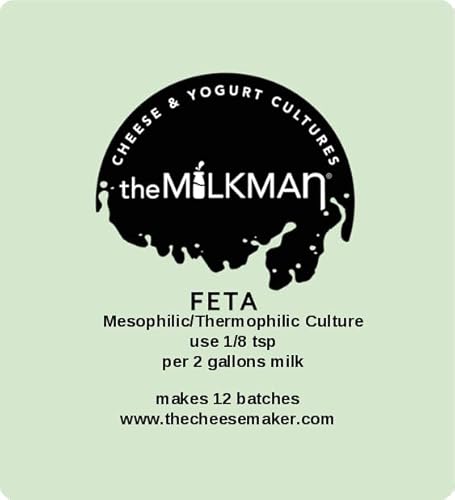
Best for: Batch-focused feta production with simple dosage and a built-in recipe. Ideal for emulating traditional feta yields using small-to-medium milk volumes.
- Complete culture blend tailored for feta; includes recommended usage for 2 gallons per batch.
- Yield capacity stated as 12 batches from two gallons each, simplifying production planning.
- Limitation: Requires additional ingredients like rennet or calcium chloride as per chosen recipe.
Cultures for Health Cream Cheese Starter Culture

Best for: Cream cheese and soft spreads; good for bagels, dips, and frostings where texture matters most.
- Includes four cream cheese starter packets with integrated vegetable rennet for ease.
- Beginner-friendly with guidance included; no need for ongoing maintenance or aging.
- Limitation: Focused on soft spreads; less suitable for hard cheese endeavors.
Mesophilic Direct Set Cheese Culture, 5-Pack

Best for: A bulk option suitable for multiple cheese styles that require mesophilic cultures, including cheddar, Colby, and blue varieties alongside feta experiments.
- Moderate-temperature culture suitable for a range of hard and semi-hard cheeses.
- Each packet sets up to 2 US gallons of milk; good for larger households or small-batch cheesemaking.
- Limitation: Primarily mesophilic; may need complementary cultures for certain cheese profiles.
Buying Guide: How to Choose Feta Cheese Starter Cultures
What milk type will you use?
Most feta starters are designed for cow’s milk, but some can work with goat or sheep milk with adjustments. If you primarily use cow’s milk, a versatile mesophilic or a dedicated feta culture works well. For mixed-millk or unfamiliar milk, choose direct-set cultures that are forgiving of small composition changes.
How much cheese are you planning to make?
Direct-set, multi-pack cultures are ideal for small batches and experimentation, while bulk packs suit steady production. If you plan to produce weekly batches, a 4-packet plus rennet option provides flexibility without constant replenishment.
Do you want versatility or a feta-specific approach?
Versatile mesophilic starters let you explore multiple cheeses, including feta variants, whereas feta-focused cultures optimize texture and tang for traditional styles. Decide whether you want one starter that covers many cheeses or a dedicated feta option for best results.
Is aging time a consideration?
Direct-set cultures typically avoid lengthy aging. If you want quick turnover to produce fresh feta-like results, choose fresh or mesophilic direct-set options that require minimal aging time.
What about ease of use and maintenance?
Look for direct-set formats that don’t require ongoing culture maintenance. If you’re new to cheesemaking, beginner-friendly kits with included rennet and clear instructions reduce setup friction.
Ingredient and allergen considerations
Check for non-GMO or gluten-free claims if important to you. Some cultures note gluten-free status; others may be neutral. If you have dietary restrictions, review ingredient lists and recommended usage carefully.
Frequently Asked Questions
- Can I use feta starter cultures with any milk? Most are designed for cow’s milk; some tolerate goat or sheep milk with adjustments. Always follow the manufacturer’s guidance for best results.
- Do these cultures require aging? Direct-set cultures are designed for fresh cheese or short maturation; feta can be achieved without long aging depending on the recipe and starter used.
- Is it better to buy a feta-specific culture or a versatile one? If your primary goal is feta, a feta-specific culture can optimize texture and tang. For experimentation across cheeses, a versatile mesophilic starter is more economical.
- How much cheese can I make with a 4-pack starter? This depends on the batch size per recipe. Some kits are designed to culture 4–10 gallons per pack when used across multiple batches.
- What equipment do I need besides the starter? Common essentials include a thermometer, a large pot, a cheesecloth or mold, and basic kitchen tools. Most kits include or imply basic equipment, but verify before purchasing.
- Are there drawbacks to direct-set cultures? Direct-set cultures are convenient but may offer less ongoing flexibility for aging or multi-stage cultures compared to traditional starter cultures.
Leave a Reply