Best Ethiopian Green Coffee Beans for Home Roasting and Flavor
Answering the question of which Ethiopian green beans are best for home roasting, this guide highlights five top options. Each product is suited to different roasters and flavor preferences—from bright floral profiles to fruity and berry-forward notes. The selections favor high-altitude Ethiopian origins and heirloom varieties, with clear distinctions for roasters of all skill levels. Whether you’re new to green beans or an experienced home roaster, these options offer reliable, consistent starts for crafting your perfect cup.
| Product | Brand | Why It Stands Out |
|---|---|---|
| 5 Pounds – African – Ethiopia Yirgacheffe | Smokin Beans | Classic Ethiopian heirloom with juicy, floral, and fruity notes; great for bright, clean cups |
| Fresh Roasted Coffee, Ethiopian Yirgacheffe Kochere | Fresh Roasted Coffee | Strong home-roasting suitability; kosher-certified and USA-packaged |
| Fresh Roasted Coffee, Organic Ethiopian Yirgacheffe | Fresh Roasted Coffee | USDA Organic, single-origin, kosher; reliable for precise roast profiles |
| Roastika – Ethiopia Yirgacheffe | Roastika | High-grade Arabica with red berry, jasmine notes; balanced aftertaste |
| Ethiopia Unroasted Specialty Green Coffee Beans | Showroom Coffee | Bulk, high-altitude Ethiopian origin; versatile for light to dark roasts |
5 Pounds – African – Ethiopia Yirgacheffe – Unroasted Arabica Green Beans

Best for traditional Ethiopian drip or pour-over roasters seeking a classic Yirgacheffe profile. This batch emphasizes the Ethiopian heirloom varietal with a clean, bright cup, offering juicy, floral, and fruity notes like blueberry and lemon. Best for roasters who want a reliable baseline with strong aroma and a distinctive, high-altitude character. Caution: bag shows designation as washed sun-dried; verify your roast profile to avoid overpowering acidity for some preferences.
Fresh Roasted Coffee, Ethiopian Yirgacheffe Kochere Unroasted Green Beans
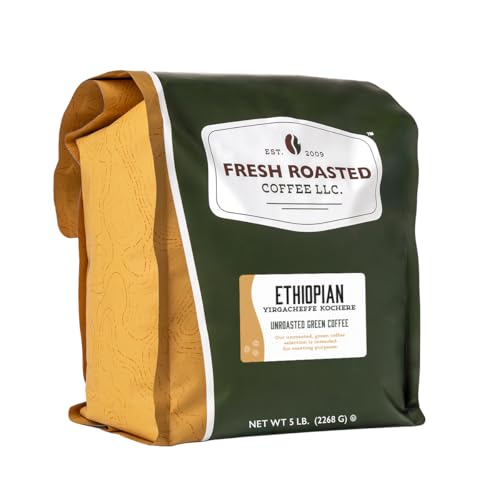
Best for roasters who want a ready-to-roast option with a kosher-certified, USA-packaged product. Kochere is known for a vibrant, fruit-forward cup with a clean finish. This 5 lb offering suits families or coffee clubs that roast in smaller batches but want consistent quality and sustainable sourcing. Caution: consumer roasters should calibrate heat to avoid over-roasting bright acids inherent to Ethiopian beans.
Fresh Roasted Coffee, Organic Ethiopian Yirgacheffe Unroasted Beans

Best for roasters seeking USDA Organic, single-origin reliability with a Kosher certification. The organic designation supports growers’ sustainable practices, while the Yirgacheffe origin emphasizes floral brightness and citrusy sweetness. Choose this if you prioritize organic sourcing and a consistent baseline for experimenting with roast levels. Caution: organic labeling can imply slightly higher price and variability in some harvests.
Roastika – Ethiopia Yirgacheffe

Best for home roasters wanting a well-balanced bean with berry and jasmine notes. This 2 lb bag suits roasters testing different profiles or those who want a smaller trial batch before committing to larger purchases. Caution: shorter shelf life once opened; store in a cool, airtight container to preserve flavor.
Ethiopia Unroasted Specialty Green Coffee Beans – Showroom Coffee

Best for bulk buyers and seasonal roasters who want flexibility with roast styles. The 10 lb bulk packaging supports cost savings and multi-batch roasting. Origin emphasizes smallholder farming and high-altitude growth, enabling light to dark roast versatility with nuanced highland flavors. Caution: bulk bags require careful portioning to maintain freshness after opening.
Buying Guide
What to consider when choosing Ethiopian green beans for home roasting:
- Origin and varieties: Ethiopian Yirgacheffe, Kochere, and heirloom cultivars offer distinct floral, fruity, and citrus notes. Higher altitudes typically yield brighter acidity and cleaner flavors.
- Roast level goals: Light roasts reveal floral and citrus elements; medium roasts balance sweetness with body; dark roasts mute some delicate notes but increase chocolate and caramel tones.
- Bean form and certifications: Organic and Kosher labeling can reflect farming practices and quality controls. Single-origin beans provide traceability and consistent flavor.
- Packaging and freshness: Airtight packaging and proper storage extend bean freshness. Bulk bags save money but require careful sealing after opening.
- Roasting equipment compatibility: Home roasters vary in batch size; choose beans that align with your machine’s capacity for consistent results.
Frequently Asked Questions
- What makes Ethiopian green beans distinct from other origins?
Their lineage often includes floral, berry, and lemon notes with bright acidity and a clean profile, particularly from Yirgacheffe varieties. - Is Organic certification important for Ethiopian green beans?
It indicates farming practices and can align with sustainability goals, but flavor remains the primary factor for roast decisions. - How should I store green coffee beans before roasting?
Store in an airtight, opaque container in a cool, dark place to preserve aroma and freshness before roasting. - What roast level best showcases Yirgacheffe flavors?
Light to medium roasts typically highlight delicate floral and fruity notes; deeper roasts can mute some acidity for a smoother cup. - Are bulk Ethiopian green beans a good choice for beginners?
Yes, bulk options can offer cost savings for learning roasts, provided you manage freshness and batch consistency. - Do these beans require special degassing after roasting?
Yes; many Ethiopian beans benefit from resting 24–48 hours after roasting to allow CO2 release for better flavor stability.
Leave a Reply