Best Cream Separator for Goat Milk: Top Picks for Home and Farm Use
Choosing the right cream separator helps you efficiently separate cream from goat milk, ensuring fresh dairy products with consistent texture. The products below are selected for reliability, build quality, and effective separation at home or small farms. Each entry features key specs and practical considerations to help you compare options quickly.
| Product | Brand | Capacity | RPM | Bowl |
|---|---|---|---|---|
| Milk Cream Centrifugal Separator Electric | DIYAREA | 100 L/H | 10500 | 5 L |
| Milk Cream Centrifugal Separator Electric Cream Separator | WEHAVEFUN | 100 L/H | 10500 | 5 L |
| Carivia Milk Cream Centrifugal Separator | Carivia | 50 L/H | 10500 | 5 L |
| Happybuy Milk Cream Centrifugal Separator | Happybuy | 100 L/H | 10500 | 5 L |
| Milk Cream Centrifugal Separator | lxrnqcey | 50 L/H | 10500 | 5 L |
DIYAREA Cream Separator With 5L Bowl

The DIYAREA milk cream separator is designed for faster separation, enabling higher throughput for daily dairy processing. With a reported 10500 RPM, the unit aims to produce cream with skimmed milk containing less than 0.03% fat. The construction combines aluminum alloy parts for durability and a 304 stainless steel bowl and spouts for dairy-grade cleanliness. The device operates as a centrifugal separator, pulling cream away from whole milk while removing contaminants. Its 100 L/H capacity positions it well for small-scale operations or enthusiast use at home. Consider the energy needs and noise level when planning placement in a kitchen or shop area.
Key considerations: the motor and core materials influence longevity; stainless steel components aid in sanitation; high RPM promises quick separation but may require stable mounting to minimize vibration. If you plan frequent deviations in cream thickness, the device’s adjustment range should be assessed against your preferred cream consistency.
WEHAVEFUN 100L/H Milk Cream Separator

This fresh-milk cream separator emphasizes a straightforward, user-friendly workflow: pour whole milk into the tank, switch on the motor, and the machine performs automatic separation. The stainless steel body supports repeat use, resisting corrosion, while a copper separation core and durable base contribute to long-term stability. It processes up to 100 L/H, aligning with casual farm or large household needs. The design aims to minimize manual handling, making cleaning more convenient with removable parts. A balanced motor setup reduces vibration, which is helpful in busy dairy routines.
Considerations include the ease of cleaning, availability of replacement parts, and how often you adjust the cream ratio. The device’s reliability for continuous operation may be a factor if you plan daily production. Noise level and power requirements (110-240V) may also influence placement in shared spaces.
Carivia 304 Stainless Steel Cream Separator

The Carivia model emphasizes stainless steel construction with a 5L raw milk bowl and a powerful 10500 RPM core. With a claimed separation efficiency, this unit supports a 50 L/H throughput and offers a 1:3 to 1:12 adjustable fat ratio, enabling you to tailor the thickness of the cream. A copper motor and durable 304 stainless steel contact surfaces contribute to durability and sanitation. The LED indicator provides a quick visual cue when the motor is active, and the 30W motor provides a balance between performance and energy use. This option suits small farms seeking customization of cream consistency.
Important considerations include whether 50 L/H meets your production needs, the long-term availability of spare parts, and the ease of calibrating the cream-to-milk ratio to achieve specific texture targets. The 5L bowl supports modest batches, but larger operations may require multiple runs or a higher-capacity model.
Happybuy 100L/H Milk Cream Separator

The Happybuy model focuses on versatile operation and ease of cleaning. It uses a 30W copper motor and stainless steel contact surfaces, delivering up to 100 L/H throughput with a separation speed around 10,500 RPM. The design emphasizes user-friendly features like removable parts for damp-cloth cleanup and straightforward assembly. The copper motor and cast-iron base are chosen for durability and stability, which helps during longer processing sessions. It’s suitable for households and small farms seeking a reliable all-purpose cream separator with robust construction.
Considerations include the overall footprint, ease of disassembly for cleaning, and how the unit handles continuous daily use. The noise level and energy efficiency are additional factors to evaluate, especially if the separator will be used in closer living or working spaces.
AYAWNGJ 1.32Gal 10500RPM Milk Separator
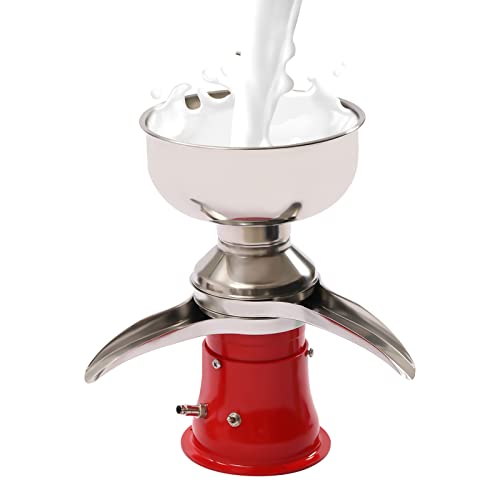
The AYAWNGJ unit emphasizes an adjustable cream thickness and a sizable 1.32 gallon (5 L) milk bowl, with a brass motor providing 10500 RPM separation. The product highlights include a 13.2 gallons per hour output and adjustable cream consistency via screw tightening. The 304 stainless steel components ensure corrosion resistance and food safety, making it suitable for goat, horse, camel, or sheep milk processing. The build combines a durable base and a polished appearance with a focus on consistent separation performance.
Key considerations include whether the screw-based adjustment provides the range you need for different dairy products, how easy it is to clean the detachable parts, and whether you need a larger throughput than 13.2 gallons per hour for your operation. Noise, heat generation, and motor longevity are also important in planning long-term use.
LXRNQCEY 50L/H Cream Separator
The LXRNQCEY model advertises an excellent separation rate with a 10500 RPM brass motor and a 5L bowl capacity. With a stated 13.2 gallons per hour output, the unit targets households and small farms seeking reliable daily cream production. The combination of a brass motor and 304 stainless steel contact surfaces emphasizes both performance and longevity. The adjustable cream thickness via screw tension allows the operator to tailor texture, from light creams to thicker varieties.
Important considerations include the balance between throughput and batch size, how often the unit requires maintenance, and whether replacement parts are readily available. The device’s robustness against wear and its noise output during extended sessions are additional factors to weigh for practical use in busy dairy routines.
Buying Guide: Key Purchase Considerations For Cream Separators
- Throughput需求: Determine the daily milk volume you plan to process. Most models target 50–100 L/H; select higher throughput if you need more cream per day or larger batches.
- Bowl capacity: A 5 L bowl suits small farms and households; larger operations may benefit from bigger bowls or the ability to run multiple batches sequentially.
- Material and sanitation: Machines with 304 stainless steel contact surfaces and corrosion-resistant components are easier to clean and maintain. Food-grade materials reduce contamination risk.
- Separation efficiency: Look for reported fat-content levels in skim milk (often ≤0.03%). Higher efficiency yields more consistent cream quality and less residual fat in milk.
- Motor and noise: A copper or brass motor with balanced design reduces heat and vibration. Consider placement and noise level for home use or shared spaces.
- Adjustability: If you want different cream thickness, ensure the model provides an adjustable fat ratio (e.g., 1:3 to 1:12). Ease of adjustment matters for frequent changes.
- Cleaning and maintenance: Removable parts and clear assembly instructions save time. Check for compatibility with common cleaning methods and available replacement parts.
- Power requirements and compatibility: Confirm voltage range matches your location (110–240V) and that there is a suitable power source in the processing area.
- Durability and warranty: Heavier-duty units with robust bases and durable bearings tend to last longer under daily use. Review warranty terms for critical components like the motor and drive system.
- Use-case fit: For goat milk and similar dairy streams, prioritize models that advertise safety for dairy processing and have a proven track record in small-scale production.
In summary, select a cream separator that matches your batch size, preferred cream texture, and maintenance capacity. stainless steel construction and a robust motor are common indicators of reliable performance, while adjustable cream ratios offer flexibility across different dairy needs.
Leave a Reply