Best Clean Label Baby Cereals for Starting Solids in 2026
As a parent, you want a first solid-food cereal that’s gentle on tiny stomachs and free from unwanted additives. This guide highlights clean-label baby cereals that emphasize simple ingredients, transparency, and safety. The top picks are tailored for caregivers seeking nutrient-dense options with minimal processing. Best for parents prioritizing clean-label certification, organic ingredients, and stage-appropriate textures.
The following table summarizes the five selected products, including who they’re best for and a quick note on why they stand out.
| Product | Best For | Why It Stands Out |
|---|---|---|
| Else Nutrition Super Cereal For Babies Mango | Parents seeking Clean Label certified, plant-based first cereals | Clean Label Project Purity Award; free of heavy metals and pesticides; gluten-free carbs and plant protein |
| Earth’s Best Organic Whole Grain Oatmeal Cereal | Families wanting USDA Organic and non-GMO with simple ingredients | USDA Organic, Clean Label Project certified, minimal ingredients |
| Amara Organic Baby Food Stage 3 Ancient Grain | Babies needing complex grains and fruit/veg blends | 100% organic, customizable by mixing with breastmilk or formula |
| Amara Organic Baby Food Stage 2 Oats & Berries | Texture-tuning mixes for early solids | Simple ingredients; mix with liquid to reach preferred consistency |
| Gerber Organic For Baby Grain And Grow Oatmeal Cereal | Convenient, organic option for quick mornings | Organic ingredients with iron fortification; easy to prepare |
Else Nutrition Super Cereal For Babies Mango

The product is designed for babies 6 months and older and is presented as a stage 1 cereal with real plant ingredients. Best for caregivers seeking a gluten-free carbohydrate base paired with plant protein. It emphasizes Clean Label certification and testing against contaminants.
- Best for health-conscious families prioritizing Clean Label certification.
- Better for parents who want a gentle introduction to solids without heavy metal concerns.
Limitation: Specific fruit flavor (Mango) might not suit all babies’ tastes; always monitor texture and readiness for solids.
Earth’s Best Organic Whole Grain Oatmeal Cereal
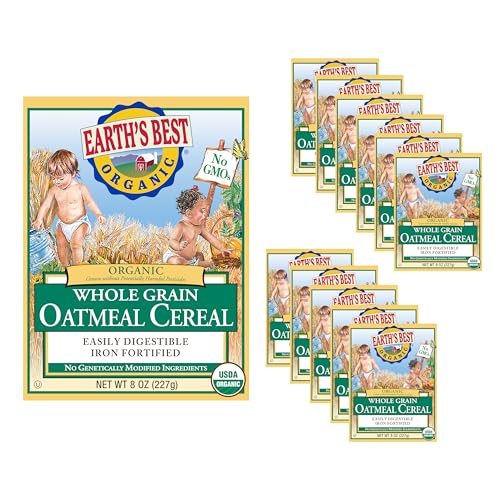
This cereal uses organic whole grain oat flour and is described as easily digestible for babies transitioning to solids. It is USDA Organic and Clean Label Project Purity Awarded, emphasizing non-GMO ingredients and absence of artificial flavors or colors.
- Best for families seeking USDA Organic certification and a minimalist ingredient list.
- Better for babies who respond well to oat-based textures and iron fortification.
Limitation: May be plain for some babies who prefer sweeter flavors; consider pairing with breast milk or formula to introduce texture gradually.
Amara Organic Baby Food Stage 3 Ancient Grain

Stage 3 is designed for babies who are ready for more complex textures and flavors. It blends ancient grains with organic fruits and veggies and is shelf-stable, allowing easy stocking of non-refrigerated portions. Best for parents who want a customizable blend with breastmilk, water, or formula.
- Best for gradual flavor expansion and texture progression.
- Better for families wanting 100% organic ingredients and non-GMO assurance.
- Limitation: Stage 3 may require additional preparation or mixing to reach preferred consistency for certain infants.
Amara Organic Baby Food Stage 2 Oats & Berries

This Stage 2 option focuses on a simple blend of oats and berries, designed to mix with breast milk, water, or formula to achieve the desired texture. Best for babies who are transitioning and need a familiar, fruity taste with organic bases.
- Best for texture control and gradual introduction to new flavors.
- Better for parents who want a straightforward ingredient list with organic certification.
- Limitation: Stage 2 offerings may have fewer grain varieties for some infants seeking variety.
Earth’s Best Organic Whole Grain Multi-Grain Cereal

This product combines multiple grains (oats, spelt, barley) to offer a gentle, multi-grain texture. It is USDA Organic and non-GMO, with iron fortification to support growth and development.
- Best for babies who benefit from a textured, multi-grain profile.
- Better for families seeking a broad grain blend with organic assurance.
- Limitation: May differ in texture depending on preparation; adjust liquid amounts to reach desired consistency.
Buying Guide: Clean Label Baby Cereal Essentials
What does “clean label” mean for baby cereals? It generally refers to simple, recognizable ingredients, minimal processing, and third-party certifications that affirm purity. When choosing a clean-label cereal, consider the following:
- Certification: Look for Clean Label Project Purity or USDA Organic certifications to reduce exposure to contaminants and artificial additives.
- Texture and stage: Ensure the cereal matches your baby’s developmental stage—Stage 1 for starter solids, Stage 2 or 3 for advancing textures.
- Allergens and dietary needs: If gluten-free or plant-based protein is important, verify ingredients and possible cross-contamination statements.
- Iron and vitamin fortification: Many cereals include iron and essential vitamins; compare to dietary recommendations for your baby’s age.
- Flavor variety: Some babies prefer mild, single-ingredient bases; others may enjoy fruit or mixed-grain blends.
- Preparation simplicity: Consider whether you need shelf-stable options for quick meals or ready-to-mix pouches for on-the-go feeding.
What to ask before buying
- Is the cereal certified clean-label or organic?
- Is the ingredient list short and easily understood?
- Is the texture suitable for your baby’s current stage?
How to introduce cereal safely
- Start with small amounts and watch for any signs of intolerance.
- Mix with breast milk or formula to reach a smooth, manageable texture for early stages.
- Gradually advance texture as your baby adapts to new flavors and consistencies.
Storage and safety tips
- Store unopened cereals in a cool, dry place.
- Respect the product’s shelf life and use-by dates.
- Discard any cereal that shows unusual smell, color, or clumping.
Frequently Asked Questions
- What is a clean-label cereal? A cereal with simple, recognizable ingredients and third-party certifications ensuring purity and safety.
- When can I start cereals? Most babies begin with cereals around 4–6 months, after consulting your pediatrician.
- Are gluten-free cereals better for my baby? Gluten-free cereals are an option for gluten sensitivity or dietary preference, but always verify nutritional adequacy.
- How do I choose between Stage 1 and Stage 2 cereals? Stage 1 is for beginners with smooth textures; Stage 2 offers thicker textures for advancing feeding skills.
- Can I mix cereals with formula or breast milk? Yes, many cereals are designed to mix with breast milk, formula, or water to achieve the right consistency.
- Do clean-label cereals contain heavy metals? Reputable clean-label cereals are tested for contaminants; always follow packaging guidance and pediatric recommendations.
Leave a Reply