Best Bulk Chicken Breast Options for Smart Meal Prep and Savings
If you’re buying chicken breast in bulk, you’re likely after convenience, value, and consistent quality for meals all week. This buyer’s guide highlights five bulk-friendly options well-suited for busy households, meal preppers, and budget-conscious cooks. Each product is explained with who it’s best for, why it stands out, and any potential limitation to consider. A quick summary table follows to help you compare at a glance.
| Product | Best For | Bulk Size | Notes |
|---|---|---|---|
| Amazon Grocery Chicken Breast Fillets Value Pack | Large families or meal-prep fans | 4.5–5.5 lb tray | Boneless, skinless, USA-sourced |
| Amazon Grocery Premium Chunk Chicken Breast, 10 Oz | Bulk pantry rotation | 6 cans x 10 oz | Versatile for quick meals |
| Swanson White Premium Chunk Chicken Breast in Water, 12.5 oz | Ready-to-eat convenience | 12.5 oz can | Rib meat, no added MSG |
| Wild Planet Organic Roasted Chicken Breast, 5 oz | Organic, clean-label meals | 5 oz cans x 12 | No salt added; raised on open range |
| Sweet Sue Canned Chicken Breast in Water, 5 oz | Simple pantry protein | 5 oz cans x 24 | Gluten-free, keto-friendly |
Amazon Grocery Chicken Breast Fillets Value Pack
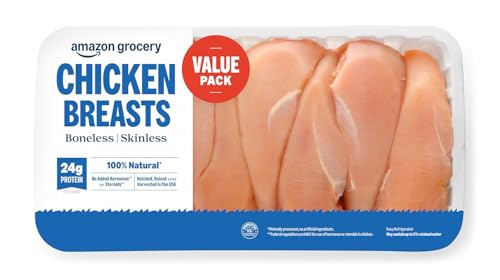
Best for households needing a true bulk option, this tray contains boneless, skinless chicken breast fillets weighing 4.5 to 5.5 pounds. The fillets are described as USA-hatched, raised, and harvested, supporting buyers seeking domestic sourcing. This value pack is ideal for grilling, baking, or stir-fries in large batches. A potential limitation is variable weight per tray, which can affect portion planning if you need precise counts.
Amazon Grocery Chicken Breast Fillets, 1.6–2.7 lb Tray

Selected as a compact bulk option for smaller families or those who don’t need maximum bulk. This tray offers boneless, skinless fillets weighing 1.6 to 2.7 pounds and is also USA-sourced. It’s better for weeknight meals where you want quick thawing and even portions. The trade-off is a smaller total quantity compared with larger trays.
Sweet Sue Canned Chicken Breast with Rib Meat

Best for quick, no-fuss meals and pantry staple needs, this 5-ounce can contains moist chicken chunks in water. It’s a good pick for quick lunches and recipes requiring pre-cooked protein. The main limitation is can size and texture variability compared with larger bulk packs; plan more for convenience rather than long-term bulk storage.
Swanson White Premium Chunk Chicken Breast in Water, 12.5 oz

Ideal for households seeking ready-to-use bulk protein, this 12.5-ounce can provides chunk white chicken breast with rib meat in water. It delivers consistent protein content per serving and includes no antibiotics or added MSG in some variants. It’s a practical choice for quick casseroles, salads, or sandwiches. Caution: Always check ingredient specifics for added sodium or allergens per can.
Wild Planet Organic Roasted Chicken Breast

Best for buyers prioritizing organic labeling and a clean ingredient list, this 5-ounce can features roasted chicken breast with rib meat, no added salt, and no fillers. The product is certified organic and sourced from open-range chickens. This option is particularly suitable for gluten-free or paleo-style meal plans. Limitation: smaller can size means more cans for bulk meals and storage space requirements.
Amazon Grocery Premium Chunk Chicken Breast, 10 Oz

Choose this if you want a versatile bulk option in convenient cans. This is a pack of six 10-ounce cans containing premium shredded chicken breast with 98% fat-free content. It’s better for quick meals, salads, and wraps where you need pre-chopped protein. Caution: Contains sulfites, which may be unsuitable for sulfite-sensitive individuals.
Buying Guide: Bulk Chicken Breast For Every Kitchen
What bulk size works best for you?
Consider how many meals you cook weekly and the typical portion size. Large trays (around 4.5–5.5 pounds) suit big households or frequent meal prep, while smaller bulk cans (8–12 ounces) work for singles or couples with varied recipes.
Fresh vs. canned: which should you choose?
Fresh or frozen bulk fillets deliver texture like fresh meat and are ideal for grilling or baking in bulk. Canned chicken provides convenience, longer shelf life, and is excellent for quick salads, soups, and lunches. For long-term storage, canned options reduce freezer space needs.
Source, ingredients, and labeling considerations
Look for USA-sourced fillets if domestic production matters. Organic or naturally raised labels are important for some buyers. Check for added ingredients such as salt, MSG, or preservatives if you’re watching sodium or dietary restrictions.
Texture and versatility across recipes
Fillets offer clean, tender chunks ideal for grilling, baking, or stir-fries. Chunk canned chicken provides ready-to-use pieces perfect for casseroles, salads, and quick meals. If you value texture control, go with whole fillets for slicing and shaping in recipes.
Cost-efficiency and storage
Bulk packages save money per serving, especially for families or meal-prep enthusiasts. Consider freezer capacity for fresh bulk options or shelf-stable cans for pantry storage. Labeling and rotation help minimize waste.
FAQ
- Q: Which bulk option is best for meal-prep beginners? A: Large trays of boneless, skinless fillets or multi-pack canned chicken provide straightforward cooking and portioning.
- Q: Are canned chicken products as nutritious as fresh? A: They can be convenient with comparable protein content, but texture differs. Choose based on recipe needs.
- Q: Is organic bulk chicken worth the price? A: It depends on your dietary priorities and willingness to pay a premium for organic labeling and sustainable sourcing.
- Q: How should I store bulk chicken to maximize quality? A: Refrigerate fresh bulk fillets, or freeze in portions. Canned chicken can stay on the shelf until opened.
- Q: Can I substitute canned chicken for fresh in any recipe? A: Most recipes work with canned chicken, but texture and moisture content may vary; drain and pat dry as needed.
- Q: What should I consider for sodium content? A: Some canned options include added salt; if you’re watching sodium, look for low-sodium or no-salt-added varieties.
Leave a Reply