Best Bucket of Survival Food for Emergencies and Prepper Kits
Discover the best buckets of survival food designed for long-term storage, easy transport, and quick meals during emergencies. This guide compares top 5 options to suit different needs—whether you’re stocking a pantry, outfitting an RV, or building a home emergency kit. Best for families seeking ready-to-eat meals, best for hikers needing compact options, and best for general preparedness alike.
The following table highlights the five selected products, focusing on serving counts, shelf life, and key usability features to help you compare at a glance.
| Product | Servings | Shelf Life | Notable Feature |
|---|---|---|---|
| ReadyWise Emergency Survival Food Supply Favorite Sample Bucket | 120 | Up to 25 years | Split lid doubles as a tray |
| Augason Farms Lunch & Dinner Variety Kit 4 Gallon Bucket | 113 | Up to 25 years | 13 varieties, large total calories |
| Ready Hour 120 Serving Entree Bucket | 120 | Up to 25 years | Freeze-dried entrees, no refrigeration needed |
| ReadyWise Emergency Food Supply 132 Servings | 132 | Up to 25 years | Split lid tray, stackable storage |
| ReadyWise Emergency Survival Supply Protein Bucket | 296 | Up to 25 years | Higher protein variety |
READYWISE Emergency Survival Food Supply Favorite Sample Bucket 120 Serving

Best for: households needing a broad entrée selection in a compact bucket. Why: This ReadyWise bucket emphasizes convenience with 120 servings of ready-to-eat entrées and a unique split-lid design that doubles as a tray, enabling quick serving and easy organization during outages or outdoor trips. Caution: Shelf life is long, but storage conditions should remain cool and dry to maximize longevity.
Augason Farms Lunch & Dinner Variety Kit 4 Gallon Bucket
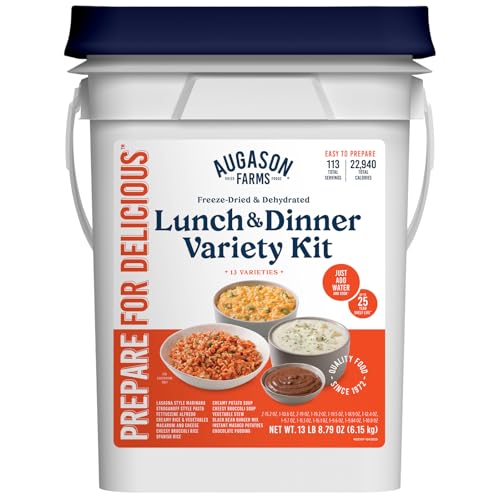
Best for: bigger households or groups needing a wide variety. Why: With 113 servings across 13 meal varieties and a 25-year shelf life, this bucket provides substantial total calories and diverse flavors. No advanced cooking equipment required—just add water and heat. Caution: The exterior bucket size is larger; storage space is a consideration in tight spaces.
Ready Hour 120 Serving Entree Bucket-Freeze Dried Emergency Food

Best for: individuals who prioritize variety of quick meals at a low-effort level. Why: This Ready Hour bucket includes 120 servings of entrees that are designed for long storage and easy preparation with water. It supports flexible uses from home prep to camping. Caution: The flavor range is broad, so some meals may appeal more than others depending on taste preferences.
READYWISE Emergency Food Supply Survival Bucket, 132 Servings

Best for: steady, reliable storage with a compact footprint. Why: This ReadyWise option combines 132 servings with a stackable, long-term storage design and a split lid that doubles as a tray. It’s suited for families building a long-term preparedness plan. Caution: As with any bucket kit, ensure proper rotation to maintain freshness over decades.
READYWISE Emergency Survival Supply Protein Bucket, 296 Servings

Best for: high-protein needs during emergencies or active outdoor adventures. Why: This larger protein-focused bucket increases total protein servings to support recovery and energy. Split-lid tray design aids serving during outages, and the long shelf life supports long-term storage. Caution: Higher serving counts mean more upfront space required for storage and rotation planning.
READYWISE Emergency Survival Supply Meat And Rice Bucket, 88 Servings
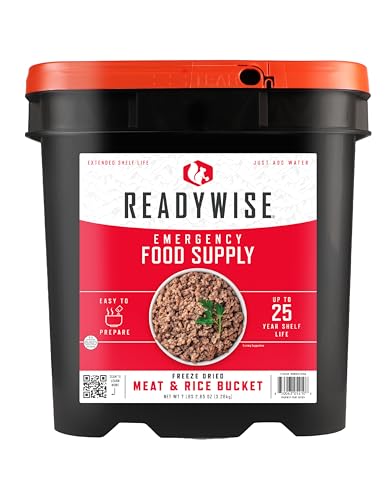
Best for: compact, protein-focused options that travel well. Why: The meat and rice bucket provides 88 servings with a focus on protein-rich meals, ideal for smaller households or limited storage. Caution: Slightly lower total servings compared to larger buckets; plan for more frequent restocking if you rely on it as a primary source.
Buying Guide: Key Considerations For Choosing A Survival Food Bucket
- Storage Life: Look for shelf lives up to 25 years and verify conditions required to preserve freshness—cool, dry locations are typically best.
- Serving Count: Choose a bucket that matches your household size and consumption rate. Higher servings reduce restocking frequency but require more storage space.
- Meal Variety: Consider whether you prefer entrées, entrees with protein, or a mix of meals to avoid menu fatigue during extended use.
- Storage Footprint: Buckets vary in size. Measure your storage area to ensure fit, especially in cabinets or closets with limited space.
- Ease of Preparation: Most sets use just adding water; some include freeze-dried options that heat quickly. Determine if you need dump-and-serve simplicity or more cooking flexibility.
- Portability: If you need to move supplies for camping or evacuation, choose buckets with stackable design and sturdy handles or a lid that doubles as a tray.
- Protein vs. Carbohydrate Balance: For longer events, ensure adequate protein and calorie distribution to support energy and recovery.
FAQ
- What is the typical shelf life of survival food buckets? Answer: Many buckets offer up to 25 years when stored properly in a cool, dry location.
- Do these buckets require refrigeration? Answer: Most are shelf-stable and designed to be prepared with water or simple cooking, without refrigeration.
- How many servings should a family plan for? Answer: It depends on family size, daily consumption, and duration of use; choose a bucket with at least several weeks to months of supply for redundancy.
- Are there flavor options or just meals? Answer: Meal variety varies by bucket; some provide a broad range of entrées and proteins for menu variety.
- Is it better to buy one large bucket or several smaller ones? Answer: A mix offers rotation flexibility and space management; multiple smaller buckets can simplify storage and accessibility.
- What should I consider for long-term storage? Answer: Store in a cool, dry place away from sunlight; rotate stock periodically and label with purchase dates.
Leave a Reply