Best Bread Proofing Box for Consistent Fermentation and Flexible Kitchen Use
Bread proofing boxes help bakers maintain steady warmth, humidity, and timing for dough fermentation. This guide reviews top options with precise temperature control, long timers, and portable designs suited for home bakers in American kitchens. Each pick below offers different capacities and features to fit varying dough volumes and storage needs.
Product Snapshot
| Product | Brand | Temp Range | Timer | Capacity (approx) | Notes |
|---|---|---|---|---|---|
| GIYUDOT Folding Bread Proofing Box | GIYUDOT | 50–113°F | Up to 48H | Compact interior with 16″ × 12″ × 12″ | Three heating zones; acrylic window |
| KOMBELLA Proofing Box | KOMBELLA | 68–122°F | 0–48H | Large capacity (~37L) | 3-sided heating; foldable |
| Antner Folding Bread Proofing Box | Antner | 70–131°F | 99H | 16.4″ × 12.2″ × 12.2″ | Front-view window; 3-zone heating |
| XPLI Bread Proofing Box | XPLI | 50–113°F | Up to 48H | Foldable; compact storage | 3 heating zones; oxford outer layer |
| Cozy Bread Proofing Box | Cozy Bread | Not specified with mat | Not specified | Compatible with 10″ × 21″ mats | Thermal insulation box; requires Cozy mat |
GIYUDOT Folding Bread Proofing Box
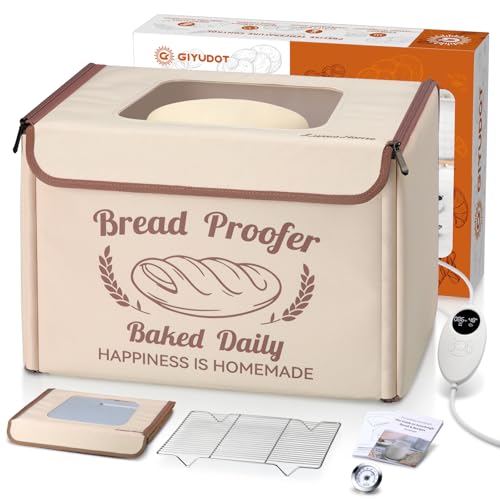
The GIYUDOT folding proofer is designed for precise warmth with three heating zones that provide even warming across the front, back, and bottom. Temperature ranges from 50 to 113°F, suitable for sourdough fermentation and standard dough proofs. A 48-hour timer helps manage long fermentation cycles, while automatic shutoff at 131°F adds a safety margin. The interior measures 16 × 12 × 12 inches, offering enough space for multiple dough portions, and a transparent acrylic window allows monitoring without disrupting the environment. The unit emphasizes insulation with five layers and a stainless steel shelf to avoid bottom overheating. This model is well-suited for serious home bakers who want stable proofing without large kitchen footprint.
KOMBELLA Proofing Box

The KomBella bread proofer combines a 3-sided heating design with an NTC sensor to maintain 68–122°F, supporting reliable fermentation even in cooler kitchens. A 0–48h timer provides flexible scheduling for long or short proofs. The unit offers a generous capacity of about 37 liters while folding down to a slim profile (16″ × 11.5″ × 2.5″), making it ideal for tiny apartments that still want to handle multiple dough portions. An acrylic viewing window helps monitor progress without opening the lid, which helps maintain steady temperature and humidity levels during fermentation.
Foldable Bread Proofing Box by Yacumx

The Yacumx foldable proofer provides 50–130°F of precise temperature control across seven settings, with a 1–12 hour digital timer to accommodate short and medium-length proofs. Its foldable design supports compact storage when not in use. The unit is built with food-grade materials and a heat-resistant structure, offering reliable performance for sourdough, pizza dough, yogurt, or other fermentation projects. A balanced combination of portability and steadiness makes it a practical choice for kitchens with limited space or for bakers who move between spaces.
Bread Proofing Box with 50-113℉ Temp Control

The XPLI bread proofing box emphasizes even, rapid warming across three heating zones to maintain 50–113°F. A 48-hour timer lets bakers plan longer proofs, and the foldable design aids storage. The unit features an outer Oxford fabric shell with insulated layers and an aluminum inner lining for durability and energy efficiency. This model targets home bakers seeking a compact, energy-conscious solution without sacrificing temperature control.
Cozy Bread Proofing Box

Cozy Bread offers a compatible proofing box designed to work with a 10″ × 21″ proofing mat (heat mat not included). This option emphasizes thermal insulation to stabilize temperatures during fermentation, aiding consistent dough development. While specifics on range and timer are less detailed, the system is positioned as a reliable, mat-supported proofer for those who already own a Cozy mat or prefer a dedicated, insulated enclosure for proofing doughs such as sourdough and artisan loaves.
Buying Guide: Key Purchase Considerations
When choosing a bread proofing box, consider how you bake most often and how much space you can dedicate to fermentation equipment. Here are essential factors to compare:
- Temperature range and stability: Look for precise controls (NTC sensors or multi-zone heating) and a range wide enough for sourdough, pizza dough, and yeast-based breads.
- Timer capability: A longer timer (12–48 hours) supports overnight or extended proofs; automatic shutoff adds safety.
- Capacity and footprint: Determine whether you need a large capacity for multiple dough pieces or a compact unit that folds for storage.
- Heat distribution: 3-sided or multi-zone heating helps reduce cold spots and yields even fermentation.
- Insulation and materials: Food-grade interiors, waterproof linings, and sturdy insulation improve temperature consistency and easy cleaning.
- Monitoring features: A front or acrylic viewing window minimizes disruption during proofs.
- Portability and storage: Foldable designs save space, useful for smaller kitchens or renters.
- Compatibility with mats or accessories: Some boxes pair with warming mats; verify compatibility if you plan to use a mat.
- Maintenance: Ease of cleaning and ability to withstand humidity are important for long-term use.
Depth vs. simplicity: If you bake infrequently or have limited counter space, a compact, foldable model with reliable temperature control may be preferable. For avid bakers handling multiple doughs or larger loaves, a high-capacity proofer with a wide temperature range and robust insulation offers greater flexibility and fewer batch limits. Consider whether you need a viewing window to monitor progress without opening the lid, and weigh the importance of a front-view design against a fully enclosed unit.
Americans who value kitchen organization might favor foldable or compact designs to minimize clutter, while those in regions with cooler homes may prioritize models with stronger heating power and consistent warmth. Likewise, if you frequently proof yogurt or starter cultures, units with stable humidity and safe warm ranges help maintain food safety and texture. Finally, assess warranty and customer support from the brand to ensure long-term reliability in day-to-day baking tasks.
Leave a Reply