Best Biodegradable Trash Bags for Eco-Friendly Disposal
Choosing biodegradable trash bags helps reduce plastic waste and supports composting and responsible disposal. The following picks represent leading options from trusted brands, with certifications and materials designed to minimize environmental impact while maintaining strength and reliability in typical home or office settings. Below you’ll find concise product details, key features, and a buying guide to help compare options.
| Product | Brand | Capacity | Certifications | Notes |
|---|---|---|---|---|
| Emily’s Choice Biodegradable Trash Bag Code Q (50 count) | Emily’s Choice | 13-17 gallons | D2W, ASTM 6954 | Heavy duty, easy to tie |
| UNNI Compostable Trash Bags, 13 Gallon | UNNI | 13 gallons | BPI, CMA, OK compost HOME | Certified compostable |
| Hippo Sak Plant Based Tall Kitchen Bags | Hippo Sak | 13 gallons | USDA Biobased Product | Plant-based, recyclable |
| Reli. Biodegradable 13 Gallon Trash Bags | Reli. | 13 gallons | ASTM D6954 (U.S. Standard) | Eco-friendly degradable under some conditions |
| Simply Bio 13 Gallon Compostable Bags | Simply Bio | 13 gallons | BPI, OK compost HOME | 1 mil thick, drawstring |
Note: The list focuses on bags that balance biodegradability certifications, material quality, and practical sizing for typical kitchen and office use. Each product links to an Amazon listing for quick access to purchase and official specifications.
Emily’s Choice Biodegradable Trash Bags (Code Q)
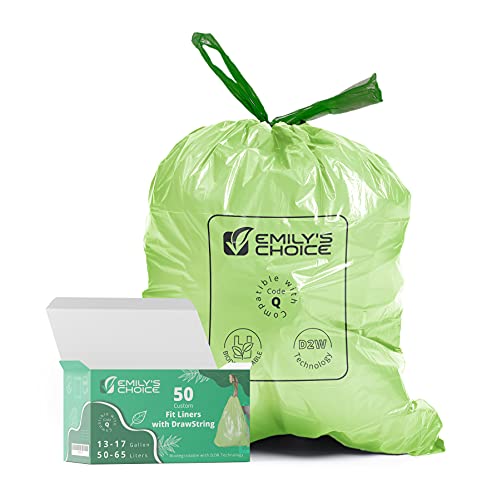
The Emily’s Choice Code Q trash bags are designed for heavy-duty use while remaining biodegradable. They are compatible with Code Q cans and offer a thickness of 1.2 mil / 30 micron, aiming to withstand dense loads and puncture risk from sharp objects. The packaging emphasizes easy tying and fast breakdown, leveraging D2W technology to promote decomposition after disposal. These bags are positioned for households and small offices needing reliable performance without sacrificing eco-friendliness.
- Heavy-duty construction resists punctures and tears when bags are full or bulky waste is added.
- Smart tie design supports secure closure, reducing leaks and spills.
- biodegradation claims rely on specific environmental conditions to achieve breakdown speed.
UNNI Compostable Trash Bags, 13 Gallon

UNNI’s compostable bags are sized for tall kitchen cans, designed to handle food scraps and daily waste with a reinforced 0.9 mil thickness. They are independently certified compostable by multiple bodies (BPI, CMA, OK compost HOME), aligning with ASTM D6400. The bags aim to keep tall bins tidy and reduce the environmental footprint of routine trash disposal, making them a popular choice for households prioritizing certified compostability without compromising fit or strength.
- Perfect fit for tall kitchen trash cans (13 gallon / 49.2 liter).
- Reinforced 0.9 mil thickness supports daily kitchen use.
- Certified compostable to widely recognized standards.
Hippo Sak Plant Based Tall Kitchen Bags

Hippo Sak bags are marketed as plant-based and recyclable, utilizing sugar cane-derived materials rather than fossil fuels. This aligns with sustainability goals by reducing reliance on traditional plastic feedstocks. The design emphasizes strong performance and leak resistance while highlighting the environmental benefits of sourcing from renewable resources, suitable for users seeking a more sustainable trash bag option without sacrificing usability in tall kitchen bins.
- USDA Certified Biobased Product from plant-based materials.
- Promotes a lower carbon footprint compared to conventional plastic bags.
- Designed for strong, leak-proof performance in tall bins.
Reli. Biodegradable 13 Gallon Trash Bags
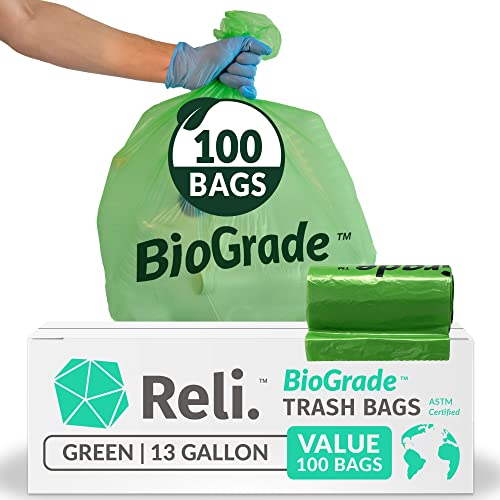
Reli.’s 13-gallon biodegradable bags emphasize eco-friendly degradation under appropriate conditions. With a 10 micron thickness and ASTM D6954 certification, these bags are positioned as a value-conscious option for households seeking duty-grade bags that align with standard environmental standards. The product description highlights degradability through moisture, oxygen, and soil exposure, which can be a practical fit for controlled composting or municipal programs where such conditions occur.
- Economical option for regular trash needs with biodegradability in mind.
- Certified to ASTM D6954 standards for U.S. market compatibility.
- Appropriate thickness for typical household waste without excessive tearing.
Simply Bio 13 Gallon Compostable Bags

Simply Bio offers 13-gallon compostable bags with a 1 mil thickness and a drawstring for easy closure. Certified by BPI and OK compost HOME, these bags meet recognized standards for compostability. The combination of a durable 1 mil layer and a convenient drawstring makes them a practical option for managing kitchen scraps and office waste in environments that value certified compostability and leak resistance.
- Drawstring closure for secure sealing and ease of use.
- 1 mil thickness provides puncture resistance for everyday waste.
- Certified compostable to BPI and OK compost HOME standards.
Buying Guide: Key Considerations For Choosing Biodegradable Trash Bags
When selecting biodegradable trash bags, consider how and where you will use them. The following factors help compare options across brands and certifications.
- Certification and standards: Look for certifications such as BPI, OK compost HOME, and CMA. These indicate compliance with recognized compostability or biodegradability criteria in the U.S. and abroad.
- Biodegradation vs. compostability: Some bags are designed to break down in industrial facilities, while others are certified for home composting. Understand where your bags are intended to decompose.
- Material thickness: Thicker bags (e.g., 0.9–1.2 mil) offer better puncture resistance and load-holding capacity, reducing leaks with sharp or heavy waste. Very thin bags may be suitable for light use or non-food trash.
- Fit and sizing: Ensure the bag size matches your bin (e.g., 13 gallon tall kitchen cans). A bag that fits poorly can slip or tear easily during use.
- Strength and tear resistance: Look for reinforced seams, gussets, or special bottom designs that resist tears when the bag is full.
- Ease of use: Drawstring or tie-top designs simplify sealing and minimize odors, especially in kitchens or shared spaces.
- Environmental impact: Consider the bag’s source material (plant-based vs. traditional plastic) and lifecycle impacts. Plant-based or bio-based options can reduce fossil fuel use, though end-of-life disposal matters.
- Storage and shelf life: Some compostable bags have recommended shelf lives and storage instructions; store away from heat and direct sunlight to maintain performance.
- Cost and value: Compare counts per box and price relative to thickness, certification, and fit. Higher certification does not always equate to higher value for every household.
Leave a Reply