Best Barley Malt Extract Powder for Home Baking and Brewing
The best barley malt extract powder options for home bakers and brewers are those that offer reliable enzyme activity, clear labeling, and suitability for bread, beer, and pastries. This guide highlights five top products, explaining who each is best for and why it stands out. Use the buying guide to compare form, diastatic vs non-diastatic varieties, and storage considerations.
| Product | Best For | Why It Stands Out |
|---|---|---|
| Organic Light Dried Malt Extract DME – Maltoferm | Bread bakers and home brewers seeking a pure malt extract | 100% pure malted barley extract from organically grown barley; versatile for beer and dough enhancements. |
| Anthony’s Diastatic Dry Malt Powder | Leavened breads, pizza dough, and pastries | Diastatic, adds enzymatic activity to improve rise and flavor; USA-made. |
| Bakers Club Diastatic Malt Powder 10oz | Artisan bread and pretzel making | Diastatic malt powder designed to boost dough rise, texture, and crust development; USA-made. |
| Scratch Diastatic Malt Powder (10oz) | Bakery-style breads and soft interiors | Natural enzyme power to improve dough performance and crust browning. |
| Briess Dry Malt Extract – Golden Light (1 lb) | Brewing and light-colored malt-forward baking | Pure malt extract ideal for light beers and as a base malt for recipes requiring light color and gravity boost. |
Note: If you’re unsure whether you need diastatic (enzyme-rich) malt powder or non-diastatic malt, consider your recipe goals. Diastatic varieties help with rise and browning, while non-diastatic powders primarily add flavor and color without enzymatic activity.
Organic Light Dried Malt Extract DME – Maltoferm

Brand: Home Brew Ohio. Features include 100% pure malted barley extract from organically grown barley. Model 96-PKL1-4U0E. Item package dimensions: 8.0″ L x 5.2″ W x 1.6″ H. This is best for bakers seeking organic malt extract and beer brewers starting with a clean, light profile. Caution: confirm the product is diastatic if you need enzymatic activity.
Anthony’s Diastatic Dry Malt Powder
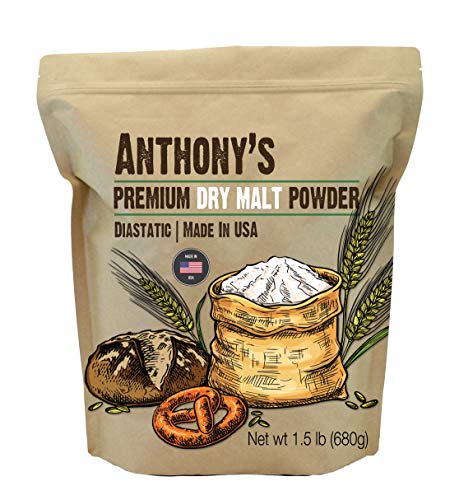
Brand: Anthony’s. This diastatic malt powder is made from malted barley flour and is diastatic, providing enzymatic activity to doughs and breads. USA-made, vegan-friendly. Best for: breads, crackers, and doughs seeking improved rise and flavor. Limitation: may be too potent for some delicate baked goods; start with small amounts.
Bakers Club Artisan Diastatic Malt Powder 10oz

Brand: BAKERS CLUB EST 1991. Claims to boost dough rise, enhance texture and crumb, and elevate flavor profiles with a nutty, malty taste. Best for: whole wheat and organic breads, pizzas, pretzels, and sourdough. Limitation: check packaging for unit size to ensure you have enough for larger batches.
Scratch Diastatic Malt Powder

Brand: Scratch. Diastatic malt powder designed to boost dough performance, oven spring, and crumb structure. Best for: homemade breads, pizzas, pretzels, and baked desserts where consistent bakery-quality results are desired. Caution: enzyme activity varies with storage and usage; follow recommended amounts.
Briess Dry Malt Extract – Golden Light

Brand: Briess. A light-colored malt extract suited for light beers, specialty malts, and as a base for various styles. Best for: light beers and as a base malt to boost gravity and yeast propagation. Limitation: color and flavor are light; not ideal for dark beer recipes.
Buying Guide: Barley Malt Powder Essentials
What is diastatic vs non-diastatic?
Diastatic malt powder contains active enzymes that help break down starches, improving dough rise and beer efficiency. Non-diastatic malt powder lacks these enzymes, mainly contributing sweetness and color. Choose diastatic when you need improved rise; non-diastatic for flavor and browning without enzymatic effects.
How to choose by purpose
- Bread baking: Prefer diastatic malt for better rise and crumb. Start with small amounts and adjust to recipe needs.
- Beer brewing: Light or golden extracts help maintain a clean profile; diastatic options can assist with fermentation.
- Flavor and color: Non-diastatic powders add aroma and color without altering enzymatic activity.
Storage and handling
Store in a cool, dry place away from moisture. Use within best-by windows to preserve enzyme activity where applicable. Keep containers airtight to prevent clumping and moisture absorption.
How much to use
Follow recipe guidelines and start conservatively. Diastatic powders are potent; small adjustments can yield noticeable changes in rise and browning. For breads, typical usage ranges from 1/4 to 1 teaspoon per loaf, depending on flour type and hydration.
Quality and labeling considerations
Look for labels that state whether the product is diastatic, the origin of the barley, and whether it is vegan or gluten-containing. Certifications like Kosher or organic can guide ingredient sourcing preferences.
Practical comparison tips
- For best all-around performance in bread: choose a diastatic malt powder with verified enzyme activity.
- For beer recipes aiming for light color: select a dry malt extract labeled for light malt flavors.
- If you bake frequently with whole grains, diastatic varieties can unlock better fermentation with whole-wheat doughs.
FAQ
- What is barley malt extract powder used for? It is used to enhance flavor, color, and fermentation in bread and beer and to improve dough rise and texture in baking.
- What’s the difference between diastatic and non-diastatic malt powder? Diastatic contains active enzymes that help fermentation; non-diastatic does not, adding sweetness and color but not enzymatic activity.
- Can I substitute malt powder for yeast? Malt powder can aid fermentation but should not replace yeast completely; use as directed in recipes.
- Is malt powder gluten-free? Malt derived from barley contains gluten, so most malt powders are not gluten-free unless specifically labeled as such.
- How should I store malt powder? Keep in a cool, dry place in an airtight container to prevent moisture and clumping.
- Which malt powder is best for bread dough? Diastatic malt powders are generally best for bread dough due to enzymatic activity that supports rise and crumb structure.
Leave a Reply