Best 25 Year Emergency Food for Serious Preparedness and Long-Term Storage
When planning for long-term emergencies, choose durable, shelf-stable options that deliver calories, variety, and reliability. This guide highlights five emergency food products designed for up to 25 years of shelf life, helping buyers decide which kit fits different needs—whether you’re stocking a pantry, outfitting a bug-out bag, or building a family emergency plan. The top picks appeal to prepper beginners, compact space dwellers, outdoor enthusiasts, and budget-conscious households seeking longevity and ease of use.
| Product | Best For | Approx. Servings | Shelf Life |
|---|---|---|---|
| ReadyWise Emergency Food Supply – 120 Servings | Starting long-term supply; family safe | 120 | Up to 25 years |
| Augason Farms Lunch & Dinner Variety Kit | Variety meals; bucket storage | 113 | Up to 25 years |
| Ready Hour 120 Serving Entree Bucket | Portability; easy transport | 120 | Up to 25 years |
| Ready Hour Fruit & Veggie Mix | Vegetable/fruit variety for nutrition | 56 | Up to 30 years |
| ReadyWise 30 Day Emergency Food Supply | One-month buffer; two buckets | 296 | Up to 25 years |
ReadyWise Emergency Food Supply – 120 Servings

Best for: households building a foundational long-term supply. This grab-and-go bucket offers 120 servings of ready-to-prepare entrées with up to 25 years of shelf life. The stackable design helps conserve space in a pantry, car, or closet. Best chosen for stable, low-maintenance storage and for families starting a preparedness plan.
Why selected: The kit emphasizes ease of use with a split-lid design that doubles as a tray, simplifying serving during emergencies. It balances portion variety with long-term storage potential, making it a practical anchor for a 25-year plan.
Caution: Exact meal variety is not disclosed; expect standard entrée options and plan for complementary sides or beverages to maintain variety.
Augason Farms Lunch & Dinner Variety Kit
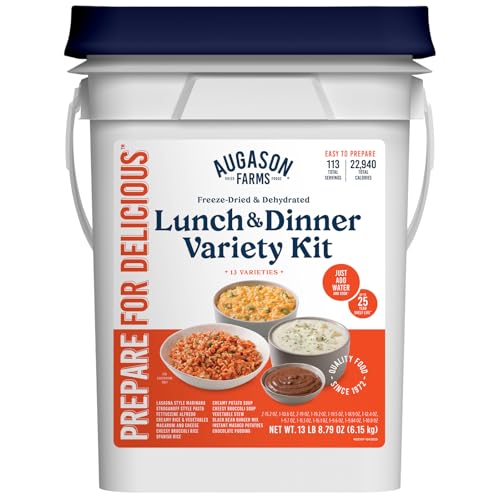
Best for: families seeking a wide meal assortment within a 25-year shelf life. This 4-gallon bucket contains 113 servings and 13 varieties, designed for easy meal planning and quick preparation.
Why selected: The kit emphasizes a broad selection and high total calories, making it easier to maintain daily energy intake during extended outages or camping scenarios. It’s well-suited for those who want dietary variety without complex cooking.
Limitation: Requires water and heating for most meals; no refrigeration required, but prep may demand basic cookware.
Ready Hour 120 Serving Entree Bucket

Best for: portability-first buyers who need durable, flood-safe transport and a 25-year shelf life. The bucket includes 120 servings of entrees with a convenient handle for carry and quick access.
Why selected: This option emphasizes long-term reliability with a portable design. It is a solid pick where space is limited but readiness is essential, such as cabins or vehicles used for disaster planning.
Caution: Flavor variety and exact meal types may vary; pair with shelf-stable sides for a balanced menu.
Ready Hour Fruit & Veggie Mix

Best for: adding nutrition variety with long shelf life to a grocery-to-emergency transition plan. This 56-serving mix of freeze-dried fruits and vegetables helps maintain vitamin intake during extended outages.
Why selected: The 30-year shelf life far exceeds typical timelines, offering durable nutrition while occupying modest storage space. It complements protein-centric options well for balanced meals.
Limitation: Primarily fruits and vegetables; consider protein and grain options to ensure complete meals in emergencies.
ReadyWise 30 Day Emergency Food Supply

Best for: households building a robust short-to-mid-term запас with long-term potential. This kit includes 296 servings across two buckets, designed for a month of ready-to-eat meals with simple water additions.
Why selected: The two-bucket configuration offers practical redundancy and easier organization for daily meal planning during emergencies. It highlights long shelf life and quick, no-fuss preparation.
Limitation: Larger initial storage footprint; plan for pantry space and rotation to avoid gaps in supply.
Buying Guide
What to consider when choosing 25-year emergency food
- Storage space: Assess pantry, closet, or garage space to determine how many buckets you can safely store without exposure to heat or moisture.
- Serving needs: Estimate daily calories per person and plan for variety to avoid menu fatigue over long-term storage.
- Shelf life integrity: Prioritize products with documented long shelf life and durable packaging designed for flood or heat resistance.
- Ease of preparation: Consider whether meals require water only, minimal cooking, or basic stove access, depending on your setup.
- Nutrition balance: Combine entrees with fruits/vegetables and protein sources to maintain a balanced diet during emergencies.
- Portability: If you plan to relocate or travel, prioritize lighter containers with handles and compact designs.
- Budget and rotation: Build a phased plan that adds new stock while using older stock to minimize waste and maintain readiness.
Frequently Asked Questions
- How long do emergency meals really last? Most products claim up to 25 years under proper cool, dry storage conditions.
- What is the best size for a first long-term stock? A starter kit (about 120–296 servings) is a common baseline for a family, with additional meals added over time.
- Do these kits require refrigeration? No refrigeration is typically required; meals are designed to be prepared with water and heat.
- How should I rotate emergency food? Use a first-in, first-out approach, and replace stock before its stated shelf life nears expiration to maintain reliability.
- Can I mix brands in my emergency plan? Yes, combining products with similar shelf lives can increase variety and resilience without sacrificing storage efficiency.
- Are these products suitable for day-to-day meals? Some products are marketed primarily for emergencies but may be palatable for everyday use; check flavor preferences and nutritional needs.
Leave a Reply