Best 2 Week Food Supply Kits for Quick, Reliable Emergency Meals
If you’re stocking a compact, two-week food supply, you want trusted, shelf-stable options that cook quickly and taste good. This guide highlights five dependable kits ideal for preppers, campers, or households planning for emergencies. Each pick is evaluated for portability, variety, shelf life, and ease of use—so you can choose the best fit for your needs without unnecessary fluff.
| Product | Type | Servings Approx. | Best For |
|---|---|---|---|
| Augason Farms 2 Week Emergency Food Supply Kit – 1 Person | Dehydrated Meals Kit | 119 | Single-person, long-term storage |
| 4Patriots 2-Week Survival Food Kit | Freeze-dried Survival Pack | 84 | Family-ready, durable packaging |
| Augason Farms Bakery Food Storage Kit No. 10 Can 3-Pack | Bakery Essentials | 113 | Variety, quick bread/bake options |
| BetterBundle 2026 Inspection MRE Variety Pack | Military-Grade MREs | 24 meals | High-calorie meals, ready-to-eat |
| ReadyWise 120 Servings Favorites Sample Bucket | Freeze-Dried Entrees | 120 | Versatile, long shelf life up to 25 years |
Key considerations include caloric density, preparation simplicity, packaging durability, and the ability to fit into a small space. The following sections break down each option, noting who it’s best for and potential limits to consider when building a two-week supply.
Augason Farms 2 Week Kit — 119 Servings
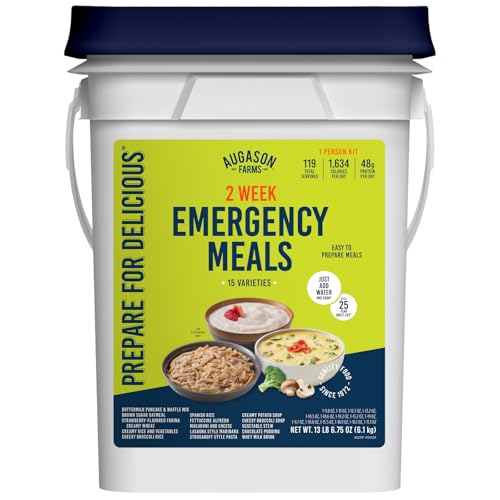
Best for: Individuals seeking a compact, long-storage option with variety. This 4-gallon watertight pail supports quick grab-and-go storage in a closet, car trunk, or RV. The kit includes multiple staple meals—like buttermilk pancakes, cheesy broccoli rice, stroganoff, and mac & cheese—delivering familiar flavors that help reduce meal fatigue in tight timelines.
Why chosen: It balances a large number of servings with essential flavor variety, making it easier to sustain a two-week menu without repetition. It also emphasizes simplicity—add water and heat—without requiring extra ingredients.
Limitations: Preparedness relies on reheating; if you’re in a scenario without heat, you’ll need an alternative method to heat meals. Also, no explicit nutrition breakdown is listed beyond general meal variety.
4Patriots 2-Week Survival Kit

Best for: Families seeking a longer-term stock with robust protection against supply interruptions. The kit provides about 84 servings with a total calorie density designed to help sustain energy during emergencies.
Why chosen: Its triple-layer Mylar packaging with oxygen absorbers is designed to protect against air, light, and moisture, extending shelf life and helping maintain quality in storage. The large number of servings supports multi-day meal planning.
Limitations: Slightly fewer total servings than some two-week bundles may require pairing with additional snacks or meals for higher daily calories. Packaging emphasis favors resilience, not compact portability alone.
Augason Farms Bakery Food Storage Kit No. 10 Can 3-Pack

Best for: Those who value baked goods and versatile items within a two-week plan. This kit adds 113 total servings across three bakery varieties, supporting breakfast and dessert options alongside main meals.
Why chosen: It broadens variety beyond entrees, which can improve morale and variety during a prolonged event. Bakers’ items can also be used in non-emergency meal planning, which adds ancillary utility.
Limitations: It may be lighter on high-protein mains compared to other strictly entree-focused kits, so consider supplementing with additional protein options if needed.
BetterBundle 2026 MRE Variety Pack
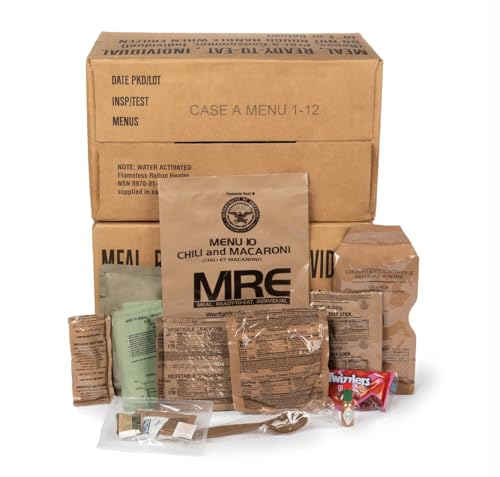
Best for: Users who want ready-to-eat meals with no cooking required in a compact, long-shelf-life format. Each MRE includes an entrée, sides, dessert, and accessories, with some kits featuring flameless heater options.
Why chosen: MREs provide high caloric content per meal and are convenient when cooking is unavailable or impractical, making them a strong choice for short-term emergencies or travel.
Limitations: Some users may prefer a more varied flavor profile or a longer-term storage solution with primarily dehydrated or freeze-dried meals. Weight can be higher per serving compared to powder-based options.
ReadyWise 120 Servings Sample Bucket

Best for: Individuals seeking a flexible, long-lasting supply with a wide selection of entrées. The split-lid bucket design enables quick access and serves as a portable tray.
Why chosen: ReadyWise emphasizes ease of use with “just add water” preparation and a shelf life of up to 25 years, which is advantageous for long-term storage or rotating stock in a two-week plan as meals are swapped in and out.
Limitations: Some users may want more protein-dense or varied flavors in a two-week window, depending on dietary needs and preferences.
ReadyWise 30 Day Emergency Food — 296 Servings

Best for: Households that want a robust, month-long option with a higher total serving count to cover longer outages or larger groups.
Why chosen: It offers extensive servings and a modular, stackable format, supporting long-term storage while maintaining accessibility for quick meals during emergencies.
Limitations: Larger footprint than single- or dual-bucket kits; storage space and lift considerations are more prominent for compact setups.
Ready Hour 120 Serving Entree Bucket

Best for: Quick, everyday use with a plan for emergencies. The bucket contains 120 total servings and a durable container for flood-safe storage and easy transport.
Why chosen: It provides solid shelf life and the convenience of bucket storage, making it a practical addition to a two-week stock that may be replenished over time.
Limitations: Some kits emphasize entrees; consider pairing with snack items or sides to ensure a balanced two-week menu plan.
Buying Guide: Key Factors To Consider
How many servings do you actually need for two weeks? Estimate daily calories per person and multiply by the number of people in your household. Choose kits with a balance of entrees and sides to maintain variety and nutrition.
What about shelf life and storage conditions? Look for long shelf lives (5–25 years is common) and moisture- and light-resistant packaging. Consider how you’ll store kits in small spaces or vehicles.
Do you need ready-to-eat options? If you’ll have limited cooking access, MREs or Ready-to-Eat buckets can be more convenient than strictly dehydrated meals that require cooking and heating.
How important is flavor variety? A mix of familiar flavors can reduce meal fatigue during an extended outage. Some kits emphasize bakery items or dessert options to improve morale.
What about portability and packaging? Durable, compact containers and resealable pouches help with organization and quick access during emergencies or camping.
Frequently Asked Questions
- What is a two-week food supply, and why is it important? A two-week supply provides enough calories and nutrition to cover a typical outage or emergency period, giving you time to secure longer-term resources.
- Are MREs suitable for daily use? MREs are designed for emergencies with high calorie content and no cooking needed, but many people prefer a variety of meals for normal daily use.
- Should I mix different brands? Yes, blending kits can balance flavors, nutrition, and shelf-life, and can improve overall meal appeal during a stressful period.
- How should I store a two-week supply? Store in a cool, dry, dark place. Use containers that protect against moisture and temperature fluctuations, and rotate stocks before shelf life expires.
- Is it okay to include bakery items in an emergency kit? Bakery items can diversify meals and boost morale, but ensure you still meet protein needs with other items in your kit.
- Do these kits require cooking? Some kits require water and heat; others are ready-to-eat. Check each product’s preparation steps to match your needs.
Leave a Reply