Best Pasteurizer for Ice Cream: Top Commercial Options for Small Kitchens to Shops
<文章>
Answer: For ice cream production, a dedicated pasteurizer with reliable heating and cleaning features is essential. This guide highlights five practical pasteurizers that balance size, throughput, and ease of use, helping buyers choose the right model for dairy, dessert shops, or home-scale operations. Best for compact counters, small-batch production, or entry-level commercial use, these units emphasize safe pasteurization, straightforward maintenance, and clear process control. The following table summarizes key details to compare at a glance.
| Product | Capacity | Best For | Notable Benefit |
|---|---|---|---|
| Wtecom Commercial Milk/Juice Pasteurization Sterilization Machine | Not stated, batch-based | Small shops, beverage dairies | Compact stainless steel construction with auto wash |
| Kolice Commercial 14L Pasteurization Machine | 14L | Dairy, coffee shops, small-scale juice handling | Auto washing; clear 60–85°C range |
| Kolice Commercial BIG Cylinder 36L Pasteurizer | 36L | Mid-sized operations with blending and cooling | Integrated cooling and blending; higher capacity |
| HNZXIB 14L Commercial Pasteurizer | 14L | Dairy, gelato, juice processing | Auto wash and timer; viewing lid |
| Kolice 150L Commercial Pasteurization Machine | 150L | Larger scale dairy operations | Large capacity with temperature control and stirring |
Wtecom Commercial Milk/Juice Pasteurization Sterilization Machine
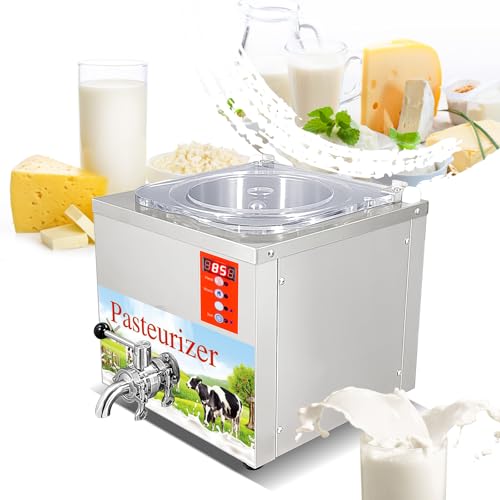
- Capacity: compact, suitable for small counters and daily use.
- Material: food-grade stainless steel for hygiene and durability.
- Temperature range: 60°C–85°C (140°F–185°F) with batch processing in 30–40 minutes.
- Automation: auto wash and timer; detachable shaft and stirring paddle for easy cleaning.
Best for: small cafés, dairy startups, or beverage stations that require reliable pasteurization without refrigeration. Choose this if you need a compact unit with straightforward cleaning and a strong yield per batch.
Caution: Data does not indicate cooling capability; plan separate chilling if needed for pasteurized liquids.
Kolice Commercial 14L Pasteurization Machine

- Capacity and design: countertop unit with 14L pasteurization capacity; includes auto washing.
- Temperature control: 60°C–85°C with 40-minute batch completion.
- Construction: food-grade stainless steel; features 360° stirring leaf and acrylic cover for monitoring.
- Best for: small dairy operations, coffee shops, or juice processing that value compact size and ease of cleaning.
Limitation: Heating only; does not provide active cooling, so post-pasteurization chilling requires an external system.
Kolice Commercial BIG Cylinder 36L Pasteurizer
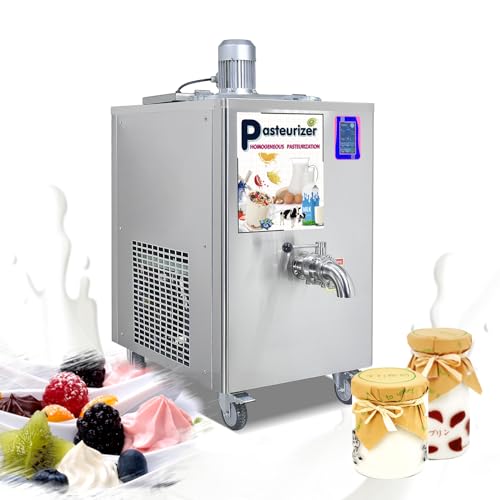
- Capacity: 36L with blending and automatic cooling.
- Process: pasteurization at 65°C/75°C/85°C with cooling to 5–15°C after pasteurization.
- Design: 360° stirring with a transparent lid for process monitoring.
- Best for: mid-sized operations seeking integrated cooling and faster turnover for blended products.
Limitation: Heating function is paired with cooling but the specific hold temperature function is not described; ensure workflow compatibility with your product line.
Kolice Commercial Milk Pasteurization Machine, 14L

- Design: countertop, 14L capacity with auto washing; 60–85°C range.
- Material: food-grade stainless steel; includes 360° stirring and acrylic viewing cover.
- Best for: small-to-mid-scale dairies or beverage prep stations that favor compact footprint.
- Limitation: Heating only; no built-in cooling; plan for downstream chilling if needed.
Best for: businesses prioritizing compactness and straightforward operation with visible process monitoring.
Kolice 150L Commercial Pasteurization Machine

- Capacity: large 150L with heating, stirring, and temperature display; heavy-duty design for higher throughput.
- Control: temperature settable up to 210.2 °F maximum; supports multiple pasteurization times via a three-gear controller.
- Features: double-layer stainless steel construction; water-immersion heating; adjustable temperature and real-time readout.
- Best for: larger dairy facilities or bottling operations needing high-volume pasteurization without external cooling.
Limitation: No integrated cooling function; cooling requires an external setup if product needs rapid chilling after pasteurization.
Buying Guide: Key Considerations For Pasteurizers For Ice Cream
- Capacity vs. workflow: Match batch size (14L, 36L, 150L) to your weekly output. Higher capacity reduces run frequency but requires more space and power.
- Heating range and time: Most units operate in 60°C–85°C; confirm batch time aligns with your production pace (roughly 30–40 minutes typical).
- Cooling options: Some models include integrated cooling; others do not. If your process requires rapid cooling or post-pasteurization hold, choose a unit with cooling or plan an external chiller.
- Automation features: Auto wash and timer save labor. Look for detachable stirring components and clear lids to simplify cleaning and inspection.
- Material and hygiene: Food-grade stainless steel is standard for durability and ease of cleaning; ensure seals and gaskets are corrosion-resistant.
- Monitoring and control: Acrylic viewing lids and real-time temperature displays help track pasteurization progress without opening the tank.
- Footprint and installation: Countertop models save space; larger units require adequate counter or cabinet space and proper electrical supply (voltage, amperage).
- Maintenance considerations: Look for simple disassembly for cleaning and a design that minimizes hard-to-reach areas.
Frequently Asked Questions
- What does pasteurization achieve for ice cream mix?
Pasteurization inactivates harmful bacteria and enzymes, improving safety and extending shelf life for dairy-based ice cream mixes.
- Is integrated cooling necessary for all pasteurizers?
No. Some models include cooling and can rapidly bring mix to a safe temperature; others require a separate cooling step after pasteurization.
- What capacity should a starter pasteurizer have for a small shop?
A 14L–36L unit is typically suitable for daily production or specialty flavors; larger setups (150L) suit higher-volume operations.
- Can pasteurizers handle non-dairy mixes?
Yes, many units are designed for milk, juice, and various dessert mixes; confirm compatibility with your specific ingredients.
- What maintenance steps are essential after pasteurization?
Run auto-wash as configured, inspect stirring mechanisms, clean the tank interior, and verify temperature sensors are functioning properly.
- Do these machines require special electrical wiring?
Most units run on standard 110V or 220V single-phase supplies; verify the exact electrical requirements with the supplier before purchase.
Leave a Reply