Best 3 Month Food Kit Options for Emergency Prep
Answering the question straight away: a 3 month food kit is designed for long-term emergency preparedness, offering ready-to-eat or easy-to-prepare meals with long shelf lives. The top picks here are suited for preppers, families, or individuals seeking steady, stackable food storage. Each entry below explains who it’s best for, why it was selected, and a practical caveat to consider before buying.
| Product | Servings | Shelf Life | Best For |
|---|---|---|---|
| 4Patriots 3-Month Survival Food Kit | 688 | 25 years | Families seeking a long-term, US-made supply |
| ReadyWise 3 Month Emergency Food Supply | 894 | Up to 25 years | Compact, diversified kits for thorough preparedness |
| ReadyWise Emergency Food Supply – 120 Servings | 120 | Up to 25 years | Starter or supplemental bucket for gradual buildup |
| Ready Hour 3-Month Emergency Food Supply | 846 | Up to 25 years | Portable, flood-safe option with varied meals |
| NuManna Defender Pack With Meat | 648 | 25+ years | Protein-focused, meat-inclusive kit for nutrition balance |
Note: Each product is presented with a focused view on who benefits most, why it stands out, and any practical limitation. The table above summarizes key purchase considerations to help you compare at a glance.
4Patriots 3-Month Survival Food Kit
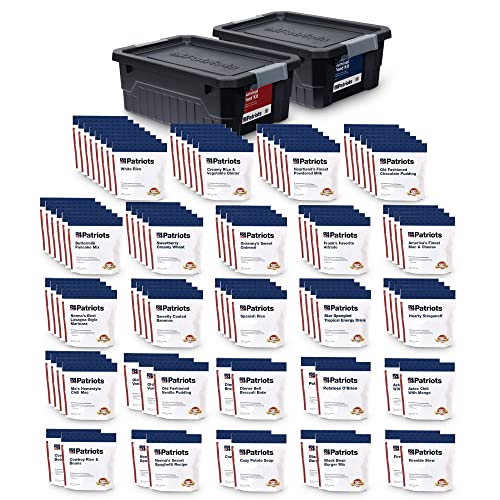
Features: 688 emergency servings across 24 recipes, including Grammy’s Sweet Oatmeal and America’s Finest Mac & Cheese. Approximately 7.6 servings per day with a total of about 135,840 calories (roughly 1,509 daily). Shelf life up to 25 years and manufactured in a US-based facility with SQF certification and USDA/FDA registration.
Best for: families or households needing a long-lasting, USA-made supply with a wide variety of meals. This kit emphasizes a traditional, comfort-food flavor profile suitable for long-term storage and reliability in crises.
Why selected: It combines a substantial overall calorie count, a diverse menu, and a lengthy shelf life, providing peace of mind for prepper households that want a ready-to-store, all-in-one solution.
Caution: The large batch storage requires adequate space; ensure you have a dedicated area that remains dry and stable to preserve long-term freshness.
ReadyWise 3 Month Emergency Food Supply

Features: 894 servings across 6 buckets, ready-to-eat meals, and stackable storage. Includes “just add water” convenience and a tray-like lid that doubles as a surface for serving. Provides up to 25 years shelf life.
Best for: households needing a compact, organized system with easy access during emergencies or camping trips. The durable bucket design supports stacked storage and quick meal prep.
Why selected: This kit emphasizes ease of storage and quick readiness, with a clear, modular format that helps with inventory control during crises.
Caution: While impressive in capacity, check the weight of each bucket and plan for transport or relocation if you live in a smaller space or need to move gear quickly.
ReadyWise Emergency Food Supply – 120 Servings

Features: 120 servings of ready-to-eat entrées with up to 25 year shelf life. The bucket design allows organized storage and quick access to pouches; includes a split lid that doubles as a tray.
Best for: individuals starting a long-term storage plan or households seeking a cost-efficient entry point into preparedness.
Why selected: It provides a practical entry point to emergency food storage, letting you scale up with additional kits as needed without committing to a full 3-month setup right away.
Caution: Totals are less than a full 3-month supply, so you’ll need to buy additional kits to reach a 3-month target if that is your goal.
Ready Hour 3-Month Emergency Food Supply

Features: 846 servings with more than 2,000 calories per day, totaling 180,840 calories and 3,966 grams of protein per kit. Includes 22 varieties of meals and easy “add water” preparation; most meals ready in minutes.
Best for: preppers prioritizing a diverse menu with high energy content, suitable for heavy use during prolonged emergencies or outdoor scenarios.
Why selected: The high calorie and protein content supports sustained energy, while the multiple meal options reduce meal boredom and ensure essential nutrient coverage.
Caution: Heavier kits can be cumbersome to move; ensure you have serveral accessible storage spots and a plan for limited space during deployment.
NuManna Defender Pack With Meat

Features: Triple Defender Pack with Meat, including protein-focused meals with breast chicken and ground beef. Total of 648 servings across three buckets, designed to boost protein intake and nutrition with live nutrition emphasis.
Best for: households seeking higher-protein options within a long-term kit, especially where meat-inclusive meals are valued for satisfaction and nutrition balance.
Why selected: The Defender concept adds meat-based protein to expand dietary variety and nutritional coverage within a 3-month timeframe.
Caution: Protein-focused kits can have heavier portions; check storage space and ensure you’re comfortable with the weight and volume of meat-containing meals over time.
Buying Guide: Key Considerations For 3 Month Food Kits
What should a 3 month kit include?
A solid 3 month kit should offer a mix of entrées with high caloric density, varied meals, complete shelf-stable options, and a plan for water and fuel needs. Look for long shelf life (up to 25 years where stated), easy rehydration or heating, and a reasonable total calorie target per person per day.
How much storage space is needed?
Most 3 month kits come in stackable buckets or packaged pouches. Assess your pantry or garage space and plan for weatherproof storage. Heavier kits may require sturdy shelving and clear access for quick meal prep during emergencies.
Who should consider these kits?
Families, individuals living in disaster-prone areas, campers, and anyone building a long-term emergency plan can benefit. Kits with greater protein or a broader menu are better for households with picky eaters or higher energy needs.
How to compare options effectively?
Compare total servings, calories, shelf life, and the variety of meals. A kit with diverse meals reduces meal fatigue, while high-calorie per-day counts support sustained energy in crises. Consider the ease of transport if moving between locations is anticipated.
What about starter options?
Starter buckets (like 120 servings) can be a low-commitment entry point. They allow you to progressively build toward a full 3-month supply, spreading out initial cost and storage needs while you evaluate taste and preparation preferences.
Safety and quality notes
Choose kits from manufacturers with clear packaging and shelf-life labeling. Look for food safety certifications, and verify storage conditions suitable for your climate to maintain quality over time.
FAQs
- Q: Are 3 month food kits suitable for everyday meals?
A: They are designed for emergencies, but many meals are ready-to-eat or quick to prepare for everyday use when desired. - Q: Can I mix kits from different brands?
A: Yes, mixing brands can diversify meals and potentially optimize shelf life, but plan for consistent storage conditions and rotation. - Q: How long does it take to prepare most meals?
A: Most require adding water and heating, with several options ready in minutes in emergency scenarios. - Q: Do these kits include beverages or snacks?
A: Some kits include beverage mixes or snacks; check each product’s full feature list for specifics. - Q: Is a 3 month supply enough for a family?
A: It depends on family size, daily caloric needs, and consumption patterns. Larger families typically require more servings per day. - Q: What is the most important factor when choosing?
A: Calorie density, variety of meals, and shelf life are the core factors for reliable long-term storage.
Leave a Reply