Best Recycled Trash Bags for Eco-Conscious American Homes
If you’re shopping for trash bags that minimize environmental impact without sacrificing strength, a growing lineup of recycled, bio-based, or otherwise eco-friendly options is at your disposal. This guide highlights five top choices that balance durability, material source, and overall value. Each product draws from recycled or renewable materials and offers features designed to manage daily waste with fewer environmental trade-offs.
Summary table of chosen products:
- ValueGuard Large Trash Bags — 13 Gallon, 0.6 mil, 110 count
- Hippo Sak Tall Kitchen Bags with Ocean Bound Plastic — 13 Gallon, 45 count
- TYPLASTICS 13 Gallon Trash Bags — 300 count, 0.8 mil
- Hefty Ultra Strong 13 Gallon — 110 count, 50% recovered materials
- TECHSHARE Biodegradable 13 Gallon Bags — 1.18 mil
ValueGuard 13-Gallon Recycled Trash Bags

ValueGuard offers a convenient, highly recyclable trash bag option designed for everyday use in kitchens and offices. Each bag is 25 inches wide by 28 inches tall with a 0.6 mil thickness, providing a sturdy fit for standard 13-gallon bins. The bags come in a dispenser box, making single-bag removal simple and reducing the likelihood of tearing when pulling one bag from the stack. The drawstring closure enhances tie-down security and carrying ease, helping prevent leaks during transport. Importantly, these bags are made from recycled post-consumer plastic, certified by Intertek, reflecting a commitment to reducing new plastic production while maintaining dependable performance for heavier loads.
Key features include easy dispensing, strong drawing closure, and a 13-gallon capacity that aligns with common kitchen and office waste needs. The packaging emphasizes recycled content, presenting ValueGuard as a practical choice for households seeking to lower their plastic footprint without compromising reliability on trash containment. For users who want a balance between performance and environmental responsibility, these bags offer a credible option that scales well for daily waste.
Hippo Sak Ocean-Bound Plastic Bags

Hippo Sak’s tall kitchen bags emphasize sustainability through ocean-bound plastic content. These 13-gallon bags are made from plant-based materials in some variants and feature ergonomic handles for easy lifting and tying. While the product highlights renewable resources, the distinctive attribute here is a focus on reducing ocean plastic pollution by incorporating plastic that would otherwise enter waterways. The design aims to deliver a strong, leak-resistant bag suitable for regular kitchen waste while supporting vulnerable supply chains in developing nations that benefit from ocean-bound plastic collection programs. A visible benefit is the potential for lower environmental impact when compared to standard petroleum-based bags.
In practice, users can expect a sturdy bag with reliable strength and a practical lid-handle experience. The ingredient mix promotes sustainability without compromising everyday usability. It’s a suitable option for households seeking to prioritize eco-friendly materials, especially when the bag’s strength and sealing performance are essential for containing heavy or messy trash.
TYPLASTICS 13-Gallon Recycled Bags

TYPLASTICS markets a high-volume option designed to minimize waste across frequent household use. Each roll covers 24 inches wide by 27 inches tall with a thickness of 0.8 mil, providing robust puncture and tear resistance for everyday kitchen waste. Importantly, these bags are made from 100% post-consumer recycled material (PCR), offering a tangible way to reduce reliance on virgin plastic while maintaining dependable load capacity up to about 40 pounds. The large 300-count quantity makes them suitable for households, offices, or shared spaces that need consistent supply without frequent restocking.
The emphasis on PCR content aligns with broader recycling goals and consumer expectations for responsible material sourcing. For users who prioritize recycled content and substantial bag size, TYPLASTICS presents a compelling balance of environmental considerations and practical performance in a 13-gallon format.
Hefty Ultra Strong 50% Recovered Materials

Hefty’s Ultra Strong line highlights the use of recovered materials, with bags made from 50% recovered materials while maintaining a robust 13-gallon capacity. This combination supports circular economy goals by reusing materials that would otherwise be discarded, without compromising the bag’s strength, durability, and security features. The product offers six protective attributes: flex strength, a tough drawstring, odor control, leak resistance, puncture protection, and rip defense—delivering a versatile solution for households and small offices dealing with varied waste streams. The gray, unscented design helps visually blend with most kitchen ecosystems, while the drawstring closure simplifies handling and disposal.
From a sustainability perspective, selecting bags with recovered-content materials reflects a practical approach to reducing virgin plastic use. The Hefty option provides an easy transition for households aiming to increase recycled content in daily waste management while retaining the reliability expected in a 13-gallon bag.
TECHSHARE Biodegradable 13-Gallon Bags
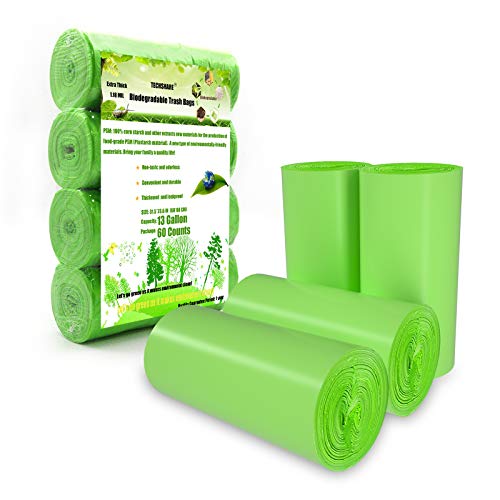
TECHSHARE offers a biodegradable option aimed at compostable or environmentally friendly disposal. These 13-gallon bags are made with plant-based Plastarch material and corn starch-derived components, presenting a biodegradable alternative to traditional polyethylene bags. With a thickness of about 1.18 mil, the bags are designed to handle typical kitchen loads, claimed to support up to approximately 20 kilograms. The product notes non-toxic, odorless properties, aligning with consumer expectations for safer, more eco-conscious waste management. While biodegradability can depend on disposal conditions, TECHSHARE positions itself as a practical solution for those prioritizing compostable or less persistent waste materials.
For households seeking to minimize long-term plastic persistence, biodegradable options offer a meaningful option, particularly for organic or compostable waste streams. It’s important to consider local recycling and composting capabilities when selecting these bags to maximize their environmental benefits.
Buying Guide: Key Purchase Considerations
- Material source and recycled content: Look for bags with post-consumer recycled content (PCR) or plant-based materials, which reduce dependence on virgin plastic and can support recycling programs.
- Capacity and fit: Ensure the bag size matches your trash can (common sizes include 13 gallons). A bag that is too small may tear; one that is too large can slip into the can.
- Strength and protection: Consider thickness (mil) and puncture resistance for heavier loads or sharp objects. Drawstring closures improve handling and containment during disposal.
- Biodegradability vs. recyclability: Biodegradable or compostable bags are designed to break down under certain conditions. Verify local composting capabilities and waste-processing options to maximize environmental benefits.
- Source transparency: Brands that clearly disclose material sources and certifications (for PCR content or compostable materials) help consumers assess eco-friendliness.
- Dispenser design: Inner-dispensing or easy-pull mechanisms reduce bag tearing and improve convenience in busy kitchens or offices.
- Cost and volume: Higher PCR content or larger pack sizes can offer long-term value, especially for households or small offices with consistent waste generation.
- Allergen and scent considerations: If sensitive users are present, opt for unscented and hypoallergenic options to minimize odor-related concerns.
In choosing among these options, consider your primary goals: reducing plastic-derived waste, supporting ocean-bound plastic initiatives, prioritizing heavy-load resilience, or opting for biodegradable solutions that align with local composting capabilities. A mix of products—one that emphasizes recycled content, another with ocean-bound plastic, and a third biodegradable option—can cover typical household waste while addressing diverse sustainability priorities.
Leave a Reply