Best Veggie Straws for Toddlers: Nutritious Picks for Busy Families
Finding kid-friendly veggie straws that suit toddlers means prioritizing simple ingredients, gentle textures, and buildable nutrition. This guide highlights five top options designed for little eaters, helping caregivers choose snacks that balance taste and munchability. Each product is evaluated for age suitability, ingredient quality, and practicality for on-the-go feeding. The best picks are suited for parents seeking organic options, allergen-conscious snacks, or easy lunchbox staples. Read on to compare key features and see which veggie straws fit your toddler’s snacking routine.
Summary of featured products
| Product | Best For | Notes |
|---|---|---|
| Earth’s Best Organic Kids Sesame Street Veggie Straws | Toddlers who love familiar characters and portable packs | Organic blend with real veggies; ideal for lunchboxes |
| Earth’s Best Organic Garden Veggie Straws (Original) | Kids starting new textures and finger foods | Hidden veggie mix; simple, wholesome ingredients |
| Little Bellies Organic Veggie Tubes | Very young toddlers; 12 months and up | USDA Organic; natural ingredients; small packs |
| Sensible Portions Veggie Straws, Multi-Pack | Snack variety and school lunches | Better-for-you alternative to traditional chips |
| Earth’s Best Organic Baby Teething Snacks (Garden Veggie Crunchy Sticks) | Teething babies and early feeders | dissolvable texture for gums; stage-appropriate |
Earth’s Best Sesame Street Toddler Veggie Straws – Original

Best for: Parents seeking organic toddler snacks in reusable, kid-friendly packs. These Sesame Street–themed bags are designed for quick lunches and on-the-go snacking. The blend emphasizes real vegetables like spinach and tomatoes along with potatoes, offering familiar flavors in a crunchy format. Ideal for daycare or preschool snack time where fun packaging can encourage fruit and veggie consumption.
Why chosen: The organic certification and simple ingredient list align with typical toddler snacking goals. The individual serving sizes make portion control easy for little hands, and the Sesame Street branding can help engage young eaters. Caution: Some toddlers may prefer milder flavors; if your child is sensitive to greens, introduce gradually.
Earth’s Best Organic Garden Veggie Straws – Original

Best for: Toddlers ready for more texture and a separate “non-snack” snack moment. The original Garden Veggie Straws feature a simple mix of organic vegetables, including spinach and tomato, crafted into a lighter straw form that supports self-feeding and finger dexterity. Great for lunch boxes and short car trips.
Why chosen: Organic ingredients and a straightforward recipe reduce complexity for picky eaters. The product supports wholesome snacking without artificial flavors. Caution: Each bag is a single-serve; if you need larger portions for older toddlers, consider multi-pack options.
Sensible Portions Veggie Straws Multi-Pack

Best for: Families seeking a variety pack with a familiar chip-like crunch but with veggies integrated. These 0.75 oz bags provide a portion-friendly snack option that travels well to school, parks, or playdates. The mix often includes tomatoes, spinach, and potato base for a satisfying bite.
Why chosen: The snack packs are easily portioned, reducing overeating. The product emphasizes no artificial flavors or preservatives, aligning with common toddler dietary goals. Caution: Some varieties may be saltier than others; monitor sodium intake for very young eaters or those with sensitivity.
Little Bellies Organic Veggie Tubes – Toddler Snack
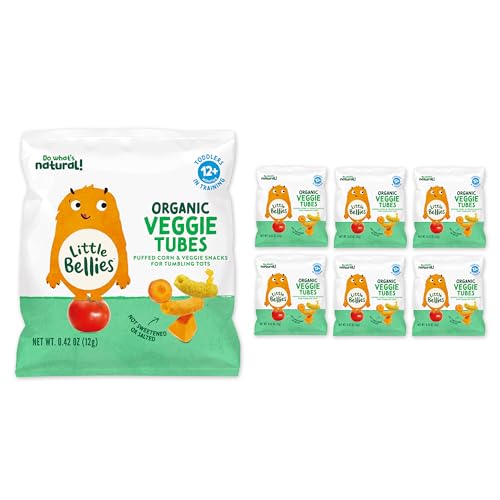
Best for: Toddlers around 12 months and older who are exploring finger foods and new textures. The Veggie Tubes are USDA Organic and use natural ingredients such as fruit and vegetable powders and lentils, making them a gentle introduction to savory, veggie-forward snacks.
Why chosen: The small, convenient packs and clearly recognizable ingredients help caregivers manage picky eating phases. Caution: Tubes are small; supervise to avoid choking hazards with very young children and ensure proper chewing before swallowing.
Earth’s Best Organic Melty Hoops – Spring Veggie

Best for: Babies and very young toddlers who need soft, dissolvable snacks. Melty Hoops dissolve quickly and are designed to be practice tools for pincer grasp development, supporting early self-feeding skills while introducing veggie flavors.
Why chosen: A gentle texture helps soothe teething and fits stage-appropriate feeding milestones. Caution: Not ideal for older toddlers needing a crunchier texture; choose when practicing soft-handling skills only.
Buying Guide: Key Considerations For Choosing Toddler Veggie Straws
What ingredients matter most? Look for organic certification or minimal processing. Prioritize real vegetables (spinach, tomatoes) over blends with artificial flavors. For babies and very young toddlers, seek dissolvable or softer textures; for older toddlers, firmer straws can aid self-feeding and chewing practice.
Is the product appropriate for your child’s age? Some items target 12 months and up, while others are specifically for toddlers 2 years and older. Always check the packaging for age guidance and supervise snacking to prevent choking.
How does packaging affect practicality? Individually wrapped bags are convenient for lunchboxes and travel. Multi-pack formats reduce waste and simplify stocking in pantries. Consider bag size relative to your child’s appetite.
Allergies and sensitivities should guide selection. If gluten, dairy, or other allergens are a concern, confirm the product’s label. Organic options can provide a lower exposure to synthetic additives for some families.
Texture progression and feeding milestones. Start with dissolvable or very soft options for teething or early self-feeding. Move toward crunchier straws as little eaters develop better jaw strength and pincer grasp skills.
FAQ: Quick Answers For Toddler Veggie Straws
- Are veggie straws healthier than regular chips for toddlers? They often contain real vegetables and may have fewer artificial ingredients, but portions still count as a snack and should fit into overall daily nutrition.
- What age is best for veggie straws? Many are suitable from 12 months onward, with some products designed specifically for older toddlers as textures become more developed.
- How should I introduce new flavors? Start with a small amount alongside familiar foods, and watch for texture preference or gag reflex before increasing portions.
- Are organic options worth it for toddlers? Organic snacks can reduce exposure to certain pesticides and synthetic additives, but taste and texture should also match your child’s preferences.
- How can I avoid choking hazards? Choose age-appropriate textures and supervise during snacking, especially with very young children or new textures.
- Can veggie straws replace vegetables in a toddler’s diet? They should complement a balanced diet that includes fresh fruits and vegetables; they should not replace regular produce intake.
Leave a Reply