Best Trays for Microgreens: Durable, Reusable Seedling Trays for Home Growing
Growing microgreens at home is easier with the right trays. This guide reviews five top options that cover drain hole varieties, no-drain designs, and heavy‑duty options for consistent results. Each tray is evaluated for durability, reusability, size, and suitability for microgreens, seed starting, and hydroponic setups.
Summary of chosen products:
- Living Whole Foods 10 Plant Growing Trays (Drain Holes) – 20″ x 10″ bottom, 21″ x 11″ top – great for drip trays and hydroponics.
- Living Whole Foods 10 Plant Growing Trays (No Drain Holes) – 20″ x 10″ bottom, ~21″ x 11″ top – ideal for clean, no-drip setups.
- Mr. Pen Plastic Growing Trays, 5-Pack – 17″ x 10″ – lightweight, reusable seedling trays.
- Mr. Pen Plastic Growing Trays, 10-Pack – 17″ x 10″ – budget-friendly bulk option.
- SOLIGT Extra Thick Heavy Duty 10 Pack Seed Starting Trays – No Holes, No Leakage – 14″ x 10.8″ x 2.3″ – durable, leak-free for neat microgreen work.
Living Whole Foods: 10 Trays With Drain Holes

These durable plastic trays include drainage holes and are sized for versatile use in seed starting, hydroponics, or drip irrigation systems. The top measurement is about 21″ by 11″ with a 20″ by 10″ bottom. The set includes ten trays, enabling batch sowing and consistent watering across multiple microgreen varieties. The holes support controlled drainage, helping prevent overwatering while keeping the workspace cleaner.
Living Whole Foods: 10 Trays, No Drain Holes

This no-hole variant provides a clean, drip-tray capable surface ideal for setups where excess water drains away naturally or is managed with separate saucers. Its dimensions resemble the drain-hole version, offering about 21″ by 11″ top and roughly 20″ by 10″ bottom. The lack of holes minimizes moisture loss, which can be preferable for certain microgreen mixes and soil-based starts where precise moisture control is desired.
Mr. Pen: 5-Pack Seedling Trays, 17×10

This five-pack from Mr. Pen emphasizes durability and reusability. Each tray measures 17 by 10 inches with a depth around 2.4 inches, offering ample space for microgreens and small seedlings. The trays are designed to contain soil, fertilizer, and water, helping gardeners manage irrigation more efficiently. They’re lightweight and easy to clean, supporting repeated indoor or outdoor use with reduced waste.
Mr. Pen: 10-Pack Seedling Trays, 17×10
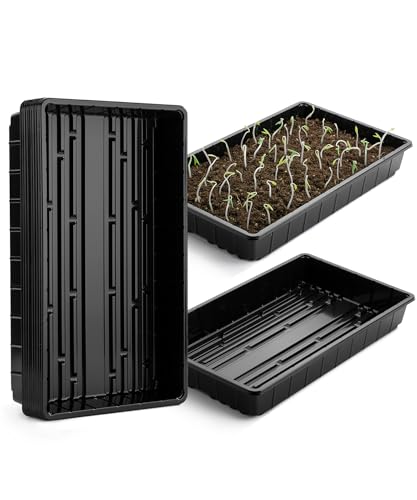
This bulk option mirrors the 5-pack in dimensions (17″ x 10″ x ~2.4″), but provides ten trays for larger microgreen operations or family-sized harvests. The construction prioritizes sturdiness and reuse, helping gardeners manage watering, soil, and nutrients more consistently across multiple seed batches. Lightweight handling makes setup and cleanup straightforward for home kitchens and basements.
SOLIGT Extra Thick No-Hole Trays, 10 Pack

These no-hole trays prioritize durability and leakage prevention, making them a robust option for long-term microgreens projects. The 14″ by 10.8″ by 2.3″ design supports heavier soils and dense seed mixes without buckling under weight. The extra-thick material adds rigidity for repeated use, and the no-hole design aligns with bottom-watering or tray-to-tray irrigation methods, helping keep work surfaces clean.
Buying Guide: Key Purchase Considerations
- Water management: Drain holes facilitate drainage, reducing water buildup in tray bottoms. No-hole trays are best with bottom watering or when using separate drip systems. Consider your irrigation method and seed type to pick the right design.
- Size and depth: Standard microgreen trays range around 17″ x 10″ to 21″ x 11″. Deeper trays tolerate more soil and moisture but require more pantry or shelf space. Choose a size compatible with your grow rack, window ledge, or shelving.
- Material and durability: Reusable trays save money and reduce waste. Look for sturdy plastic that resists warping, scratching, and staining. Thicker walls improve longevity for frequent harvest cycles.
- Leak control and containment: For indoor setups, consider trays with raised edges or leak-proof bottom surfaces to keep work areas clean. Drip trays or saucers can help manage overflow for hole-equipped trays.
- Reusability and cleanability: Dishwasher-safe materials and smooth surfaces simplify cleaning between plant batches. BPA-free plastic is a plus for food safety and odor control.
- Cost-per-use: Bulk packs can lower per-tray cost, but ensure the trays meet your needs for seed variety and space. Assess long-term reuse against initial investment.
- Compatibility with microgreen varieties: Some seeds germinate faster or require precise moisture. A mix of drain-hole and no-hole trays gives flexibility for different greens and growing strategies.
For optimal results, match tray type to your growing setup. If you rely on bottom watering or want to minimize surface moisture near your kitchen, no-hole or extra-thick options may be preferable. If you use drip irrigation or want rapid drainage, drain-hole trays can help prevent waterlogging and simplify irrigation planning.
Across these five choices, you’ll find options that balance durability, cost, and ease of use for producing fresh microgreens at home. Whether you’re starting seeds in soil, employing hydroponic systems, or experimenting with different microgreen varieties, the right tray setup helps streamline your harvest cycle and support healthy plant growth.
Leave a Reply