Best Monk Fruit Sugar Substitutes for Healthier Baking and Drinking
Discover high-quality monk fruit sweeteners that deliver real sweetness with zero or low calories. This guide highlights five popular options, comparing sweetness, ingredients, and best uses from baking to coffee. Whether you follow keto, low-carb, or simply want a natural sugar alternative, these picks offer reliable sugar-like sweetness without the glycemic spike. Read on to find the right monk fruit sugar for your pantry and preferences.
| Product | Brand | Size | Key Benefit |
|---|---|---|---|
| Lakanto Monk Fruit Sweetener with Erythritol (3 lb) | Lakanto | 3 lb | 1:1 sugar replacement, low calorie |
| Monk Fruit In The Raw Sweetener Baker’s Bag (16 oz) | IN THE RAW | 16 oz | Keto certified, zero calories, versatile for baking |
| Whole Earth Monk Fruit Sweetener with Erythritol (4 lbs) | Whole Earth | 4 lbs | Plant-based blend, low glycemic index |
| Lakanto Classic Monk Fruit Sweetener With Allulose (1 lb) | Lakanto | 1 lb | Allulose blend, sugar-like taste |
| Organic Monk Fruit Extract (5 oz) | WHYZ | 5 oz | Pure monk fruit powder, no erythritol |
Lakanto Monk Fruit Sweetener With Erythritol 3 lb

Lakanto’s Monk Fruit Sweetener with Erythritol combines monk fruit extract with erythritol to mimic white sugar’s texture and sweetness while keeping calories ultra-low. It dissolves easily in liquids, performs well in baked goods, and ships in a convenient 3 lb bag. This sugar substitute is keto-friendly and supports low-carb lifestyles without sacrificing taste. It measures cup-for-cup like sugar, making it simple to substitute in most recipes.
Monk Fruit In The Raw Sweetener Baker’s Bag, 16 oz

Monk Fruit In The Raw All-Natural Sweetener is zero calories and zero net carbs, designed for calorie-conscious bakers. It is keto certified, non-GMO, vegan, and has a low glycemic value. This sweetener works well in pies, sauces, and cakes and performs effectively in hot drinks like coffee and tea.
Whole Earth Monk Fruit Sweetener With Erythritol, 4 LBS

This plant-based blend combines monk fruit and erythritol to deliver a 1:1 sugar replacement suitable for baking, cooking, and beverages. It has a low glycemic index and supports keto, paleo, and low-carb diets. A versatile option for those seeking a natural, all-purpose sugar substitute with the familiar sweetness of sugar.
Morning Pep Monk Fruit Sweetener, Classic (2.5 lb)

Morning Pep’s Classic Monk Fruit Sweetener aims to be a straightforward white sugar substitute. It is keto-friendly and offers a 1:1 replacement ratio, making it easy to swap into existing recipes for baking, coffee, and tea. The blend is designed to provide the familiar sweetness without calories or sugar spikes.
Lakanto Classic Monk Fruit Sweetener With Allulose, 1 lb
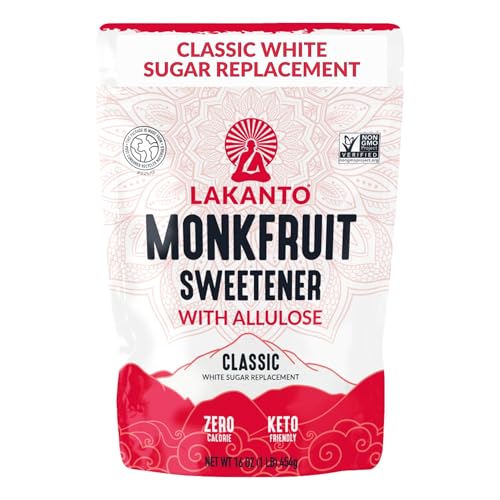
This Lakanto product uses allulose instead of erythritol, offering a sugar-like sweetness with zero calories. It dissolves quickly, helps baked goods stay moist, and provides a 1:1 sugar replacement. It’s keto-friendly and suitable for those who prefer not to use erythritol in their sweeteners.
Organic Monk Fruit Extract, 5 oz – Pure Powder

Pure monk fruit powder offers a highly concentrated form of sweetness with no erythritol or fillers. It’s non-GMO and vegan, with a low glycemic impact. Ideal for precise sweetening in drinks, sauces, and recipes requiring measured amounts of monk fruit sweetness, though it may require careful dosing due to its potency.
Buying Guide: Key Considerations And Comparisons
- Ingredients: Decide between blends (monk fruit with erythritol or allulose) or pure monk fruit extract powder. Blends can mimic sugar more closely in texture and volume, while pure powder offers clean sweetness with fewer additives.
- Sweetness and 1:1 Substitution: Some options advertise cup-for-cup replacement; verify whether you need a 1:1 ratio for baking or if you’ll adjust recipes to taste with sugar-free sweeteners.
- Glycemic Impact: Most monk fruit products are zero or low glycemic. If you follow a strict ketogenic or low-carb plan, check for any hidden carbs or sugar alcohols in blends.
- Texture And Cooking Behavior: Erythritol blends can have a cooling effect in some recipes and may crystallize in certain baked goods. Allulose blends tend to mimic white sugar more closely in moisture retention.
- Origin And Certification: Organic monk fruit and non-GMO certifications can matter for certain dietary choices. Keto certification may ease selection for keto dieters.
- Usage Versatility: Consider whether you need a product suited for baking, beverages, or both. Some products are marketed strongly toward coffee and tea, others for general cooking and baking.
- Serving Form: Decide between bags, jars, or powders. Powdered forms can be easier to measure in recipes if you’re substituting for granulated sugar in precise amounts.
- Allergen And Dietary Needs: If you have sensitivities to sugar alcohols, opt for blends without erythritol. For vegans, confirm vegan certifications on the product.
- Storage And Shelf Life: Most monk fruit products have long shelf lives, but powders may degrade if exposed to moisture. Store in a cool, dry place.
These five selections provide a range of common formats and flavor profiles to suit different recipes and dietary goals. When choosing, align with your preferred sweetness level, whether you want a 1:1 sugar substitute, and whether you prefer erythritol, allulose, or a purer monk fruit extract.
Leave a Reply