Best Honey Extractor for Beginners: Quiet, Easy and Efficient Beekeeping
Choosing a honey extractor as a beginner can boost efficiency, reduce manual labor, and protect your honeycombs. This guide highlights five user‑friendly options that blend practical features with durable materials. Each product offers a different balance of frame capacity, manual vs. electric operation, and height adjustments to fit your setup. Whether you’re starting with a few frames or expanding to a small apiary, these extractors are designed to simplify harvesting while keeping your operation safe and clean.
| Product | Type | Frames | Power | Key Benefit |
|---|---|---|---|---|
| VEVOR Electric Honey Extractor, 4/8 Frame | Electric | 4/8 | 140W | High capacity, quick processing |
| VEVOR 3 Frame Honey Extractor | Manual | 3 | Manual | Compact, precise control |
| Newest 2/4 Frames Honey Extractor Electric | Electric | 2/4 | 140W | Affordable electric option |
| Honey Lake 3 Frame Electric Honey Extractor | Electric | 3 | 140W | Low-noise operation |
| VIVO Electric Honey Extractor 8 Frame Rack | Electric | 8 | 120V motor | Large-capacity with clear lid |
VEVOR Electric Honey Extractor, 4/8 Frame

The VEVOR 4/8 Frame Electric Honey Extractor combines a spacious drum with an adjustable height stand, turning heavy manual cranking into a simple push. It accommodates up to 8 small or medium frames, or 4 large frames, making it ideal for hobbyist to semi‑professional beekeepers. The unit features a deep and a medium honeycomb size to fit common frame types, and a 140W motor that delivers speeds up to about 1300 rpm. Its polished stainless steel construction resists rust and cleans easily, helping maintain sanitary extraction conditions.
With a transparent lid, users can monitor the extraction process without opening the drum. The included height‑adjustable stand helps align the drum over a bucket, improving workflow and reducing spills. Overall, this model emphasizes speed and durability for users expanding from manual methods.
VEVOR 3 Frame Honey Extractor, Manual

Designed for hands‑on beekeepers, the VEVOR 3 Frame Manual Honey Extractor handles up to 3 frames of various depths. Its adapted honeycomb sizes match standard deep and medium frames, and the ergonomic handle reduces effort during cranking. The polished stainless steel exterior resists corrosion and is easy to clean between harvests. This model offers precise control and portability, making it suitable for kitchen counters or garage apiaries where space is at a premium.
Manual operation provides a tactile experience and can be a good fit for beginners who want to learn the extraction process step by step. The compact footprint allows storage in smaller spaces, while still delivering reliable performance for hobbyist operations and seasonal harvests.
Newest 2/4 Frames Honey Extractor Electric
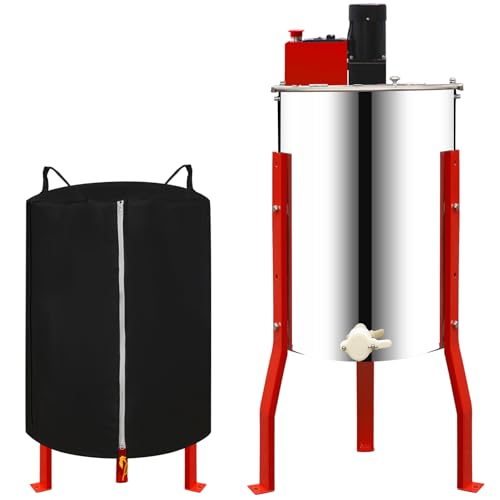
This electric model targets entry‑level users with two or four frame options. It uses a 140W motor and can reach high speeds around 1300 rpm, enabling quick extraction while minimizing arm fatigue. The stainless steel body resists rust and is straightforward to clean after use. A transparent lid allows users to observe the process, ensuring careful handling of frames and honey flow. For beginners testing the waters of larger scale but still keeping costs reasonable, this unit offers a practical balance of performance and value.
The adjustable stand helps position the drum over a bucket, supporting a tidy, spill‑free workflow. The design emphasizes reliability and ease of use, with attention to frame compatibility and durable materials that are easy to maintain over time.
VEVOR Electric Honey Extractor 2/4 Frame

This model provides a practical path from manual to electric, supporting 4 shallow or medium frames or 2 deep frames. It shares the familiar VEVOR build quality: polished stainless steel, a robust 140W motor, and an adjustable stand. A clear lid helps monitor honey flow while ensuring a clean harvest. The combination of capacity, speed, and durability makes this a strong option for beekeepers who anticipate growing their operation beyond a single season.
Honey Lake 3 Frame Electric Honey Extractor

Honey Lake’s 3 Frame Electric Honey Extractor focuses on balance and quiet operation. It holds up to 3 frames, providing a calm, low‑noise extraction experience ideal for hobbyists and semi‑professional beekeepers. The 140W motor delivers consistent performance at speeds between 90 and 1250 rpm, with an emergency pause and automatic stop for lid lift. A triangular leg design ensures stability, while the height adjustability makes it adaptable to different working heights and 5‑gallon bucket setups.
BeeTech 2/4 Frames Manual Honey Extractor Kit

The BeeTech kit combines a manual extractor with practical additions: frame grip, uncapping knife, double sieve, and honey gate. It supports up to 4 medium frames or 2 deep frames plus 2 medium frames, making it a flexible option for growing collections. The reinforced legs and adjustable height contribute to stability, reducing wobble during cranking. This kit is well suited for beginners who want a complete setup ready for immediate use, with components designed to integrate seamlessly into a small setup.
VINGLI 3 Frames Manual Honey Extractor

The VINGLI 3 Frames Manual Honey Extractor emphasizes rust resistance and ease of cleaning, with a top‑tier stainless steel frame. It holds up to three standard frames and features a slightly rounded inner basket to protect combs during extraction. The design includes a unique crank with a square screw dent for easier installation and smooth turning, suitable for both hobbyists and professionals. The robust build helps ensure consistent performance with repeated use and careful handling of frames.
VIVO Electric Honey Extractor 8 Frame Rack

The VIVO 8‑frame rack is designed for high‑volume harvests, offering an 8‑frame capacity with a stainless steel drum that stands tall at 25.5″ and a 18.5″ diameter. A 120V quiet motor reduces noise during operation, and the gate is elevated to accommodate a 5‑gallon bucket beneath for convenience. This model works well for beekeepers who anticipate frequent harvests and need to maximize throughput without sacrificing cleanliness or frame integrity. The enclosed gears help keep honey away from moving parts for easier maintenance.
Buying Guide
- Frame capacity and type: Start with the number and depth of frames you plan to harvest. Electric models tend to handle larger loads, while manual units offer cost savings and a hands‑on experience.
- Power and speed: Electric extractors typically provide consistent speeds up to around 1300 rpm, which speeds up extraction but can cause more aggressive frame handling. Manual models require more labor but give precise control over the process.
- Drum material and lid: Stainless steel drums resist rust and are easy to clean. A transparent lid helps monitor progress and reduces surprises during extraction.
- Stand height and stability: Adjustable stands improve ergonomics, allowing you to align the drum with your bucket. Look for reinforced legs or tripod designs for stability on uneven surfaces.
- Maintenance and safety: Choose models with enclosed gears or simple disassembly for cleaning. A proper honey gate and a clean drainage path minimize mess and contamination risk.
- Noise and space: If you keep an apiary near living spaces, consider quiet motors. For small spaces, compact or foldable options may be preferable.
- Budget vs. scale: Beginners often balance initial cost with future expansion. A mid‑range electric model can offer a practical starting point with room to grow.
When selecting a honey extractor, align features with your current needs and future plans. Electric extractors offer what many beginners want: speed, efficiency, and reduced manual labor. Manual extractors deliver tactile control and portability, which can be appealing for those with limited space or a desire to learn the process from the ground up. Regardless of choice, proper cleaning and maintenance will extend the life of your equipment and protect the quality of your honey harvest.
Leave a Reply