Best Water Soluble Fertilizer for Vegetables: Top Picks for a Bumper Harvest
Healthy vegetables start with balanced nutrition, and water soluble fertilizers offer quick, controllable feeding for garden beds, containers, and hydroponic setups. The following selections are among the most popular options for American gardeners seeking reliable nutrient delivery, ease of use, and proven results for vegetables and herbs. Below you’ll find concise product overviews, key features, and practical guidance to help you choose the right formula for your plots.
| Product | N-P-K Ratio (approx.) | Ideal For |
|---|---|---|
| Miracle-Gro Water Soluble All Purpose Plant Food (1.5 lb) | 24-8-16 | All outdoor/indoor plants, including vegetables |
| Miracle-Gro Water Soluble Plant Food Vegetables & Herbs (2 lb) | varies by blend | Vegetables & herbs for quick feeding |
| Pennington Water Soluble All Purpose Plant Food (8/1.5 lb) | 20-10-20 | General garden use with easy measuring scoop |
| Gardenwise 20-20-20 Water-Soluble Fertilizer (8 oz) | 20-20-20 | Indoor/outdoor plants, including vegetables and orchids |
| Jack’s Classic Veggie Feed (1.5 lb) | 12-15-30 | Vegetables with emphasis on fruit set and vigor |
Choosing the right water soluble fertilizer involves considering plant type, growth stage, and whether you’re feeding foliar or roots. The products below are selected for their vegetable growth performance, measurable results, and availability in U.S. markets. Each section provides a concise summary, standout features, and practical usage notes to help you compare options without guesswork.
Miracle-Gro All Purpose Plant Food — For Vegetables and More

Miracle-Gro All Purpose Plant Food is a versatile choice for mixed vegetable beds and container gardens. The formula delivers essential nutrients promptly to support growth and vigor, helping plants establish robust root systems and lush foliage. Its guidance to feed every 1-2 weeks suits gardeners seeking predictable feeding intervals. This product is compatible with Miracle-Gro Garden Feeder or any watering can, enabling convenient application at scale in both home gardens and patios. For larger vegetable plots or mixed plantings, the all-purpose blend provides a reliable baseline nutrition plan.
Miracle-Gro Vegetables & Herbs Soluble Plant Food
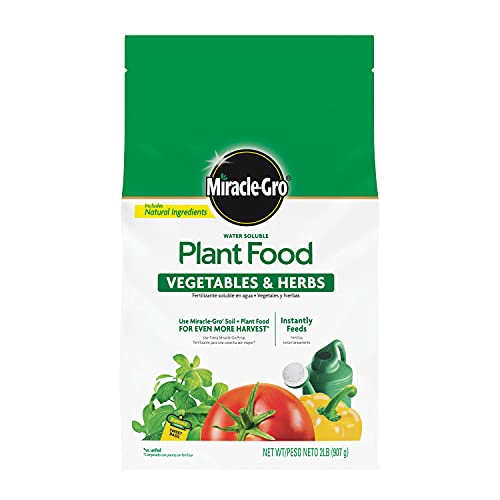
This Miracle-Gro formula is tailored for vegetables and herbs, designed to feed quickly for noticeable results. It emphasizes readily available nutrients that promote leafy growth and robust fruit set when applied on a regular schedule. The blend’s natural ingredient approach is complementary to kitchen garden methods, especially when you’re aiming for steady harvests from herbs and veggie beds. It’s particularly suitable for gardeners who want predictable, fast-acting nutrition without complex mixing steps.
Pennington All Purpose Water Soluble Plant Food

Pennington’s Water Soluble All Purpose Plant Food includes a practical measuring scoop and a wide-mouth jar that minimizes spillage. Its formulation is designed to stay dry and free-flowing, making it convenient for frequent feedings across vegetable beds and containers. The product aims to deliver consistent nutrition to promote steady growth, vibrant foliage, and healthy flowering. It’s a solid option for gardeners who value ease of use and reliable texture when mixing concentrated feeds for multiple plant varieties.
Gardenwise 20-20-20 Water-Soluble Fertilizer

Gardenwise 20-20-20 is a balanced, triple-20 fertilizer designed for indoor and outdoor use, including vegetables, lawns, and flowering plants. The product’s design highlights versatility for hydroponic or soil-based systems and notes additions for orchids, a sign of its broad nutrient compatibility. It suits gardeners seeking a single, all-purpose fertilizer that can handle diverse plant needs while delivering a uniform N-P-K blend. As a 20-20-20, it’s most effective when plants are in growth and bloom phases demanding steady nutrient availability.
Jack’s Classic Veggie Feed — Veggie Formula

Jack’s Classic Veggie Feed expands on a familiar tomato feed concept with a Veggie Feed name that emphasizes calcium-packed nutrition for vegetable plant health. The 12-15-30 analysis targets vigorous root-to-vegetation growth and strong fruit set, making it a fitting choice for productive vegetable beds and container plots. It can be used as a foliar spray or root feed, offering flexible feeding strategies for gardeners who want to optimize uptake via different routes. This adaptability can support multiple crop types within a single garden space.
Buying Guide: Key Purchase Considerations For Water Soluble Fertilizers
- Target crop type: Vegetables, herbs, and mixed plantings have different nutrient needs. Choose formulas with N-P-K values that align with growth stages—higher nitrogen for leafy growth, higher phosphorus for root and flowering, or higher potassium for fruit development.
- Delivery method: Foliar feeding can supplement soil nutrition and nurture rapid uptake, while root feeding supports sustained growth from the soil. Consider whether you prefer mixing with water for irrigation or direct foliar applications.
- Ease of use: Look for products with clear measuring tools, dry-free-flowing texture, and compatibility with standard watering cans or feeders. A product with added micronutrients can support overall plant vigor.
- Homestead vs. professional scale: Some blends are geared toward home gardens and container setups, while others are positioned for larger plots or professional landscaping. Assess your garden size and feeding schedule accordingly.
- Hydroponics compatibility: If you grow in hydroponic systems, confirm that the fertilizer is suitable for your setup, as some blends cater to soil-based growth more than hydroponics.
- Ingredient transparency: Read labels for ingredient lists and any natural ingredient claims. Natural or organic-adjacent products may offer different feeding dynamics and application frequencies.
- Safety and storage: Keep concentrates sealed, stored in a cool, dry place to prevent clumping and degradation. Use the included scoop or recommended measuring method to avoid over-fertilizing.
Across these options, gardeners can tailor feeding plans to local climates, soil health, and crop variety. For example, a backyard bed containing tomatoes, peppers, and herbs may benefit from a balanced 20-20-20 or 12-15-30 blend during transition to fruiting, while an herb-dedicated bed could respond well to a quick-acting 24-8-16 formula during growth spurts. Always follow label directions and adjust frequency based on plant response and rainfall.
Leave a Reply