Best Yeast for Sweet Wine: Top Picks for Home Winemaking
Choosing the right yeast is crucial for sweet wine fermentation, influencing aroma, sweetness retention, and alcohol tolerance. This guide highlights five reliable yeasts commonly used for sweet wines, ciders, meads, and related beverages. Each option offers distinct fermentation profiles, flavor contributions, and temperature ranges to suit different styles and equipment. Use the summary table below to compare key details at a glance.
| Product | Brand | Volume | Fermentation Notes |
|---|---|---|---|
| Lalvin EC-1118 Wine Yeast (10 Pack) | Lalvin | 10 packs | Highly fermentative; good for sparkling and high-proof wines; broad temperature tolerance |
| Red Star Premier Classique Wine Yeast (10 Pack) | CAPYBARA Distributors Inc. | 10 packs | Fast start; strong fermentation; broad temperature range; good for complex musts |
| Lalvin 71B Wine Yeast (10 Pack) | CAPYBARA Distributors Inc. | 10 packs | Delivers fruity esters; suited for sweeter, fruit-forward wines |
| Lalvin K1-V1116 Wine Yeast (10 Pack) | CAPYBARA Distributors Inc. | 10 packs | Balanced fermentation; versatile for many sweet wine styles |
| Mangrove Jack’s Wine Yeast CY17 | Mangrove Jack’s | 1 package | Designed for sweet white, blush, and dessert wines; good for grape-based and fruit wines |
Lalvin EC-1118 Wine Yeast (10 Pack)

Consistent performer for dry and sweet wines, EC-1118 is renowned for its reliability across must compositions. The 5 g sachets are convenient for scaling fermentation. Ideal for sparkling wines and ciders where a clean fermentation is desired to preserve fruit sweetness.
- Includes: 10 packs (5 g sachets)
- Manufactured by Lallemand; repackaged in Canada
- Inoculation rate: 5 g sachet; yields 4.5 L–23 L per sachet
Red Star Premier Classique Wine Yeast (10 Pack)

This yeast is designed to provide a quick start and robust fermentation, even with challenging musts. It shows good alcohol resistance and performs across a wide temperature range, making it versatile for various sweet wine recipes and high-sugar musts.
- Includes: 10 packs (5 g sachets)
- Fermentis (Lesaffre) yeast; distributed by CAPYBARA
- Resistance: up to around 15% alcohol; tolerates 14–30°C (57–86°F)
Lalvin 71B Wine Yeast (10 Pack)

71B is favored for wines where fruity esters and mouthfeel are desirable, especially in sweeter styles. This yeast provides a balanced profile with reliable fermentation performance and versatility for various musts.
- Includes: 10 packs (5 g sachets)
- Produced by Lallemand; repackaged by CAPYBARA
- Inoculation rate: 5 g per sachet; yields 4.5 L–23 L
Lalvin K1-V1116 Wine Yeast (10 Pack)

K1-V1116 provides a clean fermentation with good body and structure, making it a solid choice for sweeter wines where a smooth finish is desired. It performs well across a variety of musts and can help retain residual sweetness when paired with appropriate sweetness levels.
- Includes: 10 packs (5 g sachets)
- Manufactured by Lallemand; repackaged in Canada
- Inoculation rate: 5 g per sachet; yields 4.5 L–23 L
Mangrove Jack’s Wine Yeast CY17
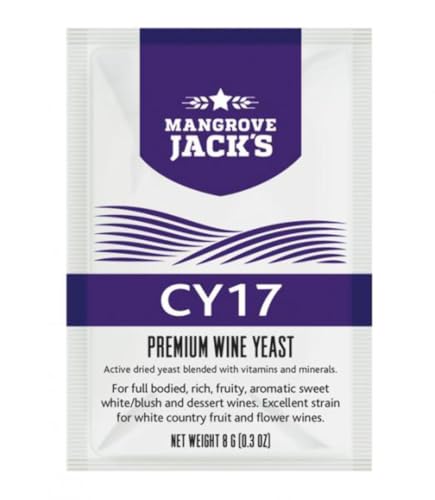
CY17 is a versatile wine yeast designed for sweet white, blush, and dessert wines, as well as various fruit-based wines. It supports complex flavor development while maintaining pleasant sweetness and a balanced profile in the final product.
- 8 g treats 23 L / 5 gallons
- Suitable for sweet white, blush, and dessert wines
Buying Guide: Key Purchase Considerations
When selecting yeast for sweet wine, consider these dimensions to match your style and fermentation setup:
- Fermentation speed and temperature range: Fast-start yeasts are helpful for shorter fermentation windows, while broad temperature tolerance protects flavor when temperatures vary.
- Alcohol tolerance: Sweet wines often finish with higher residual sugar; choose yeasts that complete fermentation without stressing or stalling, especially at lower temperatures.
- Flavor contribution: Some yeasts produce fruity esters or spicy notes that complement sweetness. If you want a crisper or fruit-forward profile, match yeast to the grape variety or must composition.
- Sulphite sensitivity and nutrient needs: High-sulphite musts or nutrient-limited environments may benefit from yeast strains known for strong fermentation under challenging conditions.
- Packaging and inoculation format: Sachets (e.g., 5 g) offer precise dosing for small batches, while larger packs lower per-batch cost for bigger projects.
- Compatibility with other ingredients: For ciders, meads, or fortified beverages, ensure the yeast strain tolerates additional sugars or flavors present in the must.
In practice, winemakers often experiment with more than one yeast to compare aroma, sweetness retention, and mouthfeel. For sweet wines, starting with a yeast known for clean fermentation (EC-1118) or a fruity-forward option (71B) and then testing alternatives like K1-V1116 or Premier Classique can help determine the best match for your must and desired dryness.
Leave a Reply