Best 2% Milk Options for Everyday Nutrition
Choosing the right 2% milk involves balancing taste, nutrition, sourcing, and packaging. The following selections highlight common household staples and specialty options, from conventional reduced-fat milks to organic and grass-fed varieties. Each product emphasizes the 2% fat level while offering different farming practices, certifications, and packaging sizes to fit family needs and dietary preferences.
| Product | Brand | Size | Key Benefit |
|---|---|---|---|
| Organic 2% Milk | Organic Valley | 64 oz | Organic, pasture-raised, small-family farms |
| 2% Reduced Fat Milk | Amazon Grocery | 128 oz | Conventional, Grade A, no rBST |
| 2% Reduced Fat Milk | a2 Milk | 64 oz | A2 protein, potential digestion benefits |
| Organic 2% Milk | 365 by Whole Foods Market | 128 oz | Organic, large-volume option |
| Grassmilk 2% Reduced Fat | Organic Valley | 64 oz | Grass-fed, higher omega-3s |
Organic Valley Organic 2% Milk, 64 Oz

Organic Valley Organic 2% Milk comes in a practical half-gallon size, offering 64 ounces of milk with 13 essential nutrients and protein in every serving. Sourced from small family farms where cows graze on organic pastures, this option emphasizes organic certification and sustainable farming practices. The product ideal for households seeking standard 2% fat while supporting organic farming communities.
Amazon Grocery 2% Reduced Fat Milk, 1 Gallon

This one-gallon 2% reduced-fat milk provides a convenient bulk option with Grade A quality. It is homogenized and pasteurized, and the label notes that the milk comes from cows not treated with rBST. It suits larger households or busy families needing longer-lasting milk without frequent restocking.
a2 Milk 2% Reduced Fat

a2 Milk 2% Reduced Fat is produced from cows that naturally produce only the A2 protein, with claims that it may be easier on digestion for some individuals. The milk is sourced from farms that avoid growth hormone rBST and partners with animal welfare-certified operations in the United States. It is a top option for households seeking potential digestive comfort alongside familiar calcium and vitamin D benefits.
365 by Whole Foods Organic 2% Milk, 128 oz

365 by Whole Foods Market offers a large-volume organic 2% milk option, designed for everyday use with the convenience of bulk packaging. The product family emphasizes organic sourcing and consumer-friendly pricing, making it a practical pick for families integrating organic milk into many meals and beverages.
Organic Valley Grassmilk 2% Reduced Fat
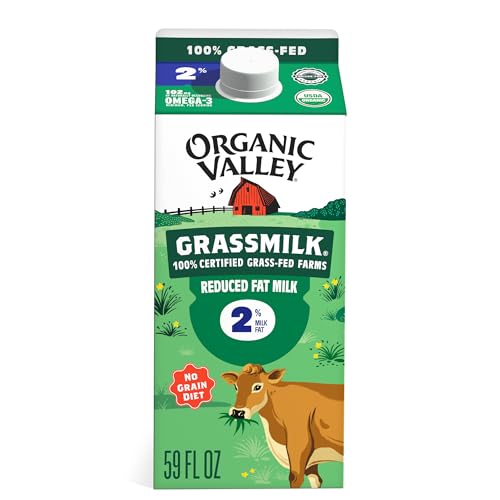
Organic Valley Grassmilk 2% Reduced Fat Milk uses grass-fed cows to deliver a slightly different flavor and higher naturally occurring omega-3s and conjugated linoleic acid (CLA) than standard milk. This half-gallon option supports grazing-based farming practices and presents an appealing choice for consumers prioritizing pasture-raised dairy products.
Organic Valley Organic 2% Milk, 128 oz

This gallon option extends Organic Valley’s organic 2% milk to a larger family size, maintaining the farm-fresh feel with natural grazing and organic certification. It provides a reliable daily source of calcium and protein, suitable for households that prefer organic dairy at a higher volume for meal prep, coffee, and cereal.
Buying Guide: Key Purchase Considerations
- Source and certification: Organic, grass-fed, or conventional 2% milk each aligns with different farming practices and certifications. Decide whether organic labeling, grass-fed standards, or non-GMO assurances matter most to you.
- Flavor and texture: Grass-fed and a2 protein formulas can offer distinct flavors and possible digestive differences. Consider trying a smaller carton to compare taste and mouthfeel before committing to bulk sizes.
- Fat level and nutrition: All listed options are 2% fat, balancing flavor and calorie content with essential nutrients such as calcium, potassium, and vitamins D and A.
- Packaging size: From half-gallon to gallon options, choose a size that fits your household’s consumption pattern and storage capacity.
- Aisle and availability: Some products are sold primarily through specific retailers or via direct online platforms. Check local store availability and delivery options to ensure steady supply.
- Ethical and welfare considerations: If animal welfare and farming ethics are important, prioritize brands that emphasize humane practices and certifications (eg., Validus, grass-fed, or Certified Organic).
- Shelf life and storage: Opened milk should be refrigerated promptly and consumed within recommended time frames. Consider your household’s schedule when selecting packaging size.
Leave a Reply