Best All Grain Brewing Supplies for Easy, Consistent Homebrewing
Answering the most common questions from homebrewers: choose all-grain brewing supplies that maximize extract efficiency, support your style goals, and fit your equipment. This guide highlights five top all-grain ingredients and kits, arranged to help novice and seasoned brewers alike decide what to buy first. The selections emphasize clean base malts, reliable adjuncts, and practical brewing gear that enable clear, repeatable results.
Buyer types to consider: beginners may prefer ready-to-brew all-grain kits that include grain, yeast, and hops. intermediate brewers often look for versatile base malts and specialty grains for custom recipes. advanced brewers seek malt with high enzymatic power and stable supply from reputable regions. The table below compares the featured products to help you decide quickly.
| Product | Best For | Key Benefit | Selected Use |
|---|---|---|---|
| My Brew Supply Wheat Malt Premium | Wheat beer lovers | High diastatic activity and strong head retention | Hefeweizens, Witbiers, Kölsch |
| My Brew Supply Oktoberfest Kit | German-style marzen fans | Complete all-grain recipe with lager-friendly malts | 5-gallon Oktoberfest |
| My Brew Supply Distillers 2-Row Malt | High-Adjunct Mashes | High diastatic power for adjuncts | Whiskey and heavy-grain batches |
| My Brew Supply Brewers Malt Premium | Versatile base for many styles | Low Lovibond color with high enzymatic power | Brewing flexibility across ales and lagers |
| My Brew Supply Flaked Wheat | NEIPA and Witbier lovers | Flaked wheat for haze and mouthfeel | Hazy IPAs and Belgian Witbiers |
My Brew Supply Wheat Malt Premium Beer Making Grain

Product spotlight: Premium European malted wheat designed to deliver robust extract potential and strong diastatic activity. The grain originates from elite Western European regions and is processed by continental maltsters to ensure uniform kernels and peak brewhouse performance. It is especially well-suited for wheat-forward beer styles where head retention and mouthfeel matter. The grain helps create a thick, durable foam and lace without dulling a crisp finish.
Best for: brewers targeting Hefeweizens, Witbiers, or Kölsch with a reliable wheat backbone. This malt is ideal when you want a consistent, high-enzyme base that supports full conversion and a strong foam head. Choose this if you are prioritizing classic wheat beer character with predictable performance.
Limitations: as a wheat-focused grain, it can add some gluten-forward viscosity; balance with appropriate hop selections and other malts for a well-rounded finish.
My Brew Supply Oktoberfest Beer Ingredient Kit
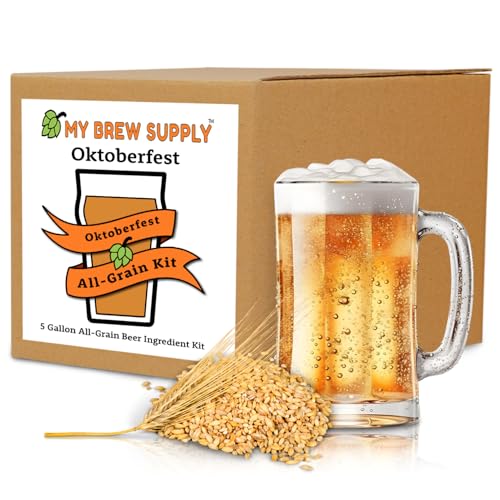
Product spotlight: A complete all-grain recipe kit designed for a five-gallon batch. The kit centers on Vienna and Munich malts, with CaraRed for color and depth, Hallertauer Mittelfrüh hops, and a German ale yeast. It provides a balanced malt-forward profile with a clean finish and a traditional amber malt character. It’s particularly convenient for brewers who want to follow a traditional German-style process with reliable results.
Best for: homebrewers seeking an authentic Oktoberfest-style beer with a rich malt backbone and straightforward steps. Suitable for those who prefer a proven, hands-off all-grain approach that yields a polished final product.
Limitation: may require careful temperature control and fermentation management to maintain the characteristic clean German profile in warmer climates.
My Brew Supply Distillers 2-Row Premium Malt Grain

Product spotlight: Bulk milled high-enzyme two-row barley base malt, grown and malted in the USA. It emphasizes clean flavor and strong starch conversion, making it ideal for home distilling as well as brewing with heavy adjunct loads like corn or rye. The domestic origin supports consistent batch-to-batch performance and predictable mash efficiency for larger or more experimental recipes.
Best for: brewers and distillers who need a robust, enzyme-rich base malt that handles adjuncts well and supports multiple workflows, including mashes with heavy adjuncts. Choose this if you want a versatile, American-grown malt that scales across projects.
Limitation: designed primarily for strong enzymatic activity, which can influence flavor if pushed too far with aggressive adjuncts; balance with other malts for nuanced character.
My Brew Supply Brewers Malt Premium

Product spotlight: A premium American-grown 2-row malt designed by Briess Malting. This base malt yields a clean, smooth, and slightly sweet profile with low perceived grain harshness. Its light color rating (1.8 Lovibond) and high enzymatic power make it a reliable backbone for a wide range of beer styles, from pale ales to light lagers and IPAs.
Best for: brewers seeking a versatile base malt that minimizes off-flavors while maximizing sugar extraction. It’s a strong candidate for recipe development and as a default base malt when experimenting across styles.
Limitation: while highly versatile, it may benefit from complementary specialty grains to achieve darker or more complex malt profiles in darker beers.
My Brew Supply Hazy IPA Brewing Kit

Product spotlight: A comprehensive kit for advanced brewers aiming for a hazy IPA with a juicy mouthfeel. Includes American Pale Ale malt, CaraRed, flaked oats, and flaked wheat, plus Azacca and Mosaic hops and English ale yeast. This setup emphasizes a hazy, fruity aroma and a soft malt backbone with haze stability. It’s best used by brewers who have proper mash equipment and are comfortable following an all-grain recipe.
Best for: brewers seeking a complete all-grain path to a hazy IPA with a balanced malt bill and modern hop profile. The included malts and adjuncts support a soft, full-bodied beer with manageable clarity and haze.
Limitation: requires a mash tun and familiarity with all-grain procedures; not ideal for complete beginners without the necessary equipment.
Buying Guide: All Grain Brewing Essentials
- Base malt choice matters: Start with a versatile malt like the 2-row premium malts listed here for consistency across styles. For wheat-forward beers, consider a quality malted wheat that provides head retention and haze control.
- Enzymatic power matters for all-grain: If you anticipate heavy adjuncts or higher gravity beers, prioritize malts with strong diastatic power to ensure complete starch conversion.
- Adjuncts and specialty grains: Flaked wheat or oats can improve body and haze in NEIPAs or Witbiers, while Vienna, Munich, and CaraRed add depth and color for German-style beers.
- All-grain kits for beginners: A complete kit with malt, grain, and instructions reduces guesswork and accelerates learning. Look for recipes calibrated to a five-gallon batch for consistency.
- Equipment compatibility: Ensure your mash tun or BIAB setup can handle the grain bill. Some kits assume a dedicated all-grain setup; others are more forgiving for partial mash or BIAB.
- Storage and freshness: Grain and milled malt should be stored in a cool, dry place to preserve enzymatic activity and prevent oxidation.
- Flavor goals: Choose base malts and adjuncts that align with your target style, balancing fermentable sugars with body, mouthfeel, and aroma.
Frequently Asked Questions
- What is all-grain brewing? All-grain brewing uses malted grains as the primary source of fermentable sugars, requiring mashing to convert starches to sugars. It offers full control over styles and flavors without extract concentrates.
- Why choose high-enzyme malts? High-enzyme malts improve starch conversion, especially when using adjuncts like corn or rye. They help achieve consistent fermentable sugar extraction for predictable gravity and mouthfeel.
- Are wheat malts good for hazy beers? Yes. Wheat malts, especially malted wheat, enhance foam stability and haze, contributing to the signature look and texture of hazy styles.
- Can I use these malts in partial mash? Many of these malts are suitable for partial mash if your equipment or recipe calls for a portion of malt extract. Check your mash schedule and adjust water ratios accordingly.
- Do I need a mash tun for all-grain? A mash tun or BIAB setup is typically needed. Some kits assume a dedicated all-grain setup, while others can be adapted to partial mash or BIAB workflows.
- How do I store milled grains? Store in a cool, dry place in airtight containers to minimize moisture exposure and preserve enzymatic activity.
Leave a Reply