Best Fertilizers for Blackberries to Maximize Harvests and Flavor
Choosing the right fertilizer can help blackberry bushes grow strong canes, develop healthy roots, and produce plump, flavorful berries. This guide highlights top organic and natural options available on Amazon, with practical tips for feeding timing and application. The following selections are well-suited for both established plants and new plantings, offering balanced nutrient blends and easy-to-use formats for American gardeners.
| Product | Brand | Type | Key Benefit |
|---|---|---|---|
| Espoma Berry-Tone 4-3-4 | Espoma | Organic granular fertilizer | Ready-to-use feeding for berries; promotes bountiful harvests |
| TPS NUTRIENTS Blackberry Fertilizer | TPS NUTRIENTS | Liquid fertilizer | Fast nutrient uptake for strong roots and flavorful berries |
| HiThrive Berry Fertilizer 16oz | HiThrive | Liquid plant food | 2x value, nitrogen, phosphorus, potassium for growth and size |
| Farmer’s Secret Fruit & Bloom Booster | Farmer’s Secret | Concentrated liquid fertilizer | Boosts flowering and yield across fruiting plants |
| True Organic Berry Food | True Organic | Organic liquid/fertilizer | Lowers soil pH naturally with sulfur for acidic-loving berries |
Whether you grow blackberries in the Pacific Northwest, the Midwest, or the Southeast, a reliable feeding plan supports fruit production and plant health. The products below are selected for their relevance to blackberry care, including soil pH considerations, ease of use, and compatibility with organic gardening goals. Review the features to decide which fits your planting style and soil conditions.
Espoma Berry-Tone 4-3-4 For All Berries

Espoma Berry-Tone is a 4-3-4 blend designed for all berries, including blackberries, with a 5% sulfur addition. The Bio-tone formula supports soil biology, promoting healthy root systems and steady growth. It’s ready to use, with no mixing required, and is suitable for both planting and feeding established plants. Apply at planting and then feed twice per year in early and late spring for best results.
Espoma Berry-Tone 4-3-4 Pack of Two

Featuring the same Berry-Tone formula, this pack provides extended use across multiple plantings or seasons. The product remains soil-friendly with no sludges or toxic ingredients and is designed for straightforward application during planting or routine feedings. As with the single bag, timing around early and late spring boosts berry size and yield without complicated mixing steps.
TPS Blackberry Fertilizer For BlackBerry Plants
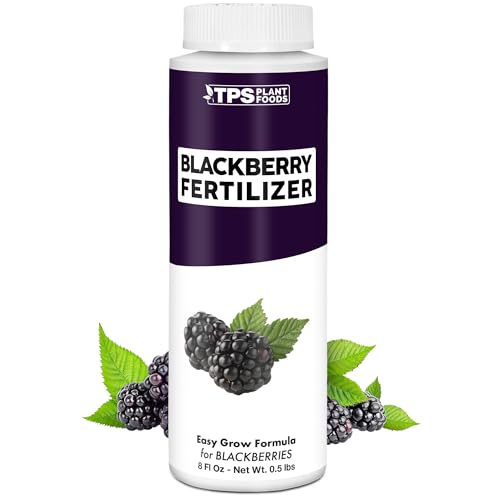
This liquid formula is specifically formulated for blackberry plants and fruiting canes. It promotes strong root systems, vigorous canes, and flavorful berries. Liquid fertilizers like this enable faster nutrient uptake and simpler application compared to some granular options, which can be advantageous for established plants needing a quick nutrient boost during the growing season.
HiThrive Berry Fertilizer 16oz

The 16-ounce bottle makes up to 16 gallons of fertilizer, with a formulation that emphasizes nitrogen for growth, phosphorus for root development, and potassium for larger, sweeter berries. The nutrient blend includes micronutrients such as calcium, magnesium, and zinc to strengthen roots and improve overall plant vigor. It offers value and flexibility for home gardeners managing multiple blackberry plants.
HiThrive Berry Fertilizer 32oz

This larger 32-ounce option expands coverage, delivering twice the volume for extended care. It maintains the same nutrient balance—nitrogen, phosphorus, potassium—plus essential micronutrients to support root strength, vegetative growth, and fruit development. It’s suitable for larger plantings or for gardeners who prefer fewer applications per season.
True Organic Berry Food

True Organic Berry Food is designed for acid-loving plants and fruits, combining seabird guano, shrimp and crab shell meals, and sulfur to naturally lower soil pH. This supports berry plants by improving micronutrient availability in slightly acidic soils. The blend aligns with organic gardening goals, offering a straightforward feeding approach for consistent berry production and soil health.
Buying Guide: Key Purchase Considerations And Comparisons
- Soil pH and plant needs: Blackberry tolerances vary with soil acidity. If your soil is neutral to slightly acidic, consider products that adjust pH naturally (like True Organic Berry Food) or provide a balanced nutrient profile suitable for berry crops.
- Form and application: Granular fertilizers (like Berry-Tone) provide slow release and are excellent for planting beds, while liquid formulas (TPS, HiThrive, Farmer’s Secret) offer rapid uptake and quicker results, ideal for established plants needing a boost mid-season.
- Feeding schedule: Most berry fertilizers are applied at planting and then sparingly during spring. Some products specify twice-yearly feeding; others are ready-to-use and require no mixing. Align with your garden calendar for best results.
- Nutrient balance: A 4-3-4 or similar N-P-K ratio supports healthy growth and fruiting without excessive nitrogen that could promote leafy growth at the expense of berries. Look for products that include sulfur or micronutrients for improved berry size and flavor.
- Organic vs. synthetic: Organic blends enhance soil biology and long-term soil health, but may act slower than liquid synthetic formulas. Choose based on your soil condition, organic gardening goals, and time frame for results.
- Application safety and compatibility: Check if the product is safe for established plantings, new transplants, or fruiting canes. Liquid options blend well with water schedule constraints and may be easier for gardeners with multiple plants.
- Gardening scale and budget: Larger bottles provide more value per gallon but require more storage space. For small berry patches, smaller bottles with straightforward dosing can be more practical and cost-effective over a season.
Leave a Reply