Best Envelope Active Dry Yeast for Home Baking
Active dry yeast in convenient envelopes is ideal for home bakers who want reliable rise and consistent results. This guide highlights five top options, outlining who each is best for and why. Whether you’re baking bread, pizza dough, rolls, or sweet pastries, these selections cover gluten-free needs, bulk storage, and easy portioning for precise measurements.
| Product | Format | Best For | Notes |
|---|---|---|---|
| Fleischmann’s Yeast, Active, Dry, 0.75-Ounce Packet (Pack of 9) | 0.75 oz packets | Frequent bakers seeking consistent, long-standing performance | Great for standard bread recipes; stable quality since 1945 |
| Fleischmann’s Active Dry Yeast, 0.25 Ounce, 9 Count | 0.25 oz packets (9) | Portion control and easy storage | Pre-measured packets simplify batch baking |
| Red Star Active Dry Yeast 0.75 oz, Gluten Free 3 Count | 0.75 oz packets (3) | Baking gluten-free breads and rolls | Gluten-free option with reliable rise |
| Instant Dry Yeast, 1.1 lb – Active Dry Yeast | Bulk jar (1.1 lb) | High-volume bakers and professionals | No activation needed; long shelf life with proper storage |
| Anthony’s Active Dry Yeast Packets, 42 Packets | 42 x 0.25 oz packets | Gluten-free options and bulk use | Batch-tested and gluten-free |
Fleischmann’s Yeast, Active, Dry, 0.75-Ounce Packet (Pack of 9)
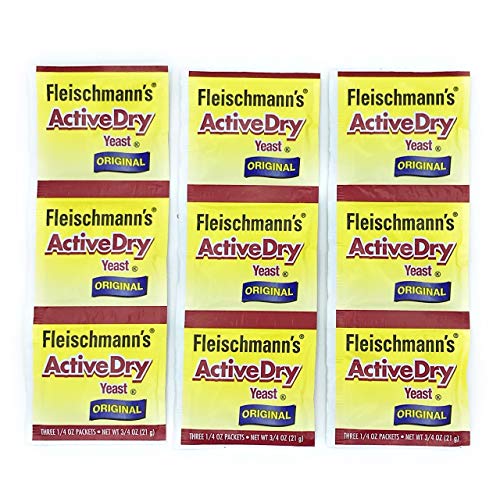
This product offers a long-standing, highly stable active dry yeast line. Each packet is designed for reliable rise in standard bread dough, making it suitable for frequent bakers who value consistency across batches. Best for home bakers who prefer a known, dependable brand with historic performance.
Who it’s best for: Home bakers who bake often and want predictable results with minimal prep. Why selected: Brand longevity and consistent performance since 1945 provide a proven track record.
Caution: Packets should be stored in a cool, dry place; exposure to moisture reduces effectiveness.
Fleischmann’s Active Dry Yeast, 0.25 Oz, 9 Count

This option emphasizes portability and portion control, with nine individually wrapped packets that align with standard recipe requirements. It’s ideal for bakers who want to avoid measuring and for small kitchens with limited storage. Best for: occasional bakers or those who bake in small batches.
Why selected: Pre-measured packets simplify workflow and reduce waste. Caution: Each packet is small; ensure you use it before the expiration window for best rise.
Red Star Active Dry Yeast Gluten Free 3 Count, 0.75 Oz

Gluten-free active dry yeast options meet the needs of bakers avoiding gluten while still achieving robust dough rise. This product is best for gluten-free baking enthusiasts who want a reliable yeast option without gluten cross-contamination worries.
Why selected: Gluten-free labeling helps ensure suitability for GF recipes. Caution: Gluten-free yeasts can still be sensitive to storage conditions; keep in a cool, dry place to maintain potency.
Instant Dry Yeast, 1.1 lb – Active Dry Yeast for Bread

Ideal for high-volume or frequent bakers, this instant dry yeast is designed to work without pre-activation, offering quicker mixing into flour. Best for: professional or serious hobby bakers who value speed and extended shelf life.
Why selected: Fast-acting formula reduces prep time; long shelf life supports bulk storage. Caution: Bulk formats require proper sealing after each use to prevent moisture exposure.
Anthony’s Active Dry Yeast Packets, 42 Packets

This option provides a bulk supply of gluten-free active dry yeast packets, making it suitable for households that bake regularly or for small commercial use. Each packet contains 0.25 oz, allowing easy recipe scaling.
Best for: Gluten-free households that bake in larger batches. Limitation: Bulk packaging can lead to occasional waste if portions aren’t used promptly; store sealed to maintain freshness.
Buying Guide
Key considerations when choosing envelope active dry yeast.
- Format and portioning: Do you prefer pre-measured packets for quick use, or a bulk jar for long-term baking? Packets suit small kitchens; bulk options suit frequent bakers or families with high volume.
- Dietary needs: Do you require gluten-free yeast? Gluten-free options exist and are labeled accordingly, reducing gluten exposure in sensitive bakers.
- Storage and shelf life: Yeast should be kept in a cool, dry place. Refrigeration can extend life for many options; avoid moisture to prevent clumping or loss of activity.
- Bake planning: Some yeasts are instant and require no proofing, while others benefit from a warm-water activation. Choose according to your preferred workflow and recipe types.
- Intended use: For bread and pizza dough, consistent rise is crucial. For frequent pizza makers or bread enthusiasts, a bulk option may offer better value and performance.
Frequently Asked Questions
- What is active dry yeast, and how is it different from instant yeast? Answer: Active dry yeast usually requires hydration in warm water before use, while instant yeast can be mixed directly into flour. Instant yeast often acts faster.
- Can gluten-free yeast be used for regular bread? Answer: Gluten-free yeast can be used, but ensure other recipe ingredients are also gluten-free if needed and follow GF baking guidelines.
- How should I store yeast to maximize shelf life? Answer: Store in a cool, dry place; some packets can be refrigerated or frozen after opening to extend freshness, depending on the brand guidelines.
- Is pre-measured packaging better for beginners? Answer: Yes, pre-measured packets reduce measurement errors and simplify recipe scaling for beginners.
- What size package is best for a household that bakes weekly? Answer: A moderate bulk option (like 1 lb) or 42–54 packet sets provide a good balance of storage and usage frequency, minimizing waste.
- Should I refrigerate yeast after opening? Answer: Refrigeration is beneficial for most active dry yeasts; always check manufacturer storage recommendations on the packaging.
Leave a Reply