Best Air Dryers for Food Dehydration: Top Home Dehydrators
Discover the best air dryers for food dehydration and choose the right machine for your kitchen. These dehydrators are ideal for making jerky, dried fruits, herbs, and homemade dog treats. The top picks below are selected for reliability, capacity, and temperature control, helping you preserve flavors with efficient airflow. This guide highlights buyers who need large batches, quiet operation, or precise temperature settings.
| Product | Best For | Key Feature |
|---|---|---|
| Cosori Food Dehydrator, 6 Stainless Steel Trays | Large batches; quiet night use | 6.5 ft² space, 600 W motor, low noise |
| Cosori Food Dehydrator, 5 Stainless Steel Trays (3.1 ft²) | Preset convenience; flexible temps | 5 trays, 176°F max, 4 presets |
| Cosori Food Dehydrator, 5 BPA-Free Trays | Compact, precise control | 165°F max, BPA-free trays, adjustable 95–165°F |
| Food Dehydrator Machine, 8 Trays (PSIIDAN) | High capacity with strong motor | 650 W, 8 trays, up to 167°F |
| Magic Mill Pro Food Dehydrator | Professional-style control | 600 W, 7 stainless trays, 95–176°F |
Note: Each product below is described with its best-use cases, potential limitations, and why it was selected for certain buyers. Use this guide to compare capacity, temperature range, and noise levels to fit your kitchen needs.
Cosori Food Dehydrator, 6 Trays

Best for large batches and quiet operation. This model uses six stainless steel trays offering 6.5 ft² of drying area. It features a 600 W motor, a rear-mounted fan, and upgraded airflow for faster, even drying with less manual intervention. The advanced brushless motor keeps noise below 48 dB, enabling overnight dehydration without disruption.
Who it’s best for: home cooks who routinely dry large quantities and value quiet performance. Why selected: the combination of high-capacity trays and a quiet workflow makes it a versatile choice for busy households. Caution: larger footprint means more countertop space required.
Cosori Food Dehydrator, 5 Trays (3.1 ft²)
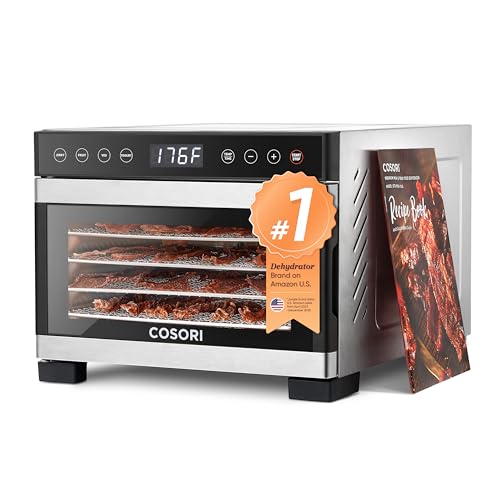
Best for cooks seeking precise presets and a compact footprint. This model includes 5 trays and a 3.1 ft² drying area, with 176°F maximum temperature and four presets (jerky, fruit, vegetables, yogurt). It’s designed to be fully equipped with a recipe cookbook and extra sheets for expanding drying options.
Who it’s best for: small to mid-sized batches and users who value program presets for quick setup. Why selected: presets and temperature precision support reliable, repeatable results. Caution: fewer trays than larger units limit batch size.
Cosori Food Dehydrator, 5 BPA-Free Trays

Best for safer jerky and BPA-free materials. This unit offers a maximum of 165°F with adjustable settings from 95–165°F and includes fundamental accessories. The trays are BPA-free, supporting safer storage of dried foods.
Who it’s best for: families prioritizing safety and easy operation. Why selected: BPA-free construction and adjustable temperature help maintain quality and safety. Caution: 5 trays may limit total batch size compared to units with more trays.
PSIIDAN Food Dehydrator Machine, 8 Trays

Best for high-capacity dehydration and robust control. This machine features a powerful 650 W motor and eight stainless steel trays, enabling large batches with even airflow. It offers adjustable temperatures up to 167°F and a practical timer range for long dehydration sessions.
Who it’s best for: serious hobbyists or families that dry large quantities regularly. Why selected: eight trays provide substantial capacity, while the strong motor supports even drying. Caution: higher power usage may be noticeable on energy bills during extended runs.
Magic Mill Pro Food Dehydrator

Best for precision control and durable stainless construction. The Magic Mill Pro uses a full stainless interior, 600 W rear fan for even drying, and 95–176°F digital control with 1° increments. It includes seven stainless trays and a multi-feature design suitable for jerky, fruits, and herbs.
Who it’s best for: cooks who want repeatable, lab-like control over drying conditions. Why selected: the combination of full stainless construction and precise digital control supports consistent results. Caution: taller footprint and higher price than some entry-level models.
Buying Guide: Key Purchase Considerations
- Drying capacity: How many trays and total drying space do you need to handle typical batch sizes?
- Temperature range and control: Is a wide range (e.g., 95–176°F) important for jerky, fruits, and herbs? Are presets useful?
- Airflow design: Rear vs. top-mounted fans, and the number of fans. Consider even heat distribution to avoid hotspots.
- Materials and build: Stainless steel trays and interiors are easier to clean and more durable than plastic.
- Noise and energy use: Quieter models support overnight drying. Check motor power if you plan long sessions.
- Expandable capacity: Some models allow additional trays; evaluate future needs and space availability.
- Accessories: Look for mesh screens, fruit roll sheets, and recipe guides that expand drying options.
How to Choose Based On Your Use Case
- Healthy snacks and jerky in small households: Opt for mid-sized units with precise temperature control and presets.
- Bulk batch drying for beginners: Choose models with larger tray counts and straightforward controls to minimize setup time.
- Quiet operation for overnight runs: Prioritize low-noise motors and brushless designs.
- Safety and durability: Favor stainless steel interiors and BPA-free materials for long-term use and safety.
Frequently Asked Questions
- What temperature is best for jerky? Most jerky targets around 165–176°F to ensure safety and texture.
- Is BPA-free plastic enough? BPA-free trays reduce concerns about chemical transfer but stainless steel is often more durable.
- How many trays should I start with? Beginners can start with 5–6 trays and add trays as needed for batch size.
- Can I use a dehydrator for herbs and spices? Yes, set lower temperatures to preserve aroma and flavor compounds.
- Is a rear fan better than a top fan? A rear fan can provide even airflow across all trays, reducing the risk of uneven drying.
- Do dehydrators require special maintenance? Regular cleaning of trays and airflow paths helps maintain efficiency and food safety.
Leave a Reply