Best Fertilizer for Peas: Top Picks for Bountiful Pea Harvests
Growing peas successfully relies on the right nutrition at key stages: vine growth, root development, and pod filling. This article highlights five well-suited products that support pea crops—from seed to harvest—through balanced nutrients, nitrogen fixation, and root health. Each option aligns with common pea-growing goals, whether you’re gardening in a backyard bed or container space.
| Product | Brand | Type | Key Benefit |
|---|---|---|---|
| Liquid Power Peas Fertilizer | Gardenera | Liquid Plant Food | Targeted NPK for vines, roots, and pods |
| Garden Inoculant For Peas | Papaw’s Garden Supply LLC | Inoculant | Adds free nitrogen via root bacteria |
| Nature’s Aid Garden Soil Inoculant | Park Seed | Soil Inoculant | Natural nitrogen fixation for legumes |
| Miracle-Gro Pour & Feed Plant Food | Miracle-Gro | Liquid Plant Food | Instant feeding for live plants |
| Root Boost Water Soluble Powder | Big Foot | Inoculant / Rooting Aid | Promotes rooting and nutrient uptake |
The selections above cover a spectrum of pea-supportive needs: liquid feeds for quick uptake, inoculants to boost nitrogen fixation, and root-boosting products to improve establishment. Use these products as part of a comprehensive feeding plan that matches your garden’s soil conditions and your pea variety.
Gardenera Liquid Power Peas Fertilizer
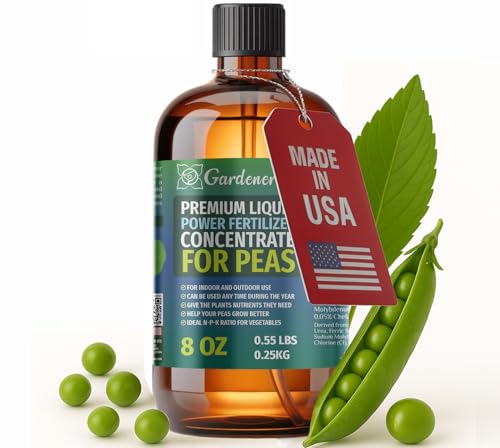
Gardenera LIQUID POWER Peas Fertilizer is designed for all pea varieties, including garden peas, sugar snaps, snow peas, and shelling peas. It provides a nutrient blend aimed at legumes, with an NPK balance intended to support vine growth, root development, and pod formation. An acidic formulation (pH ~1.69) is claimed to enhance micronutrient uptake such as boron, zinc, iron, and manganese, which can support flowering, pod filling, and disease resistance. This product is suitable for indoor or outdoor use and can be applied as part of a regular feeding schedule during growth phases.
Papaw’s Garden Inoculant For Peas

This inoculant attaches to pea and bean roots to enable nitrogen fixation, reducing the need for synthetic nitrogen inputs. Packaged as a 1.5 oz packet, it covers up to 8 pounds of pea or bean seed. The product is designed to jump-start nodulation in legumes, promoting vigorous foliage and improved nodulation at early growth stages. It’s a practical option for seed sowing and can be used with direct-sown peas or transplanted transplants to help establish a nitrogen-fixing soil relationship quickly.
Park Seed Nature’s Aid Inoculant
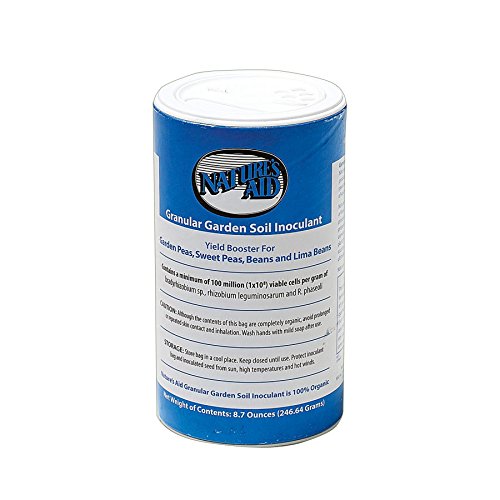
Nature’s Aid Garden Soil Inoculant is a granular formula that introduces live nitrogen-fixing bacteria into the soil. It’s formulated for beans, peas, lima beans, and vetch, using bradyrhizobium sp. and rhizobium strains to support efficient nutrient uptake and higher yields. The dry granules are convenient to apply at sowing time, aligning well with seed planting for legumes. This product emphasizes natural nitrogen fixation to reduce synthetic fertilizer dependence while encouraging robust root systems and leafy growth.
Miracle-Gro Pour & Feed Plant Food

Miracle-Gro Pour & Feed is a convenient, ready-to-use plant food that eliminates mixing. It is designed to instantly feed live plants—perfect for quick feed applications in containers or garden beds. While it is a general-purpose plant food, it provides a straightforward option for garden peas or mixed plantings where immediate nutrient availability is desired. For best results, follow on-planting schedules and monitor plant response after application to adjust feeding frequency.
Big Foot Probiotic Root Boost

Big Foot Root Boost is a water-soluble root-boosting powder advertised as promoting root size and vigor. It includes probiotics and a rooting hormone-style effect, intended to improve nitrogen uptake and overall plant health. This product can be particularly beneficial for established plants or transplants, aiding root growth and resilience. The 2-ounce package makes it suitable for smaller plots or starter applications. It is produced in the USA and emphasizes long-term root development for stronger plants and better nutrient absorption.
Buying Guide: Key Purchase Considerations for Pea Growers
- Plant stage and needs: Align your product choice with growth stage. Seedlings and early vines benefit from inoculants and root boosters, while mid-season pods may respond to balanced NPK liquids or instant feeds.
- Soil biology: Inoculants improve natural nitrogen fixation. If your soil already has healthy microbial life, you may prioritize quick-release feeds for fast uptake or a combination approach.
- Application method: Liquid feeds provide rapid uptake; granular inoculants are convenient for sowing. Consider your gardening setup—containers, raised beds, or in-ground—to choose compatible formats.
- pH and micronutrients: Some acidic formulas claim enhanced micronutrient uptake. Test soil pH to determine whether adjustments are needed to optimize nutrient availability for peas.
- Organic vs. synthetic: Organic blends emphasize long-term soil health and microbial activity, while synthetic or fast-acting options deliver immediacy. Decide based on your sustainability goals and growing conditions.
- Variety considerations: Different pea varieties may respond differently to inoculants and fertilizers. For climbing peas, prioritize nutrients that support vine growth and pod set, whereas bush varieties may benefit more from balanced uptake and root support.
- Safety and labeling: Follow label directions for dilution, application timing, and frequency. Avoid over-fertilizing, which can lead to foliage burn or nutrient runoff.
- Cost and coverage: Compare coverage per package and application frequency. A higher upfront cost can be offset by longer-lasting effects or reduced need for synthetic inputs over the season.
- Compatibility: If you use multiple products, ensure compatibility to prevent negative interactions. For example, don’t mix incompatible liquids in the same container.
- Local growing conditions: Adjust your plan for climate, seasonal rainfall, and local soil conditions. In harsher climates, root health and nitrogen fixation become especially important.
Pea health depends on a balanced approach: inoculation for nitrogen-fixing potential, supported by timely feeding for foliage and pod development, augmented by root-boosting products when transplanting or establishing new plants. Combining these strategies can help maximize vigor and yield while maintaining soil vitality for future seasons.
Leave a Reply