Best Organic Hojicha Green Tea for Smooth Roasts and Low Caffeine
Organic hojicha is the ideal choice for tea lovers seeking a mellow, toasty, and naturally lower-caffeine experience. This guide compares five top organic hojicha options to help buyers choose by flavor, origin, and brewing style. Each product is suited to different buyers: casual tea drinkers who want a smooth daily cup, health-conscious shoppers seeking antioxidants, and bakers or chefs who want a roasted tea as an ingredient.
| Product | Best For | Key Benefit |
|---|---|---|
| Positively Tea Organic Hojicha Loose Leaf | Daily drinkers seeking organic, versatile loose leaf | USDA Organic, Non-GMO, green tea |
| YAMASAN KYOTO UJI Organic Hojicha | Purists who value traditional roasting and Uji origin | Authentic hojicha with smoky, earthy aroma |
| SUGIMOTO TEA Organic Hojicha Bags | Convenience without sacrificing authentic flavor | Organic hojicha in tea bags |
| SARASOTA COFFEE & TEA CO. Organic Hojicha Loose Leaf | Antioxidant-conscious drinkers with a nutty profile | Low caffeine, rich roasted flavor |
| TOMOSAN Hojicha Tea – Loose Leaf | Home bakers and beverage creators | Premium hojicha for roasting and culinary uses |
Positively Tea Organic Hojicha Loose Leaf

Features: USDA Organic, Non-GMO, Green Tea, Loose Leaf.
Best for: Daily drinkers who want a straightforward, all-organic hojicha experience with the flexibility of loose leaves. The organic certification supports buyers seeking non-GMO and pesticide-free options.
Why selected: This product provides a clean organic base with simple, familiar green tea origins, making it a dependable all-purpose hojicha for both hot and iced brews.
Caution: Loose-leaf tea can settle in brewing, so use a strainer or infuser to avoid particles in a cup.
YAMASAN Kyoto Uji Organic Hojicha

Features: HOJICHA ROASTED GREEN TEA, Organic Green Tea, Origins in Uji, Kyoto; historic roasting method; organic certifications (JONA and JAS).
Best for: Purists who value time-honored roasting and a true Uji, Kyoto origin. The roasting method reduces bitterness and yields a pleasant earthy aroma with a reddish hue.
Why selected: It represents a traditional approach to hojicha with strong storytelling about origin and craft, appealing to buyers who want an authentic, high-quality roasted green tea.
Caution: Roasted notes can vary slightly between harvests; expect occasional subtle differences in aroma batch-to-batch.
Sugimoto Tea Organic Hojicha Bags

Features: 12 tea bags; organic hojicha from a blend of organic Sencha Asamushi leaves and stems; rich aroma and toasted flavor.
Best for: Tea lovers who want a convenient, bagged option without sacrificing the roasted, earthy profile hojicha is known for.
Why selected: The bagged format adds convenience for quick brews while preserving the integrity of a traditional hojicha flavor.
Caution: Tea bag format may result in quicker flavor release; avoid over-brewing to prevent bitterness buildup.
Organic Hojicha Loose Leaf Sarasota Coffee & Tea Co.
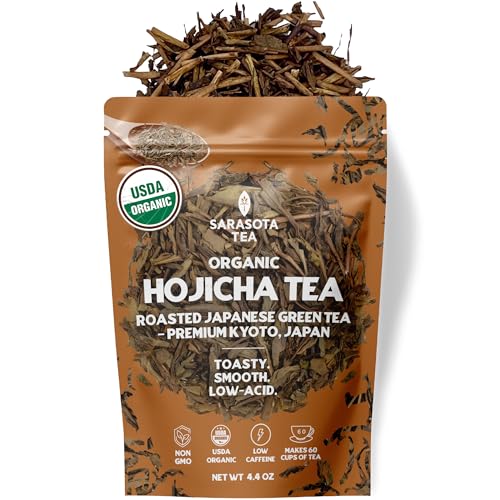
Features: Authentic Japanese organic hojicha green tea; low caffeine; smooth toasty, nutty flavor; 4.4 oz bulk bag.
Best for: Caffeine-sensitive drinkers seeking a calm energy profile and a robust roasted flavor in a bulk size.
Why selected: Emphasizes naturally low caffeine and a deep roasted profile, making it a strong option for evening sessions or late-afternoon tea.
Caution: Bulk bags require proper storage to maintain freshness and flavor over time.
TOMOSAN Hojicha Tea – Loose Leaf

Features: Premium Organic Hojicha; roasted at high temperatures; low caffeine; Uji-Kyoto origin; 100g/3.5oz.
Best for: Home bakers and beverage creators who want hojicha as a versatile ingredient in recipes or drinks, as well as a traditional cup.
Why selected: This powder-friendly hojicha option emphasizes premium quality with a culinary edge, suitable for both drinking and recipe use.
Caution: Some bakers may find the flavor more intense when used in desserts; start with small amounts and adjust.
Buying Guide: Key Considerations For Organic Hojicha
- Origin and Roast: Look for hojicha with clear origin notes (e.g., Uji, Kyoto) and a traditional roasting method. The roast level affects aroma, flavor, and color—earthy and toasty is typical, with smoother bitterness than unroasted greens.
- Form Factor: Loose leaf delivers flexibility for brewing strength and iced tea, while tea bags offer convenience. Bulk loose leaves are cost-effective for frequent drinkers; bags suit quick daily cups.
- Caffeine Content: Hojicha generally has lower caffeine than green tea due to roasting; however, caffeine levels still vary by blend and leaf size. Choose according to sensitivity and time of day.
- Organic Certification: USDA Organic, JONA, and JAS certifications confirm non-GMO status and organic farming practices. These details help shoppers prioritizing organic integrity.
- Flavor and Use Cases: Toasted, nutty, and smoky flavors pair well with milk or dairy alternatives in lattes, desserts, and baked goods. Consider whether you want an everyday cup or a culinary ingredient.
Frequently Asked Questions
- What is hojicha?
Hojicha is a Japanese green tea that is roasted, producing a toasty, mild, and often nutty flavor with lower caffeine than typical green tea.
- Is organic hojicha healthier than nonorganic?
Organic hojicha prioritizes farming practices that avoid synthetic pesticides and GMOs, which may appeal to buyers seeking organic options, but nutritional differences are typically subtle.
- How should I brew hojicha for best flavor?
Use water around 175-190°F (80-88°C), steep 2-4 minutes for loose leaf, or follow bag instructions. Shorter steep times emphasize gentler flavors; longer times intensify toastiness.
- Can hojicha be used in recipes?
Yes. Ground or loose hojicha can flavor baked goods, ice creams, smoothies, and even savory dishes, adding a roasted depth.
- Is hojicha caffeine-free?
Not completely caffeine-free, but it is naturally low in caffeine compared to many green teas due to the roasting process.
Leave a Reply