Best Plastic 2 Liter Bottles for Everyday Use and Experiments
Looking for sturdy, reusable plastic bottles closest to a two-liter capacity? This guide highlights five practical options, focusing on durability, leak-resistance, and everyday versatility. The featured picks suit educators, parents packing lunches, DIY enthusiasts, and beverage-serving setups. Each entry explains who benefits most and where to avoid common pitfalls.
| Product | Approx. Capacity | Best For | Why Pick It |
|---|---|---|---|
| Steve Spangler’s 1 Liter Soda Bottles – 6 Pack | 1 L | Teachers and students | Ideal for classroom experiments and repeated use; durable with caps to prevent leaks. |
| MT Products 64 Oz HDPE Plastic Juice Bottles (Set of 6) | 64 oz (~1.89 L) | Families and picnics | Large, portable containers with secure lids; space-saving square bottoms. |
| Fhxtcygj 64oz Plastic Bottles with Caps | 64 oz (~1.89 L) | Home beverage prep and parties | Food-grade PET, leak-proof caps, clear visibility of contents. |
| Steve Spangler’s 1 Liter Soda Bottles – 30 Pack | 1 L | Large classrooms and science outreach | Bulk supply for science kits and demonstrations; ready-to-use. |
| Coloch 10 Pack 33 Oz Plastic Juice Bottles | 33 oz (~0.97 L) | Everyday home use | Clear design, BPA-free, easy to see contents; versatile for beverages and storage. |
Note: The capacities above are approximate conversions from ounces to liters. All selected products emphasize leak resistance, BPA-free materials, and suitability for multiple reuses, aligning with buyers seeking long-term value rather than disposable use.
Steve Spangler’s 1 Liter Soda Bottles – 6 Pack

This product targets educators and science hobbyists who need reliable, reusable bottles for experiments. The 1-liter size is convenient for controlled demonstrations and is compatible with accessories like Cartesian divers and tornado tubes. Best for hands-on classroom activities where consistency and reusability matter. A potential limitation is the 1 L capacity when larger experiments require more liquid volume.
MT Products 64 Oz HDPE Bottle Set

Best for families needing larger, portable containers for beverages, smoothies, or dressings. The half-gallon-to-2-liter scale fits bulk preparation needs, and the square bottom helps bottles stand securely. The set includes tamper-evident caps for added safety. Choose this if you want fewer bottles with substantial capacity; avoid if you need many small portions.
Fhxtcygj 64oz Plastic Bottles with Caps

These 64-ounce bottles are well-suited for parties, batch beverage preparation, and bulk storage. They use BPA-free PET material for safety and feature leak-proof caps. Best for those who want clear visibility of liquids and easy pouring. A caveat is that large-mouth caps may require regular inspection to maintain a tight seal over time.
Steve Spangler’s 1 Liter Soda Bottles – 30 Pack

Best for bulk science kits, classrooms, or events requiring many identical bottles. The 30-pack format aligns with large-scale experiments, minimizing reordering frequency. It’s best for use in environments that value ready-to-use containers; avoid if you only need a few bottles for casual use.
Coloch 10 Pack 33 Oz Bottles
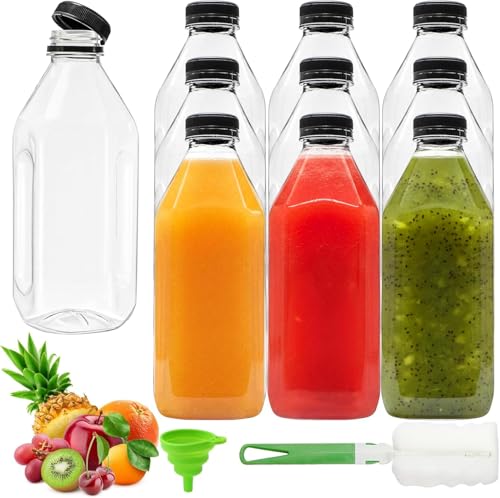
Best for individuals or households needing compact, reusable bottles. The 33-ounce (about 1 liter) capacity fits daily beverages, salad dressings, or craft liquids. They are BPA-free and clear for content visibility. Choose this if you prefer a smaller size for personal use; avoid if you need bulk storage capacity close to 2 liters.
Buying Guide: Key Considerations And Comparisons
Capacity and intended use drive the best choice. If you need near-2-liter capacity, 64 oz options provide the closest fit. For classroom and science activities, 1 L bottles are convenient and easy to handle for students. Material safety matters; look for BPA-free PET or HDPE for durability and food safety. Leak resistance and lid design protect contents during transport and storage. Portability matters for picnics or field trips; consider bottles with secure caps and space-saving shapes. Visual inspection is easier with clear plastics to monitor contents and cleanliness. Reusability and ease of cleaning should influence selection for ongoing use.
Durability and handling vary by material. HDPE tends to resist impacts well and is robust for outdoor use, whereas PET is clear and lighter, suitable for beverages and dry storage. For families or schools, bundled sets reduce ordering effort and ensure uniform compatibility with caps and lids. For bulk events or classrooms, bulk packs may be more cost-effective, but ensure the lids are compatible with the bottle neck size to prevent leaks.
Practical questions to guide decision-making:
- What capacity best fits my daily needs: near 2 liters, or smaller portions around 1 liter?
- Do I prioritize visibility of contents or maximum durability?
- Will these bottles be used for beverages, lab liquids, or sensory crafts?
- How important is leak-proof performance when carrying bottles in bags or backpacks?
- Is a set with matching caps essential for consistency and storage?
FAQ
- Are these bottles BPA-free? Most listed bottles use BPA-free PET or similar materials.
- Can these bottles be reused safely? Yes, with proper cleaning, most are designed for repeated use.
- Is the capacity close to 2 liters? The closest common size is 64 oz (about 1.89 L), which is near 2 liters.
- Are the caps leak-proof? Many come with leak-resistant caps, but performance depends on how tightly they’re closed and condition over time.
- Can I use these for hot liquids? Most plastic bottles are not intended for high-heat liquids; check manufacturer guidelines for each product.
- Do they fit in standard bottle holders or lunch bags? With a variety of shapes, some designs fit better in snug spaces than others; refer to dimensions in product listings.
Leave a Reply