Best Lactose Intolerant Milk Chocolate Choices for Easy, Creamy Satisfaction
Answering the question “which lactose-free chocolate milk is best?” this guide highlights five lactose-intolerant friendly options. Each product is chosen for easy storage, nutrient content, and whether it’s best for kids, adults, or on-the-go lifestyles. Below is a quick summary to compare key points.
| Product | Best For | Key Benefit | Storage |
|---|---|---|---|
| Horizon Organic No Added Sugar Lactose Free | Lunchboxes and on-the-go | No added sugar, 8g protein per serving | Shelf-stable |
| Organic Valley Organic Chocolate Milk (Lactose-Free) | Home use with dairy preference | Organic, fair trade cocoa, 12 nutrients & protein | Refrigerated |
| Prairie Farms Chocolate Lactose Free Milk (Shelf Stable) | Pantry stocking | Vitamin A & D, 8g protein per cup | Shelf-stable |
| Fairlife 2% Chocolate Lactose Free | Higher protein, lower sugar | 50% more protein, 50% less sugar | Refrigerated |
| Amazon Grocery Chocolate Almond Milk | Non-dairy option | No dairy, 50% more calcium | Refrigerated |
Note: The table provides a snapshot of convenience, nutrition, and storage characteristics to help you pick a lactose-intolerant chocolate milk that fits your routine.
Horizon Organic Shelf Stable No Added Sugar Lactose Free 1% Lowfat Chocolate Milk

Product Overview: Eighteen 8 fl oz cartons provide lactose-free chocolate milk with no added sugar and 8g protein per serving. Made with real organic lowfat milk, it’s UHT-pasteurized for shelf stability.
Best For: Lunchboxes, school days, and families seeking an on-the-go lactose-free option with no added sugar.
Why Selected: Combines lactose-free milk with a no-added-sugar formula, making it easier to control sugar intake while keeping familiar chocolate flavor.
Caution: Contains no refrigeration until opened; once opened, refrigerate and consume promptly as indicated on packaging data.
Organic Valley Organic Chocolate Milk, 1%, Lactose-Free, 64 oz

Product Overview: A half-gallon of lactose-free organic chocolate milk, made with fair-trade cocoa, providing essential nutrients.
Best For: Households prioritizing organic ingredients and a dairy-based lactose-free option with robust nutrient content.
Why Selected: Notable for organic certification and a nutrient-dense profile in every serving.
Caution: Refrigeration is required; shelf-life is limited by typical dairy dairy handling after opening.
Prairie Farms Chocolate Lactose Free Milk, Shelf Stable 1% Low Fat

Product Overview: 8 fl oz cartons with 1% low-fat milk, fortified with vitamins A and D, and 8g protein per cup. UHT pasteurized and shelf-stable for pantry storage.
Best For: Families seeking a lactose-free chocolate option with convenient shelf-stable packaging.
Why Selected: Emphasizes real milk quality with added vitamins and no refrigeration until unopened.
Caution: Once opened, must be refrigerated and used within 7 days.
Fairlife 2% Chocolate Ultra-Filtered Milk, Lactose Free

Product Overview: Ultra-filtered milk starts with high-quality dairy, concentrating protein and calcium while removing lactose and lactose sugars.
Best For: Those seeking higher protein content with lower sugar in a lactose-free format.
Why Selected: Highlights protein-density benefits from ultra-filtering and lactose removal.
Caution: Dairy-based product; individuals with dairy sensitivity or allergies should avoid.
Amazon Grocery Chocolate Almond Milk
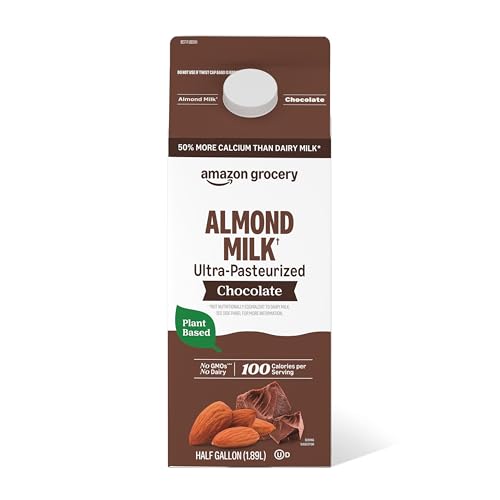
Product Overview: A chocolate almond milk option, dairy-free and suitable for lactose-intolerant individuals.
Best For: Those who prefer non-dairy milk alternatives with chocolate flavor.
Why Selected: Expands choices beyond dairy-based lactose-free options, offering a plant-based alternative.
Caution: Not suitable for dairy-based lactose-intolerant individuals who may be seeking dairy-free alternatives; check for added sugars if monitoring sugar intake.
Buying Guide: Key Purchase Considerations
- Decide between dairy-based lactose-free milk and non-dairy alternatives. Lactose-free dairy options provide familiar taste and protein, while almond or other plant milks offer potential allergies considerations and different nutrient profiles.
- Shelf-stable options are convenient for pantry storage and lunch-packing. Refrigerated lactose-free milks require timely consumption after opening.
- If you want higher protein, look at brands advertising elevated protein content (e.g., Fairlife). For lower sugar, consider options labeled no added sugar or reduced sugar beverages.
- Organic options may appeal to specific dietary ethics or preferences (e.g., Organic Valley). Always verify lactose-free labeling to avoid confusion with dairy derivatives.
- Plant-based milks exclude dairy allergens but may introduce nut or seed allergens. Review ingredient lists carefully.
FAQ
- Is lactose-free milk really lactose-free? Yes, lactose-free milks add lactase to break lactose, making it easier to digest for lactose-intolerant individuals.
- Can lactose-free chocolate milk be consumed by everyone? It is suitable for most people avoiding lactose, but check for other ingredients like gluten or nuts if you have additional allergies.
- Which lactose-free option has the most protein? Bale brands like Fairlife emphasize higher protein content due to filtration, but always verify per-serving protein on the label.
- Are shelf-stable cartons safe for long-term pantry storage? Yes, shelf-stable cartons are designed for room-temperature storage until opened. Once opened, refrigerate and use as directed.
- Is non-dairy chocolate milk a good substitute for lactose-free milk? Non-dairy milks can substitute for lactose-free milk in most uses, but flavor and texture differ. Choose based on your preference and dietary needs.
- What should I consider when buying for kids? Look for carton size, protein content, no added sugars, and kid-friendly flavors. Shelf-stable options can be convenient for lunches.
Leave a Reply