Best Wine Clarifying Agents for Clearer Bottles
Top picks for wine clarifying agents help reduce haze, proteins, and solids after fermentation. This guide focuses on all-natural, easy-to-use finings suitable for home winemakers and hobbyists. Each product is best for different setups: a small-batch wine on a budget, a larger home winery, or a fining routine that fits a quick turnaround. Read on to compare options, see which suits your workflow, and learn practical buying tips.
| Product | Best For | Why It Stands Out |
|---|---|---|
| Liquor Quik Super-Kleer KC Finings – 4-Pack | Small to medium batches | All-natural kieselsol and chitosan blend for simple, effective clarification |
| North Mountain Supply – Super-Kleer K.C. Beer and Wine Clarifier – 12 Pack | Volume winemaking | Multiple-use kit with easy 2-step application |
| FermFast Dualfine Beer and Wine Clarifier, 2.2oz – 4-Pack | All-around home brewers | Two-step fining agent with clear instructions |
| Craft A Brew Gelatin Finings – 1 oz | Clearer wine and beer | Gelatin-based clarifier that targets haze and tannins |
| Tapcraft – 1LB Bentonite for Wine Making | Clear red or white wines | Pre-fermentation use to prevent haze from pectins and proteins |
Liquor Quik Super-Kleer KC Finings – 4-Pack

Best for: Home wine enthusiasts seeking a compact, all-natural clarifier. It uses kieselsol and chitosan to remove suspended proteins and solids, improving clarity after fermentation. Choose this if you want a straightforward 2-ingredient fining that works for wine, beer, or cider in smaller batches. Limitation: single-package coverage is typically suited for 5–6 gallons, so scale accordingly for larger batches.
Liquor Kwik Super Kleer K.C. (10 Pack)

Best for: Serious home brewers or small winemaking operations needing multiple batches. This 10-set, two-stage fining system treats up to 5–6 gallons per stage, delivering clear results within 12–48 hours. It’s better for ongoing production or when you want fewer restocking steps. Caution: two-stage application adds a small learning curve for first-time users.
North Mountain Supply – Super-Kleer K.C. Beer and Wine Clarifier – 12 Pack

Best for: Bulk winemakers looking for a reliable, all-natural clarifier. Each package treats 5–6 gallons and uses kieselsol plus chitosan to remove suspended proteins and solids. It’s a good fit for frequent clarifications and larger-volume batches. Limitation: bulk packs may require careful scheduling to maximize effectiveness across multiple brews.
FermFast Dualfine Beer and Wine Clarifier, 2.2oz – 4-Pack

Best for: Brewers and winemakers who favor a clear, two-step approach. The 2.2-ounce pack includes chitosan and kieselsol and guides users through a simple, 2-step process. Better for: those who want a predictable timeline and clear instructions. Limitation: not ideal for very small batches where handling multiple steps may be cumbersome.
Craft A Brew Gelatin Finings – 1 oz

Best for: Winemakers seeking to reduce haze and tannins and improve mouthfeel. Gelatin finings attract negatively charged particles, causing settling. It’s particularly useful toward the end of fermentation and helps reduce astringency in some wines. Caution: heat processing is required to dissolve; this adds a small step to the workflow.
Tapcraft – 1LB Bentonite for Wine Making
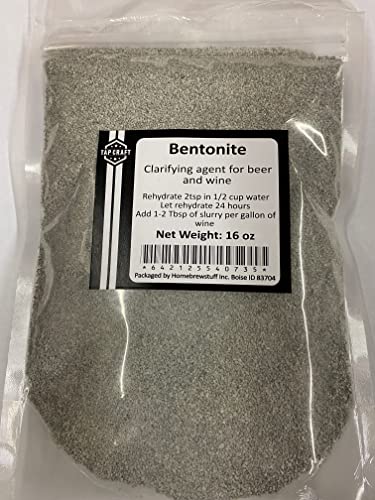
Best for: Winemakers needing pre-fermentation clarification. Bentonite helps clear pectic and protein haze and is commonly used at the start of wine making. Choose this if you’re preparing a wine that tends toward haziness from the outset. Limitation: must be measured and mixed before fermentation for best results.
Buying Guide
What should you consider when choosing a wine clarifier?
- Batch size: Are you clarifying 5–6 gallons or larger? Some options are packaged for bulk use, while others are designed for smaller batches.
- Two-stage vs. single-step: Do you prefer a fast, single-step clarification or a controlled two-step process?
- Natural vs. synthetic: Do you want all-natural ingredients like kieselsol and chitosan or gelatin-based clarifiers?
- Impact on flavor: Some finings can subtly affect tannin levels and mouthfeel; plan accordingly for your wine style.
- Post-fermentation timing: Is it acceptable to clarify after fermentation or near bottling time?
Frequently Asked Questions
- What is a clarifying agent for wine?
It is a product used to remove suspended particles, proteins, and haze after fermentation to improve clarity.
- When should I add a clarifier during winemaking?
Typically after fermentation for most finings, though some bentonite can be used pre-fermentation depending on the recipe.
- Do natural finings affect flavor?
Some clarifiers can influence mouthfeel or astringency; gelatin finings and tannin management can address these effects.
- Can I use more than one clarifier in a batch?
Yes, but follow the product’s instructions and allow adequate settling time between steps to avoid interactions.
- How long does clarification take?
Results often appear within 12–48 hours for many two-stage finings, though some batches may need a few days.
- Is clarification necessary for all wines?
Clarification improves appearance and stability but may be optional for small, clear wines depending on taste and bottling requirements.
Leave a Reply